By JBizNews Desk
Tuesday, June 2, 2026
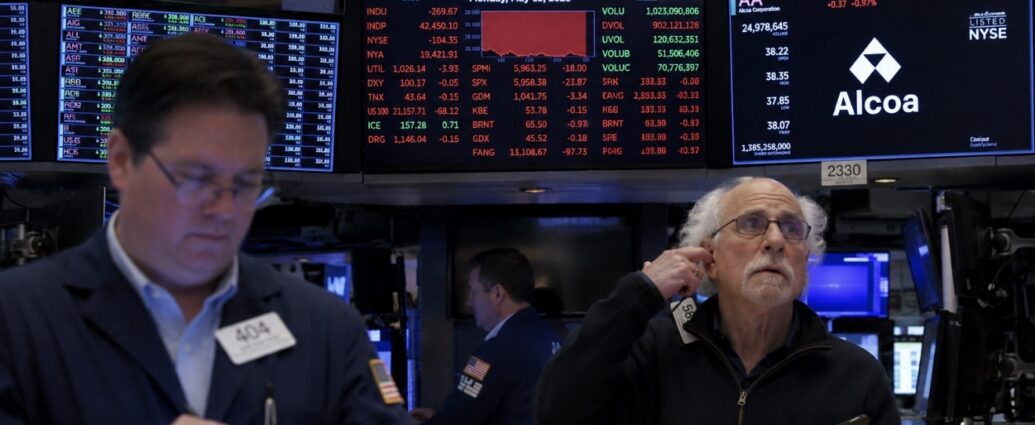
U.S. stocks opened lower Tuesday, pulling back from Monday’s record close after renewed tensions involving Iran pushed oil prices higher and gave investors a reason to pause following Wall Street’s strongest run in more than a year.
Futures tied to the S&P 500 fell about 0.2% before the opening bell after the index closed Monday at a record 7,599.96, while the Nasdaq Composite also finished at a fresh all-time high. The market’s advance has been fueled largely by relentless investor demand for companies tied to artificial intelligence, data centers, networking infrastructure, and cloud computing.
The overnight catalyst came from the Middle East.
Iranian state-linked media reported that Tehran had suspended communications with Washington unless Israel halted its expanding military operations in southern Lebanon. Additional reports indicated Iran and regional allies were discussing responses that could affect key global shipping routes, including the Strait of Hormuz and the Bab el-Mandeb Strait, two of the most important energy chokepoints in the world.
The developments immediately rattled energy markets.
West Texas Intermediate crude jumped sharply Monday and remained near $92 per barrel Tuesday morning after briefly surging more than 8% during the previous session. Brent crude traded around $95, keeping oil prices roughly 30% above levels seen before the conflict escalated earlier this year.
President Donald Trump sought to calm markets, telling reporters that discussions remained on track despite what he described as a temporary setback. Trump referred to the issue as a “small glitch” that had already been addressed and also pointed to signs of reduced hostilities between Israel and Hezbollah, helping oil retreat from its overnight highs.
For investors, however, oil remains the most important variable to watch. Sustained prices near $100 per barrel could reignite inflation concerns and complicate the Federal Reserve’s policy outlook.
While geopolitical tensions dominated headlines, corporate earnings continued to reinforce Wall Street’s bullish AI narrative.
The biggest winner of the morning was Hewlett Packard Enterprise, whose shares surged more than 25% after reporting results that significantly exceeded expectations and raising its outlook for the year.
The company increased its fiscal 2026 adjusted earnings forecast to $3.35 to $3.45 per share, up sharply from its prior guidance range of $2.30 to $2.50 and well above analyst expectations. HPE also raised free cash flow guidance to approximately $3.5 billion, compared with a prior forecast of roughly $2 billion.
The strength was driven largely by AI-related demand. HPE reported that networking revenue surged 148%, while revenue from its Cloud and AI segment increased 23%, underscoring the continued spending wave flowing into enterprise AI infrastructure.
The company also announced that a representative from Elliott Investment Management will join its board, a move welcomed by investors.
Another major beneficiary of the AI boom was Marvell Technology, whose shares jumped roughly 19% in premarket trading.
Marvell unveiled its new Teralynx T100, which the company described as the industry’s first 102.4 terabits-per-second AI-optimized switch silicon platform. The chip is specifically designed for hyperscale AI data centers and uses up to 25% less power than competing products, addressing one of the industry’s biggest challenges as power demand surges alongside AI workloads.
The announcement reinforced a trend that continues to drive markets higher: demand for AI infrastructure is growing faster than supply.
The momentum extended across the sector.
Broadcom climbed nearly 6% before the open after receiving a bullish analyst call from HSBC, while investors continued piling into companies viewed as essential suppliers to the AI buildout.
Lumentum Holdings gained nearly 7% after announcing a new $2 billion investment from Nvidia, further highlighting how capital continues to flow toward the infrastructure powering artificial intelligence.
The optimism surrounding AI remains so strong that many technology executives now describe demand as exceeding available capacity, creating substantial investment opportunities across semiconductors, networking equipment, cloud services, and supporting energy infrastructure.
Still, some of Wall Street’s most influential voices are urging caution.
The benchmark 10-year U.S. Treasury yield traded around 4.43% Tuesday morning, while the CBOE Volatility Index (VIX) climbed toward 16, suggesting investors are beginning to price in higher uncertainty.
Speaking recently at the Reagan National Economic Forum, JPMorgan Chase Chief Executive Jamie Dimon warned that financial markets may be underestimating economic and geopolitical risks. Dimon cautioned that investor enthusiasm remains high despite a growing list of potential disruptions ranging from inflation and interest rates to international conflicts.
For now, however, earnings continue to overpower those concerns.
The market remains caught between two powerful forces: a historic wave of AI-driven investment and a volatile geopolitical backdrop centered on the Middle East and global energy supplies.
Tuesday’s session will test which narrative carries more weight. So far in 2026, investors have consistently chosen artificial intelligence. But with oil approaching $100 a barrel and tensions surrounding the Strait of Hormuz remaining unresolved, that confidence could face a much tougher test in the days ahead.
Wall Street — JBizNews Desk
© JBizNews.com All Rights Reserved. Reproduction or distribution without written permission is prohibited.