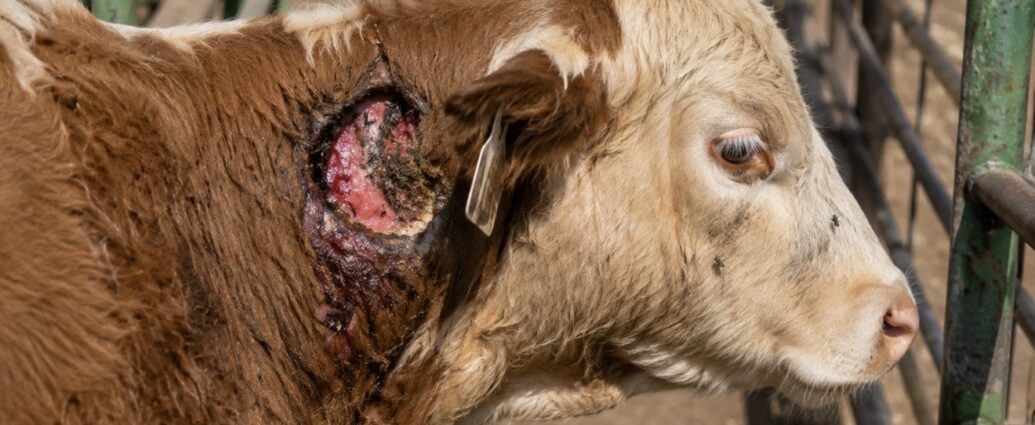
A flesh-eating parasite that the United States stamped out 60 years ago is back, and it landed at the worst possible moment for anyone who buys beef. The U.S. Department of Agriculture confirmed Wednesday evening that a New World screwworm was found in a three-week-old calf in La Pryor, in Zavala County, about 60 miles from the Mexican border — the first case on U.S. soil in decades and the first in Texas since 1966.
Agriculture Secretary Brooke Rollins said it is the only confirmed case so far and stressed it is not a danger to the food supply, because the pest infects living animals, not meat.
For shoppers, the bigger story is what this does to a beef market that is already stretched to its limits. Ground beef hit a record $6.89 a pound in May, the highest since the government began tracking the price in 1984, and beef overall is up about 57% since 2020.
The reason is simple supply. The U.S. cattle herd has shrunk to roughly 86.2 million head, the smallest since 1951, after years of drought pushed ranchers to sell breeding cows and high feed costs made rebuilding slow and expensive. A new threat to the herd is the last thing a tight market needed.
The screwworm makes that squeeze worse from two directions.
First, it has already cost the market its main relief valve. To keep the pest out, the USDA shut the southern border to live cattle imports in 2025. Mexico had supplied more than 60% of U.S. live cattle imports, roughly 1.1 million to 1.2 million head annually. Cutting that off removed a major source of young cattle that normally enter U.S. feedlots.
Second, an actual outbreak could sicken or kill cattle inside Texas, the nation’s largest beef-producing state, shrinking the herd even further.
The market’s first reaction was surprisingly negative. Feeder cattle futures for August fell 5.80 cents to 342.625 cents per pound, while August live cattle futures slipped to 237.85 cents. Shares of major meat companies including Tyson Foods and JBS also declined.
Traders worried that a confirmed U.S. case could temporarily weaken consumer demand. As market analyst Brad Kooima of KKV Trading noted, cattle futures have been trading “almost exclusively” on screwworm concerns for days.
But the cash cattle market tells a different story. Prices remain near record levels, with negotiated sales in parts of the Plains reaching approximately $257 per hundredweight last week. Live cattle futures topped $250 for the first time ever in April.
The takeaway is straightforward: there still are not enough cattle to satisfy demand, and any threat to the herd could tighten supplies further.
That creates a two-speed outlook for beef prices. In the short term, fear-driven futures selling could temporarily pressure prices. Longer term, the risk points higher.
Research from the Federal Reserve Bank of Dallas has warned that a widespread outbreak could reduce cattle inventories, cost billions of dollars, and push beef prices even higher. Because cattle take years to breed and raise, any rebuilding effort started today would not meaningfully increase beef supplies until approximately 2028.
The potential economic damage is substantial.
A screwworm outbreak could cost Texas roughly $1.8 billion annually, according to Peyton Schuman of the Texas and Southwestern Cattle Raisers Association. Cattle producers alone could face annual losses of approximately $735 million to $745 million. Texas’ cattle industry is valued at roughly $15 billion.
Corporate America is already feeling the pressure from limited cattle supplies.
Tyson Foods has projected an adjusted operating loss of up to $600 million in its beef division for fiscal 2026 and has reduced shifts at its Amarillo, Texas, processing facility, citing the shortage of cattle resulting from border restrictions. Retailers including Walmart and Kroger have also reported consumers increasingly shifting toward less expensive proteins as beef prices continue climbing.
For now, officials are moving aggressively to contain the outbreak.
Federal and state authorities established a roughly 12-mile quarantine zone around the affected ranch, expanded surveillance efforts, and began releasing sterile flies — the same technique that successfully eradicated the pest in the United States during the 1960s.
A new $610 million federal facility in Edinburg, Texas, is expected to eventually produce 300 million sterile flies per week, though it is not scheduled to open until late 2027.
Secretary Brooke Rollins said the response plan developed over the past year is already being implemented. The National Cattlemen’s Beef Association, led by Colin Woodall, said ranchers and industry leaders have spent more than a year preparing for the possibility of the pest’s return.
For consumers, the bottom line is simple: beef prices were already at record highs before the screwworm crossed the border. Now, a new threat to the nation’s cattle herd has introduced another layer of uncertainty into an already strained market — making meaningful relief at the meat counter look further away than ever.
Agriculture & Consumer Markets — JBizNews Desk
© JBizNews.com All Rights Reserved. Reproduction or distribution without written permission is prohibited.