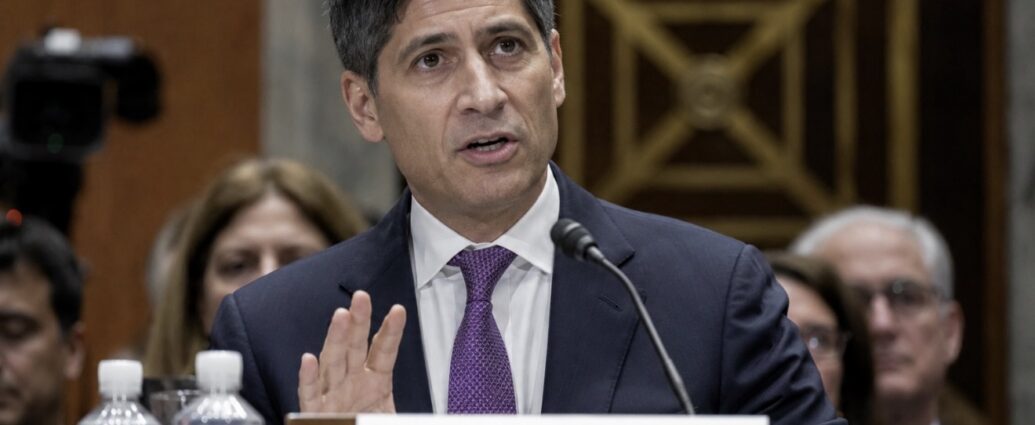
The new chairman of the Federal Reserve, Kevin Warsh, is signaling that he plans to fight inflation in a fundamentally different way than many of his predecessors, a shift that could reshape interest rates, mortgages, business borrowing, and savings returns for millions of Americans. Warsh, himself a former Fed governor, laid out the case in testimony before the Senate Banking Committee on April 21, calling for a new framework to address persistent inflation and a different approach to communicating monetary policy.
The timing could hardly be more important. On Wednesday, June 10, the Bureau of Labor Statistics reported that consumer prices rose 4.2% over the past year, the fastest pace in three years. The report arrives just days before the Federal Reserve’s next policy meeting on June 16–17, where officials will decide whether interest rates should remain unchanged, move higher, or eventually begin to fall.
At the center of Warsh’s thinking is a belief that artificial intelligence may significantly alter how inflation behaves. Warsh has repeatedly argued that AI could become one of the most powerful productivity-enhancing technologies in modern history. Greater productivity allows businesses to produce more goods and services without proportionally increasing costs, potentially easing inflationary pressures while supporting economic growth.
In practical terms, Warsh believes the economy may be capable of growing faster than traditional models suggest without automatically triggering higher inflation. If productivity rises sharply because of AI adoption, businesses may be able to absorb costs more efficiently, potentially reducing the need for aggressive interest-rate increases.
That view challenges decades of Federal Reserve orthodoxy. Traditional economic models often assume that when unemployment falls too low and economic activity accelerates, inflation eventually rises. Under that framework, the Fed frequently raises rates to cool demand and prevent prices from climbing too quickly.
Warsh has suggested that relationship may be weaker than many economists assume. Rather than focusing primarily on historical relationships between growth and inflation, he has emphasized productivity, innovation, investment, and supply-side improvements as important drivers of price stability.
He has also criticized what he sees as excessive reliance on backward-looking economic data. Government reports often arrive weeks or months after underlying economic activity occurs. Warsh has argued that policymakers should pay closer attention to real-time developments in business investment, technological adoption, and productivity trends.
Beyond inflation policy, Warsh has advocated broader changes at the central bank. He has called for a more aggressive reduction of the Fed’s balance sheet, which still contains trillions of dollars in assets accumulated during years of quantitative easing. He has also suggested that the Federal Reserve should simplify how it communicates with markets and focus more narrowly on its core economic responsibilities.
Supporters argue that these changes could restore credibility to an institution that faced criticism for initially underestimating the inflation surge that followed the pandemic-era economic recovery.
The challenge for Warsh is that current economic conditions are testing his framework. While AI may eventually boost productivity, inflation today is being driven by more immediate factors, including higher energy costs, supply disruptions, and geopolitical uncertainty.
As a result, the Federal Reserve faces a difficult balancing act. Cutting rates too quickly could risk reigniting inflation, while keeping rates elevated for too long could slow economic growth and increase borrowing costs for households and businesses.
Several former Federal Reserve officials have noted that institutional realities may limit how dramatically policy changes. Dennis Lockhart, former president of the Federal Reserve Bank of Atlanta, has suggested that regardless of personal philosophy, any Fed chair ultimately must respond to incoming economic data. Loretta Mester, former president of the Federal Reserve Bank of Cleveland, has similarly emphasized the importance of building consensus among policymakers.
For consumers, the outcome matters directly. Mortgage rates, auto loans, business lending, and savings yields are all influenced by Federal Reserve policy. A more growth-oriented approach could eventually lower borrowing costs and stimulate investment. A more cautious approach could keep rates elevated in an effort to prevent inflation from becoming entrenched.
The upcoming Federal Reserve meeting may provide the first significant indication of how Warsh intends to navigate that challenge. Investors, businesses, and consumers will be watching closely to see whether the new chairman emphasizes productivity-driven optimism or maintains a more traditional focus on inflation risks.
Either way, the decisions made over the coming months will have consequences far beyond Wall Street, influencing everything from home purchases and business expansion plans to retirement savings and household budgets.
JBizNews Desk — Washington
© JBizNews.com All Rights Reserved. Reproduction or distribution without written permission is prohibited.