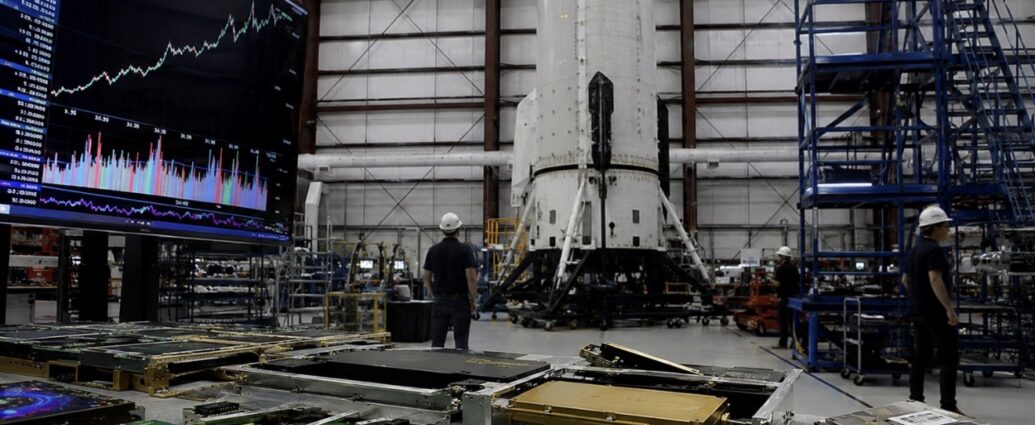
SpaceX confirmed on Thursday, June 11, that it had priced what the company described as the largest stock sale in history — approximately 555.6 million shares at $135 each, raising about $75 billion. While investors around the world rushed to participate, many investors in mainland China and Hong Kong found themselves locked out of the offering due to U.S. export-control restrictions tied to defense-related technology.
Rather than buying SpaceX directly, many investors across Asia have turned to an alternative strategy: purchasing shares of publicly traded suppliers, satellite component manufacturers, and investment funds that already hold private stakes in the company.
The company, led by Elon Musk, is expected to begin trading on the Nasdaq under the ticker SPCX on Friday at a valuation of roughly $1.75 trillion. Underwriters also hold an option to purchase an additional 83.3 million shares. The offering surpasses the previous record established by Saudi Aramco’s 2019 IPO.
Restrictions reportedly went beyond simply rejecting orders. Access to SpaceX’s website and IPO marketing materials was blocked in mainland China and Hong Kong, preventing many investors from reviewing offering documents or participating directly.
One of those investors was Hu Xiaobin, a retail trader from China’s Anhui province. Anticipating growing interest in the company, he spent months purchasing shares of Chinese-listed companies connected to SpaceX’s supply chain.
Among his holdings were Sunway Communication, which manufactures components used in Starlink ground terminals, and Western Superconducting Technologies, a producer of specialty metals used in aerospace applications.
Hu later sold both positions before the IPO, describing the trade as successful “value speculation.”
One of the biggest beneficiaries of investor enthusiasm has been Lens Technology, a Shenzhen-listed supplier known for working with Apple and Tesla. The company’s stock has surged nearly 50% this year, reaching record highs after identifying commercial space as a new growth opportunity.
Interest intensified further in May when company chairman Zhou Qunfei was photographed seated between Apple CEO Tim Cook and Elon Musk during a Beijing banquet held to welcome President Donald Trump, fueling speculation about future business opportunities involving Musk’s companies.
Taiwan has also emerged as a major focus for investors seeking indirect exposure to SpaceX.
The island produces many of the electronic components used in satellite systems. Companies including Chin-Poon Industrial, Wistron NeWeb, and Universal Microwave Technology have publicly stated that they supply SpaceX.
According to Jeffrey Chan, a director at Hong Kong-based Central Asset Management, investors are also watching Compeq, Tong Hsing Electronic, Kinpo, and Japan’s Meiko Electronics as potential beneficiaries of SpaceX’s future growth.
“For local retail investors, getting a direct piece of the IPO book is going to be incredibly tough,” Chan said, adding that he expects SpaceX to become a core holding for many global growth-oriented funds.
Investor interest has expanded beyond suppliers.
The Tema Space Innovators ETF, which owns a small pre-IPO stake in SpaceX, has gained approximately 29% since launching in March. Meanwhile, the Tradr 2x Fly Long Daily ETF, which offers leveraged exposure to space company Firefly Aerospace, has attracted significant attention from traders.
In Europe, satellite companies including Eutelsat of France, OHB of Germany, and SES of Luxembourg have all posted strong gains this year as investors seek exposure to the broader commercial-space sector.
Not everyone believes the rally is sustainable.
Nicholas Smith, Japan strategist at brokerage CLSA, said much of the recent buying appears to be driven by retail investors rather than large institutions.
“It’s a great story if you’re a trader,” Smith said. “But I doubt people would be making big bets on this.”
Others see genuine long-term opportunity.
Nick Wilcox, managing director at Man Group, believes the capital raised through the offering could translate into increased spending throughout SpaceX’s supplier network.
“There is a raft of Asian companies that will be highly benefiting from that,” Wilcox said.
Still, analysts caution that many supplier stocks have already risen sharply on expectations that may not materialize. Thinly traded aerospace and satellite suppliers can be highly volatile, and future business relationships remain uncertain.
For investors in mainland China and Hong Kong, however, the irony remains clear: the company they most want to own is the one they still cannot directly buy.
JBizNews Desk — Asia
© JBizNews.com All Rights Reserved. Reproduction or distribution without written permission is prohibited.