The U.S. Treasury Department sanctioned nine individuals and companies Wednesday for helping Iran’s military acquire weapons, with several of the entities based in China and Hong Kong. In a statement, Treasury Secretary Scott Bessent said the action, part of a campaign the department calls “Economic Fury,” is intended to disrupt “the foreign procurement networks that support the Iranian military’s efforts to acquire weapons.” He added that Treasury “will not tolerate any support of the Iranian military.”
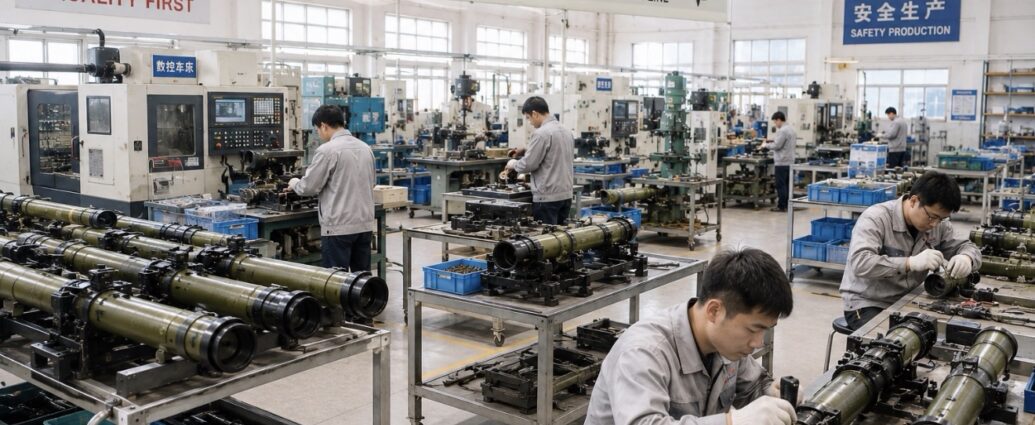
The designations were issued by Treasury’s Office of Foreign Assets Control (OFAC) under an executive order targeting the proliferation of weapons of mass destruction and their suppliers. Among those sanctioned were Chinese and Hong Kong firms accused of helping procure weapons — including shoulder-fired anti-aircraft missiles known as MANPADS — for Iran’s Islamic Revolutionary Guard Corps and its defense ministry. One Hong Kong company was linked to a covert banking network that OFAC said attempted to move money for those purchases.
The sanctions carry significant financial consequences. OFAC warned that foreign banks that knowingly process substantial transactions for the designated parties could themselves face penalties, including losing access to the U.S. financial system. These so-called secondary sanctions are aimed at the banks, brokers, and trading houses that continue facilitating Iranian procurement efforts. The action marks the second major sanctions package in roughly a month, following Treasury measures in May targeting networks connected to Iranian drone and ballistic missile programs.
The repeated appearance of Chinese firms in these investigations raises a broader geopolitical question: How far is Beijing willing to go to protect Iran, and is it using that relationship as leverage against Washington?
China remains Iran’s most important economic partner. According to estimates from analytics firm Kpler, China purchases as much as 80% of Iran’s oil exports, providing Tehran with a critical source of revenue while securing discounted crude supplies for Chinese refiners. Beijing has repeatedly rejected U.S. sanctions on those transactions, arguing that it does not recognize Washington’s authority over commerce conducted outside U.S. jurisdiction.
China has also provided diplomatic support. Chinese officials have consistently described Iran’s nuclear facilities as peaceful and defended Tehran’s right to enrich uranium under the Nuclear Non-Proliferation Treaty. Alongside Russia, China blocked a United Nations Security Council resolution earlier this year that sought action related to the Strait of Hormuz, the strategic oil chokepoint at the center of the current conflict. China’s U.N. ambassador, Fu Cong, said the proposal failed to reflect the “full picture” of the crisis, while Beijing criticized the U.S. naval blockade of Iranian ports as dangerous and destabilizing.
At the same time, analysts caution against overstating the relationship. Reviews conducted by the U.S.-China Economic and Security Review Commission have found no public evidence that China has directly assisted Iran in building a nuclear weapon. Beijing has publicly opposed Iran obtaining such a capability and has generally avoided providing direct military support that could trigger a confrontation with Washington.
Chinese leaders also face practical concerns. China imports roughly 70% of its oil and natural gas, much of it through the Persian Gulf. A wider regional conflict that disrupts energy flows would directly threaten China’s economy. For that reason, Chinese Foreign Minister Wang Yi has urged Iran to respect the “reasonable concerns” of neighboring countries and avoid actions that could escalate tensions further.
U.S. officials have attempted to turn that dependence into leverage. Bessent recently called on Beijing to “step up with some diplomacy and get the Iranians to open the strait.” President Donald Trump has also said Chinese leader Xi Jinping expressed interest in helping broker a settlement while continuing to maintain economic ties with Tehran.
The result is a delicate balancing act. Beijing benefits from maintaining Iran as a strategic counterweight to U.S. influence in the Middle East, but it has so far stopped short of the direct military or nuclear assistance that would risk a severe confrontation with Washington.
For now, what some analysts describe as a Chinese “nuclear buffer” appears less like a deliberate defense strategy and more like the byproduct of economic and diplomatic support. Chinese oil purchases, financial channels, and diplomatic backing help Iran withstand international pressure, but Beijing continues to avoid crossing lines that could trigger broader economic or military consequences.
Each new round of U.S. sanctions tests where that line exists — and how much risk Chinese companies are willing to accept in order to keep Iran’s procurement networks operating.
JBizNews Desk — Asia
© JBizNews.com All Rights Reserved. Reproduction or distribution without written permission is prohibited.