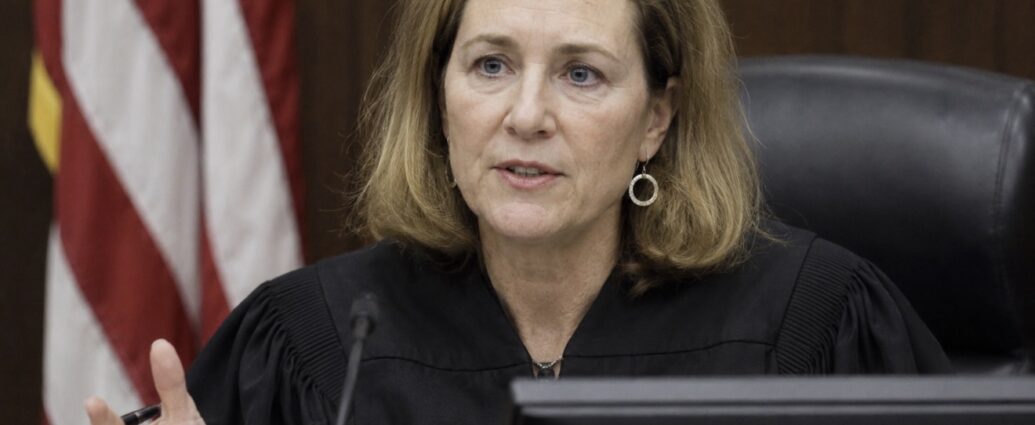
ALEXANDRIA, Va. — A federal judge refused on Friday, June 12, to take the government at its word that a controversial $1.776 billion fund is finished and ordered the Justice Department to put its position in writing.
U.S. District Judge Leonie Brinkema, of the Eastern District of Virginia, extended her block on the so-called “Anti-Weaponization Fund” and gave the administration seven days to support its claims with sworn declarations.
During a court hearing, Brinkema repeatedly said a verbal promise was not enough.
Acting Attorney General Todd Blanche had told Congress the department had no plans to move forward with the fund, but the judge said that testimony did not guarantee the program was truly dead.
She ordered Blanche and Treasury Secretary Scott Bessent to submit signed, sworn statements confirming the fund will not proceed.
What raised the judge’s concerns was the president himself.
After Blanche testified that the fund was not moving ahead, President Donald Trump publicly said he liked the concept and wanted to compensate people he believes were victims of government “weaponization.”
Brinkema pointed to the difference between the department’s testimony and the president’s public comments as a reason to demand stronger assurances.
For taxpayers, the size of the fund is what makes the case significant.
The proposal would direct nearly $1.8 billion in public money to individuals claiming they were politically targeted by the government.
Exactly who would receive those funds remains at the center of the dispute.
The proposal stems from a legal settlement tied to a lawsuit Trump filed against the Internal Revenue Service over the disclosure of his tax returns.
The settlement established a pool of money intended to compensate alleged victims of government persecution through a five-member board.
Critics quickly labeled the proposal a “slush fund.”
Opponents, including watchdog organizations and police officers who defended the U.S. Capitol on January 6, 2021, argued that the money could ultimately benefit Trump allies and individuals charged in connection with the Capitol riot, many of whom have indicated they would seek compensation.
The proposal generated criticism from both Republicans and Democrats.
The Justice Department has argued the lawsuits challenging the fund should be dismissed because no actual program has been implemented.
Government attorneys told the court that no money has been transferred, no board members have been appointed, no operating rules have been created, and no claims have been submitted.
They described the dispute as both “moot and premature,” arguing the fund never became operational and may never exist.
The department also rejected allegations of political favoritism, calling such claims speculative.
Not all judges have been persuaded.
Earlier this week, in a separate case in Washington, U.S. District Judge Richard Leon declined to issue an emergency order blocking the fund after accepting Blanche’s representation that the administration would not move forward.
Even so, Leon delivered a warning to government attorneys.
“Don’t play possum with this court,” he said.
The message was clear: if officials attempt to revive the fund after assuring judges it was inactive, they could face significant legal consequences.
The litigation continues on multiple fronts.
At least four separate lawsuits seek to stop the fund.
One was filed by a former January 6 prosecutor.
Another came from U.S. Capitol Police officers.
In a notable development, 35 former federal judges asked a court to reopen the underlying case, arguing the settlement resulted from collusion and amounted to a fraud on the court.
There is also another issue keeping the financial debate alive.
The federal government already maintains the long-established Judgment Fund, a separate mechanism used to pay taxpayer-funded settlements.
That fund predates the current administration and remains available regardless of what happens to the Anti-Weaponization Fund.
Critics argue similar payments could still potentially be made through that channel.
For now, the immediate question is straightforward but important.
Will the Justice Department and Treasury Department submit sworn statements declaring the fund is permanently abandoned?
Brinkema’s deadline gives the administration one week to answer.
If the statements are filed, the legal battle over this version of the fund could begin winding down.
If not, the judge’s doubts about whether the program is truly dead are likely to intensify.
JBizNews Desk — Washington
© JBizNews.com All Rights Reserved. Reproduction or distribution without written permission is prohibited.