NEW YORK — America’s wealthiest investors are holding unusually large amounts of cash while quietly shifting billions of dollars into alternative assets, gold, infrastructure, and global opportunities.
According to UBS’s Global Family Office Report 2026, published on May 28, many of the world’s richest families are preparing for a prolonged period of economic and geopolitical uncertainty rather than betting on a smooth continuation of recent market gains.
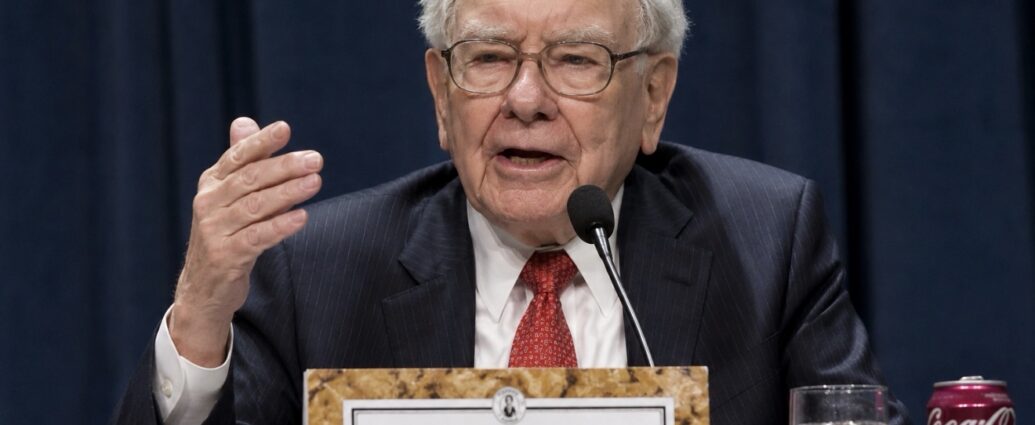
One of the clearest examples is Warren Buffett.
Before stepping down as chief executive of Berkshire Hathaway at the end of last year, Buffett accumulated a record $381.7 billion in cash and short-term investments, choosing not to aggressively deploy capital despite a strong stock market.
He is far from alone.
A recent Goldman Sachs survey found that wealthy households with at least $1 million in investable assets keep roughly 20% of their net worth in cash or cash-equivalent investments, including Treasury bills and other short-term government securities.
The strategy reflects growing caution.
Many affluent investors believe stock valuations have become stretched after years of gains, while concerns about inflation, interest rates, government debt, and geopolitical instability continue to linger.
Unlike previous years, cash now offers meaningful returns. Higher interest rates allow investors to earn respectable yields while waiting for better opportunities.
Several prominent investors have already taken defensive steps.
Buffett’s cash reserves continued growing even as stock prices climbed, while billionaire investor Peter Thiel reportedly reduced exposure to some of the market’s hottest artificial-intelligence stocks, including Nvidia, despite the company’s strong performance.
The moves have fueled speculation that some wealthy investors believe parts of the AI-driven rally may have become overheated.
Yet UBS says the behavior should not be viewed as panic.
Instead, the report describes a broad repositioning of portfolios.
Approximately 60% of family offices surveyed said they expect to adjust their long-term asset allocation during the next year — the highest level UBS has ever recorded and nearly double the percentage reported just one year earlier.
Maximilian Kunkel, Chief Investment Officer for UBS Global Wealth Management, described the shift as a proactive effort to prepare for emerging opportunities while reducing risk.
The biggest destination for that money is alternative investments.
According to UBS, family offices now allocate approximately 42% of their portfolios to assets outside traditional stocks and bonds. These include:
- Private equity
- Private credit
- Commercial real estate
- Infrastructure
- Hedge funds
Many investors favor alternatives because they are less tied to daily stock-market swings and can provide diversification during periods of volatility.
The wealthier the investor, the greater the use of alternatives. Goldman Sachs found that roughly 80% of investors with more than $10 million in assets hold alternative investments.
Two traditional assets are also making a comeback.
Gold allocations are rising as investors seek protection against inflation, geopolitical tensions, and concerns about the U.S. dollar. Average gold holdings remain relatively small but are increasing among family offices making portfolio changes.
Infrastructure investments are also attracting attention. Assets such as data centers, power grids, transportation networks, and utilities are increasingly viewed as stable long-term investments capable of generating steady cash flow.
Artificial intelligence remains the dominant investment theme.
According to UBS, 65% of family offices identified AI as one of their highest-priority investment opportunities, followed by energy and natural resources, as well as automation and robotics.
At the same time, confidence in the U.S. dollar appears to be weakening among many wealthy investors.
Nearly two-thirds of respondents expect the dollar’s dominance as the world’s reserve currency to gradually decline. As a result, some investors are increasing exposure to currencies such as the euro and Swiss franc.
While cryptocurrencies continue to attract headlines, they remain only a small portion of most family-office portfolios.
The potential impact of these shifts is significant.
According to Deloitte, there are now more than 8,000 family offices worldwide managing approximately $3.1 trillion in assets. Even modest allocation changes by these investors can influence global markets.
When asked about their biggest concerns, 64% of family offices cited a major geopolitical conflict as their top risk over the next year. Another 49% pointed to a potential global trade war, while 39% identified inflation as a primary threat.
The message from the world’s wealthiest investors is not that a crash is imminent.
Instead, they appear to be preparing for a future that may be more volatile, more fragmented, and less predictable than the one markets enjoyed in recent years.
For now, the rich are not abandoning risk entirely. They are simply keeping more cash available, spreading investments across a wider range of assets, and positioning themselves for a world they believe may become increasingly uncertain.
Wall Street — JBizNews Desk
© JBizNews.com. All Rights Reserved. Reproduction or distribution without written permission is prohibited.