Two Israeli strikes over the past year have influenced a rapid American push toward ceasefire agreements.
On September 9, 2025, during Operation Summit of Fire in Qatar, an Israeli strike targeting senior Hamas leaders in Doha led to a ceasefire in the Gaza war several weeks later and the release of all Israeli hostages.
Following the operation, US President Donald Trump concluded that an agreement was needed. He applied pressure on Israel, as well as on Turkey and Qatar, which in turn conveyed a clear message to Hamas: it was time to bring the conflict to an end.
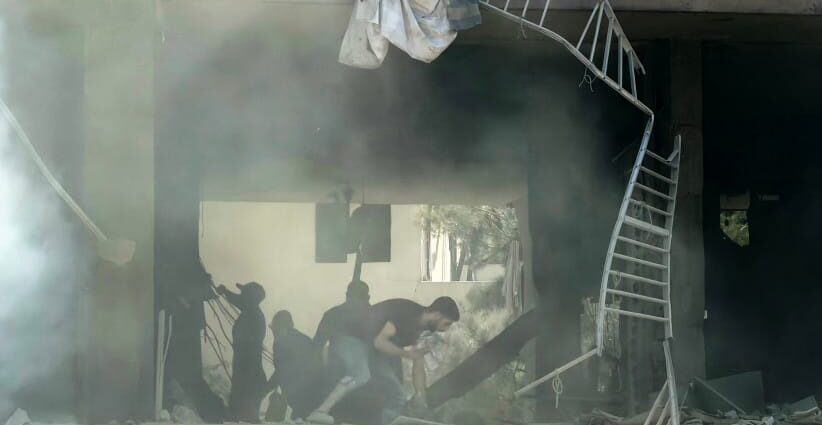
Less than a year later, an Israeli strike on Sunday in Beirut’s Dahiyeh district targeting a Hezbollah headquarters accelerated the American effort to persuade Iran to sign an agreement.
Tehran threatened retaliation against Israel, and the US president understood that an Israeli response to an Iranian retaliation could jeopardize negotiations over a memorandum of understanding between Tehran and Washington. As a result, he increased pressure on Iran, together with Qatar and Pakistan, to reach a deal.
In exchange, an agreement was reached providing for the immediate reopening of the Strait of Hormuz, rather than the gradual reopening originally envisioned, as well as restrictions on Israeli operations in Lebanon.
It remains unclear whether Israel will be permitted to act only in response to Iranian attacks or also against Hezbollah’s military buildup. Most significantly, Iran obtained something it did not have before the war: a temporary lifting of sanctions on the sale of oil and petrochemical products.
For now, Trump has not abandoned his demand that Iran forgo nuclear weapons. However, a key question remains: if the American president was unwilling to risk a war 90 days before the US midterm elections, will he be willing to do so 30 days before them?
As for Israel, preparations were underway last Thursday for a significant American strike against Iran, as well as for the possibility that Iran would resume attacks against Israel.
Trump announces US-Iran ceasefire
Then, in the middle of a security consultation convened by Prime Minister Benjamin Netanyahu with a small group of ministers and senior defense officials, Trump’s announcement arrived: “An agreement has been reached.”
Netanyahu sought to reassure the public, stating that Trump had made clear that no agreement would be finalized without addressing Iran’s nuclear program, its regional proxy network, and its ballistic missile arsenal.
However, judging by the victory statements issued by the US administration in recent hours, Washington appears to believe that the most difficult phase is already behind it.
In its view, a dramatic peace agreement has been achieved, and negotiations on the remaining issues can now begin, with the understanding that Iran will not obtain nuclear weapons. The major achievement, from the administration’s perspective, has already been secured.
Israeli officials also recognize that as long as negotiations between the United States and Iran continue, and especially if a formal agreement is reached, Israel’s freedom of action against Iran, including regarding its ballistic missile program, will be significantly constrained.
Consequently, the current focus has shifted to Lebanon: will the IDF be allowed to act only in response to Hezbollah attacks, or also against efforts by the organization to rebuild and strengthen its military capabilities?
This morning, senior Israeli officials are left feeling frustrated. There is deep criticism of the American administration and growing concern that a war which began with the stated goal of toppling the Iranian regime may end, at least for now, with that regime intact, stable, and once again benefiting from a flow of financial resources.
“Help is on the way,” Netanyahu and Trump told the Iranian people at the outset of the conflict. Yet for the moment, the Iranian public remains on the sidelines. The Ayatollah regime emerges from the war alive, breathing, and still firmly in power.