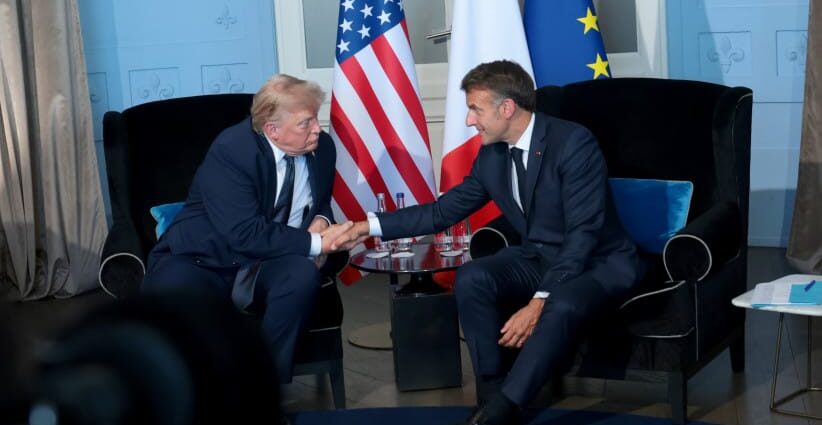
US President Donald Trump said on Monday that the Strait of Hormuz will be “completely opened” on Friday, while speaking to reporters alongside French President Emmanuel Macron in Evian-les-Bains, France.
“The strait is already partially opened,” said Trump. “Essentially, ships are starting to go out now. On Friday, it will be completely opened.”
Trump described the current Iranian leadership as “smart,” saying the US wants “good relations” with them.
“If that does not happen, we will go back to war,” added Trump. “I hope that does not happen.”
Trump responded to a question on sanctions relief for Iran, saying, “It’s really a behavioral thing. If they do what they’re supposed to do, that starts taking effect.”
Trump added that the memorandum of understanding would be released “pretty soon,” with Macron describing the agreement as “a very important step for peace.”
“I want it to be released because it’s a very powerful document,” said Trump. “It’s not like the Obama document, which was just a terrible document… So, probably pretty soon. I would say sometime after Friday.”
Vance: Many details of deal remain unresolved
Earlier on Monday, US Vice President JD Vance told CNBC that many details remain to be finalized regarding the preliminary peace deal between the United States and Iran.
Vance also mentioned that the US anticipates the Strait of Hormuz will remain open without tolls in the long term after the signing, which is scheduled for Friday.
The agreement, announced on Sunday, aims to extend the US-Iran ceasefire for 60 days and establish a framework for future negotiations regarding critical issues. However, the text of the preliminary deal has not yet been released.
“That’s the sort of thing that we’re going to figure out in these technical negotiations,” Vance said regarding the Strait.
“You know that there are a lot of very important details to figure out that we’re actually going to sit at the table and discuss together and figure out a path forward.” He said.
Iran’s nuclear program
Included in the details yet to be determined is the conclusion of Iran’s nuclear program.
Vance made it clear that while Iran has “committed to destroy and dispose of their stockpile of highly enriched material,” the process for doing so has not been outlined.
“And what we’ve said is, okay, let’s discuss exactly how we’re going to achieve that,” he stated.
“They want access to an unsanctioned economy. We’ve talked about, ‘OK, we’re open to that,’ but that would require a long-term commitment to the inspection and verification regime,” he continued.
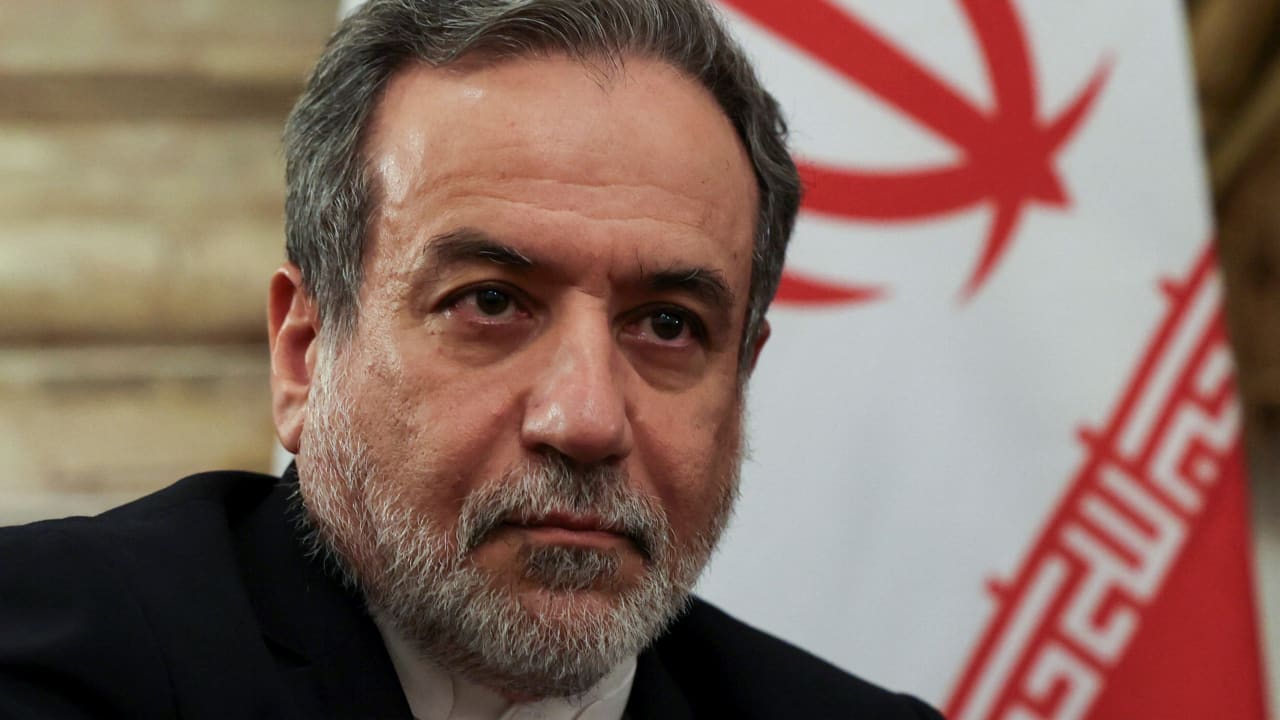
Regarding who would attend the signing on Friday, Vance told CNBC that Iran’s foreign minister, Abbas Araghchi, and its parliamentary speaker, Mohammad Bagher Ghalibaf, are expected to attend.
He did not say who would represent the US at the signing.
When discussing Israel’s involvement in the agreement, Vance noted, “I think there are elements in Israel who like the agreement.” He added, “Israel will certainly have a place at the negotiating table in the new Middle East.”
US officials: Iran pact signed, Hormuz traffic to rise significantly
The memorandum of understanding has been signed by Trump, Vance, and Iran’s Ghalibaf, one US official said on Monday, adding that the US is expected to publish the full text within 24-48 hours.
Trump encouraged Vance to take the lead on brokering the agreement with Iran, a White House official told Walla.
In an interview on ABC’s “Good Morning America” program, Vance said the agreement was already signed digitally on Sunday, and no funds were released. Vance said Iran would receive money only if it took verified steps to eliminate its stockpile of highly enriched uranium.
Speaking at a briefing with reporters, the anonymous US official added that there will also be a signing ceremony on Friday.
“You will see a significant increase in traffic in the Strait of Hormuz, actually starting already, and that will ramp up slowly over time,” the senior official said.
“We probably won’t return to normal in two weeks, but we will see a significant increase in strait traffic,” they added.
A White House official also told Walla that the US has made some concessions regarding sanctions on Iran because “the Iranians have given up [ground] in places they didn’t give up in the past.”
The US and Iran said they had agreed terms to end their war and reopen the strait, news that brought relief to markets, although the pact may hinge on an end to hostilities in Lebanon and defers talks on Tehran’s nuclear program.
While still a framework, the deal marked the biggest breakthrough toward resolving the conflict that has killed thousands and upended energy markets since it began with joint US-Israeli strikes on Iran in February.