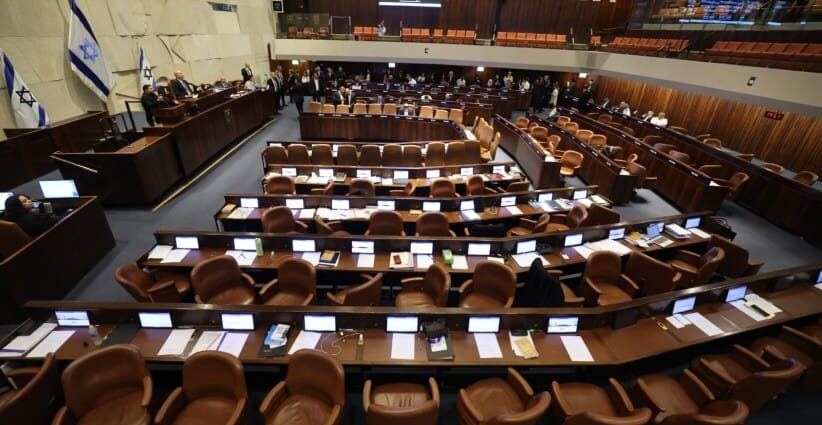
Retired Supreme Court justice Yosef Elron told the High Court of Justice that the Knesset vote in which attorney Michael Rabello was elected state comptroller was conducted unlawfully, joining the core arguments raised in petitions seeking to cancel the result.
Elron’s position was filed as part of his preliminary response to the petitions challenging the June 3 vote. He did not argue that he should be declared the rightful state comptroller instead of Rabello, nor did he ask the court to install him in the role. Rather, Elron responded as a respondent in the case and said he joined the petitioners’ arguments “insofar as they relate to the illegality of the second vote” held in the Knesset.
He also joined the remedies requested by the petitioners, including canceling the election.
The filing is brief, but significant. Elron, who lost to Rabello in the second round of voting, is now formally telling the court that the process by which his opponent was elected was not merely politically improper, but illegal.
Opposition claims secret ballot undermined by coalition’s ask to film votes
Rabello, Prime Minister Benjamin Netanyahu’s personal attorney, was elected state comptroller after a dramatic and disputed vote in the Knesset plenum. In the first round, Elron received 60 votes and Rabello received 57, leaving both candidates short of the 61 votes required for election.
A second round was then held, but was interrupted after opposition MKs alleged that coalition lawmakers were being instructed to document their votes behind the curtain, despite the fact that the state comptroller is elected by secret ballot.
After the vote was restarted, Rabello won 61 votes to Elron’s 57.
The controversy has since become one of the sharpest legal-political clashes around the appointment of a gatekeeper, because the state comptroller is tasked with auditing the government, public administration, and public bodies. The role is especially sensitive in the current period, as the next comptroller is expected to deal with the institutional fallout from the October 7 failures and the war.
The petitions argue that the secrecy of the vote was not a technical formality, but a central legal protection meant to allow MKs to vote freely, without political pressure, threats, rewards, or factional enforcement.
According to the petitions, the alleged filming turned the secret ballot into a loyalty test. Some petitioners argued that the documentation gave the vote transactional value and undermined the integrity of the entire election.
Speaker Ohana: Any instruction to photograph vote illegal, invalid, MKs chose to independently
Knesset Speaker Amir Ohana said during the plenum that any instruction to photograph the vote would be illegal and invalid, but also said MKs could choose to photograph themselves. After consultations, the second round was restarted.
The petitioners argue that this did not cure the defect, because the alleged pressure and the documentation continued to contaminate the vote.
The Knesset and Rabello have opposed the petitions, arguing in part that the petitioners rushed to court before exhausting other procedures and that the factual picture presented to the court was incomplete and misleading.
The High Court set a hearing for June 18. The petitions also seek interim relief that would prevent Rabello from pledging allegiance before the Knesset and taking office before the court rules. State Comptroller Matanyahu Englman is set to finish his term at the start of July.
The court will now have to decide whether the alleged breach of secrecy was serious enough to cancel one of the Knesset’s most sensitive appointments.