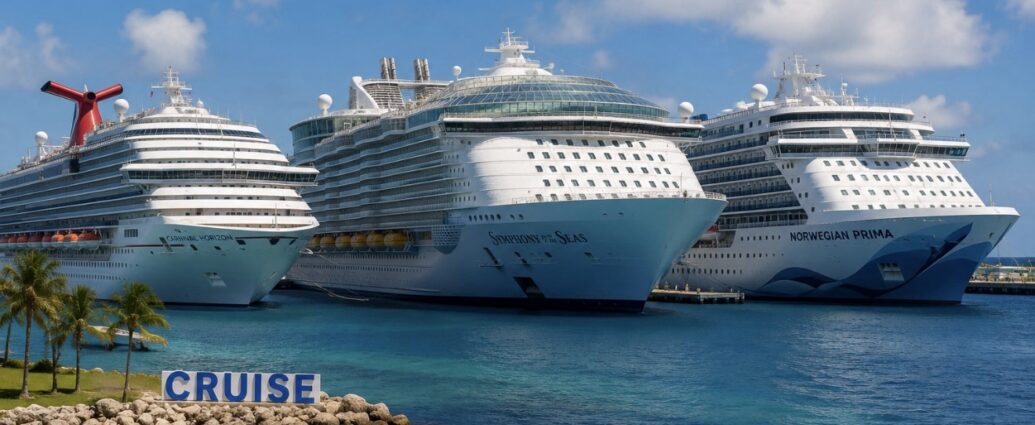
Cruise line stocks surged Monday after oil prices tumbled, giving the industry relief from one of its biggest cost pressures and improving profit expectations heading into the peak summer travel season.
Shares of Carnival Corp., Royal Caribbean Group, and Norwegian Cruise Line Holdings each gained more than 4% after President Donald Trump announced a peace agreement between the United States and Iran that is expected to reopen the Strait of Hormuz and restore normal oil flows through one of the world’s most important energy corridors.
Crude oil prices fell roughly 5% following the announcement, a significant development for cruise operators whose fleets consume massive amounts of fuel each year.
In Monday trading, Carnival rose approximately 4.5% to $30.51, Royal Caribbean gained 4.3% to about $307, and Norwegian Cruise Line climbed 4.8% to roughly $20.36, according to Benzinga Pro. Royal Caribbean shares have now advanced approximately 14% over the past five trading sessions as fears of a prolonged Middle East conflict have eased.
The connection between lower oil prices and stronger cruise stocks is straightforward.
Fuel remains one of the largest operating expenses for cruise companies. When oil prices rise, operating costs increase and profit margins come under pressure. When oil falls, those costs decline, allowing more revenue to flow directly to the bottom line.
The potential impact can be substantial.
Carnival previously told investors it expected approximately $500 million in fuel-related headwinds during fiscal 2026 because of disruptions tied to the Middle East conflict. The company also estimated that every 10% move in fuel prices could impact annual costs by roughly $160 million.
A sustained decline in oil prices could therefore eliminate a meaningful portion of those expected expenses.
Royal Caribbean faces a similar equation. The company expects to consume roughly 1.76 million metric tons of fuel this year at a cost approaching $1.2 billion. While management has hedged about 60% of its anticipated fuel needs, the remaining portion remains exposed to market price fluctuations.
Beyond fuel savings, easing tensions in the Middle East provide another potential benefit.
With shipping routes becoming more secure and geopolitical risks declining, cruise operators face less chance of itinerary disruptions, rerouted voyages, or operational complications that can frustrate passengers and increase costs.
Lower fuel prices may also support consumer demand.
As gasoline prices decline, households often have more discretionary income available for vacations and travel. That dynamic can benefit cruise operators by improving both affordability and consumer confidence.
Demand has remained resilient despite economic uncertainty.
According to Bank of America data, consumer spending on cruises increased 8.4% year-over-year in May, although that growth rate moderated from the stronger gains recorded in April.
Wall Street analysts remain broadly optimistic about the sector.
Investment firm Stifel recently established price targets of $320 for Royal Caribbean, $35 for Carnival, and $24 for Norwegian Cruise Line, citing strong booking trends, disciplined capacity growth, and continued consumer interest in cruise vacations.
Investors will soon receive another important update.
Carnival is scheduled to report quarterly earnings on June 30, providing one of the first detailed looks at summer demand trends and the potential impact of lower energy costs on profitability.
The cruise rally was part of a broader move across the travel sector.
Airlines including United Airlines, Delta Air Lines, and Southwest Airlines also gained roughly 4% Monday as investors welcomed the prospect of lower jet fuel costs. Major stock indexes moved higher as well, reflecting broader optimism surrounding the decline in energy prices.
Still, market participants remain cautious.
Oil prices have been highly volatile throughout the year, rising and falling sharply with developments in the Iran conflict. Investors recognize that a signed agreement does not necessarily guarantee long-term stability, and any renewed disruption could quickly reverse recent declines in energy prices.
Cruise stocks also remain below levels seen before the conflict began, highlighting the damage higher fuel costs inflicted on the sector earlier this year.
For now, however, the math is working in the industry’s favor.
Lower oil prices mean lower fuel expenses. Lower fuel expenses improve operating margins. And stronger margins heading into the busiest travel season of the year are exactly what cruise investors have been hoping to see after months of rising energy costs and geopolitical uncertainty.
JBizNews Desk
© JBizNews.com All Rights Reserved. Reproduction or distribution without written permission is prohibited.