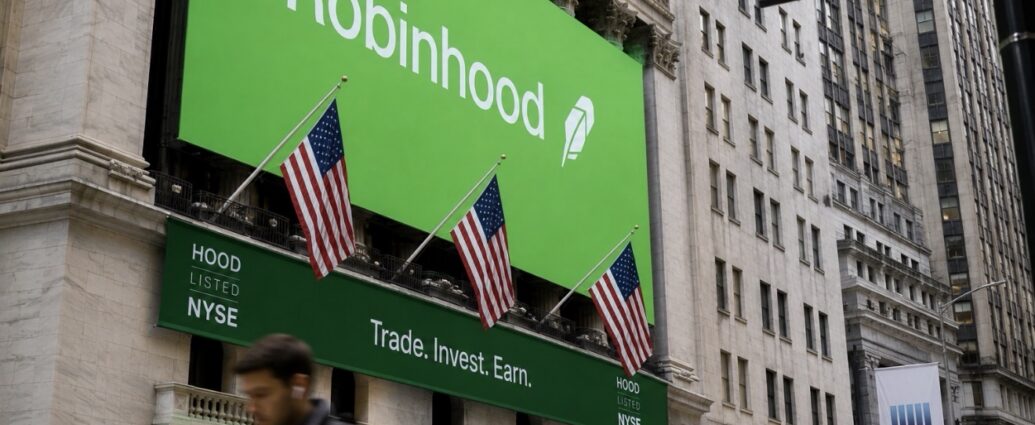
Robinhood Markets disclosed Tuesday that it will cut about 10% of its workforce, eliminating roughly 290 jobs, in a move chief executive Vlad Tenev described not as a retreat but as a deliberate effort to keep the company lean and fast-moving.
The cuts were announced in a Form 8-K filing with the Securities and Exchange Commission and laid out in a memo Tenev sent to employees, which the company later posted on X. In it, Tenev struck an unusual tone for a layoff announcement.
“Robinhood’s business has never been stronger,” he wrote, before arguing that the company “cannot default to operating as a heavily-layered organization” and must instead be a “lean, hyper-focused team.”
The numbers back up the claim of strength, which is what makes the move notable. Robinhood, which employs about 2,900 full-time workers, said its trading volumes hit record levels in June across stocks, options and the fast-growing market for prediction-market contracts. The company recently reported a 15% jump in revenue, though its stock slipped at the time because the figure came in below what analysts had hoped.
Robinhood expects the cuts to cost about $28 million, including roughly $20 million in cash for severance and benefits and about $8 million in stock-based compensation, all to be recorded in the second quarter.
These are the company’s first layoffs in three years; the last came in 2022, when a cooling market and a crypto crash forced two painful rounds of reductions.
One detail stands out for what it leaves out.
A growing number of banks, fintech firms and payment companies cutting staff this year have pointed to artificial intelligence, saying software can now do work that once required people. Robinhood did not.
Tenev framed the decision purely as a matter of structure and speed, not automation, casting the smaller headcount as a way to push more responsibility onto fewer, higher-performing employees.
The backdrop is a broader wave of belt-tightening across financial technology and crypto.
Last month, Coinbase, one of the largest crypto exchanges, said it was cutting about 14% of its staff. Earlier in the year, Crypto.com and Algorand announced their own reductions.
The price of Bitcoin and other digital currencies has slumped, and trading has cooled from the frenzy of 2024, squeezing companies whose fortunes rise and fall with market activity.
What separates Robinhood is the framing: most of its peers are cutting because business slowed, while Robinhood says it is cutting from a position of strength.
Here is why it matters beyond Wall Street.
Robinhood is the app that pulled millions of ordinary Americans into investing for the first time, powering the meme-stock craze and turning phone-based trading into a mainstream habit.
When a profitable company posting record activity still decides to shed one in ten workers, it signals something about the moment: even healthy businesses are trimming management layers in the name of speed.
For employees across the technology sector, it is one more sign that the era of aggressive hiring has given way to a focus on doing more with less.
Investors gave the news a mixed reception.
Robinhood shares rose more than 2% early Tuesday before giving back the gains and turning lower later in the day, a sign that Wall Street is still weighing whether a leaner Robinhood means a stronger one.
For the roughly 290 people losing their jobs, the company said it would offer support through the transition.
For everyone else watching, the bigger question is whether “lean and disciplined,” the phrase Tenev keeps returning to, becomes the standard other strong companies adopt, even when business is good.
Wall Street — JBizNews Desk
JBizNews Desk / © JBizNews.com All Rights Reserved. Reproduction or distribution without written permission is prohibited.