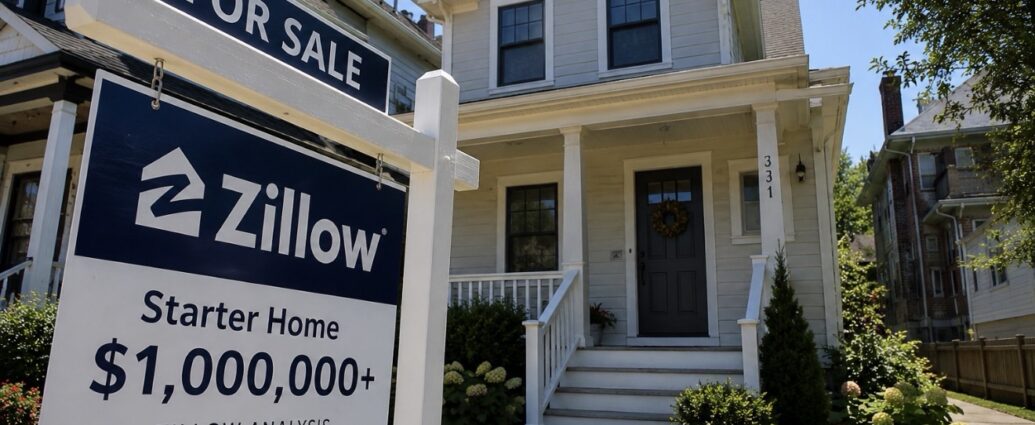
The price of getting a foot on the property ladder has never been higher.
A record 242 cities across the United States now have starter homes worth $1 million or more, according to an analysis from Zillow released Monday, a sign of how far the cost of entry-level housing has climbed.
A starter home, as Zillow defines it, is one in the lowest third of home values in a given area, the kind of modest, lower-priced house a first-time buyer typically targets.
Nationwide, the typical starter home is worth $198,649, up 1.7% from a year earlier, which means seven-figure starter homes are still the exception.
But the number of places where they are the norm keeps growing.
The count rose from 226 cities a year ago and has nearly tripled since before the pandemic, when just 80 cities had million-dollar starter homes in February 2020.
Those homes are now spread across 26 states, up from only nine before 2020.
For years, million-dollar entry-level houses were almost entirely a coastal phenomenon.
Today they have reached interior states including Colorado, Texas, Wyoming and Illinois.
California remains the epicenter, with 105 cities where the typical starter home costs at least $1 million.
New York has climbed to 41 cities, up from just 12 before the pandemic, and New Jersey now has 26 cities, up from a single city.
New York and New Jersey are the fastest-growing on the list, adding 15 cities between them in the past year alone.
The cause traces back to the pandemic housing boom.
A housing shortage that had been building for a decade collided with a surge of demand at a time when mortgage rates were at historic lows, sending prices soaring at a record pace.
Kara Ng, a senior economist at Zillow, said the pandemic effectively reset the cost of buying a home, pushing million-dollar starter homes out from a handful of coastal markets to more than two dozen states.
Those effects, she noted, have proven durable even as the market has cooled.
Here is why it matters for ordinary families.
The starter home has long been the traditional first rung of homeownership, the place where young couples and first-time buyers begin building equity.
When that first rung costs a million dollars, it moves out of reach for all but the wealthiest newcomers, and it pushes more would-be buyers into renting for longer or leaving expensive regions entirely.
It is the human face of the same housing shortage that has kept new construction from keeping up with demand.
There is, however, a more hopeful side to the report.
Conditions are slowly turning friendlier for buyers who are financially prepared.
The typical buyer now breaks even compared with renting after about six years, down from more than eight years in late 2023.
Inventory is rising, price growth has slowed, and in many markets sellers now outnumber buyers, giving those still in the hunt more leverage than they have had in years.
The broader market has been stuck in a slump since 2022, with sales of existing homes hovering near a three-decade low.
Still, the headline number captures the strain on a generation of aspiring owners.
A million-dollar starter home would have sounded absurd in most of the country a decade ago.
Today it describes the entry point in 242 cities and counting, a reminder that even as the market softens, the bar set during the boom has barely come down.
Housing Market — JBizNews Desk
JBizNews Desk / © JBizNews.com All Rights Reserved. Reproduction or distribution without written permission is prohibited.