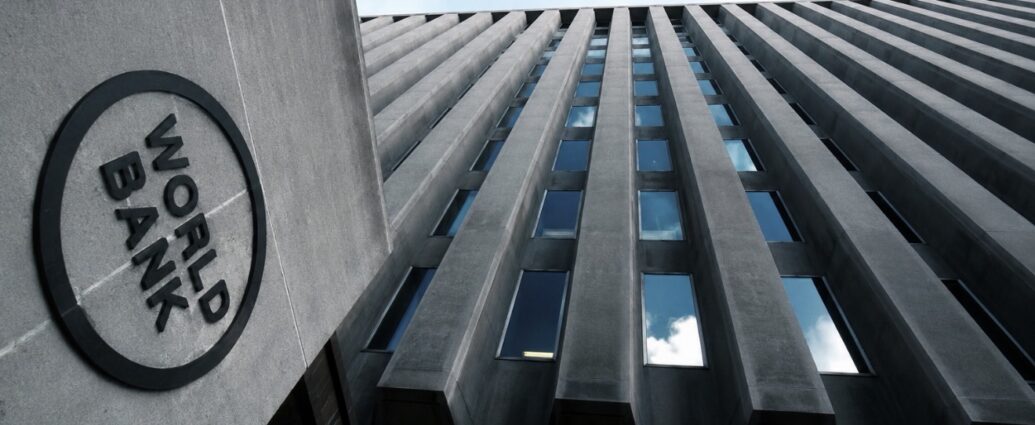
The World Bank Group said Tuesday it has approved a financing package designed to unlock as much as $2 billion in private bank loans for Argentina, a deal meant to cut the country’s borrowing costs just as a heavy round of debt payments comes due. The approval was announced from Washington by the bank’s board.
The structure is unusual, and the details matter. Rather than lend the money itself, the World Bank Group is backing loans that commercial banks will make to Argentina. It does this through two guarantees: a first-loss policy-based guarantee from the International Bank for Reconstruction and Development (IBRD) and a second-loss guarantee from the Multilateral Investment Guarantee Agency (MIGA). Together they cover 95% of the debt-service payments on the commercial loan.
In plain terms, the bank is promising to absorb most of the losses if Argentina fails to pay. That promise is what makes private lenders comfortable handing over money to a borrower they would otherwise treat as high-risk, and it lets Argentina lock in cheaper terms than it could get on its own.
The timing is no accident. Argentina faces roughly $4.4 billion in debt repayments by July 9, and the new package is built to help refinance part of that load rather than drain the country’s reserves to cover it. The supported loan carries a six-year maturity with a three-year grace period before repayments begin.
“We are committed to supporting Argentina’s macroeconomic stabilization and growth reform agenda,” said Susana Cordeiro Guerra, the World Bank’s Vice President for Latin America and the Caribbean. She said the guarantee structure helps bridge the country’s return to international capital markets on more affordable terms while pushing reforms that lift private investment and productivity.
That last point is the real goal behind the headline number. The guarantees are tied to changes meant to pull private money into Argentina — financing for infrastructure, stronger competition in its markets, and a friendlier environment for companies trying to do business there. The loan is less a handout than a down payment on Argentina convincing private investors to come back on their own.
And the World Bank is not acting alone. The Inter-American Development Bank is weighing a guarantee of up to $550 million for Argentina, while the Development Bank of Latin America and the Caribbean (CAF) is looking at another $500 million in support. CAF also announced Tuesday that it will provide a separate $400 million loan to Pan American Energy to fund the company’s natural-gas operations and expand output — a sign that lenders are backing both the government and the businesses driving its energy sector.
For ordinary Argentines and the companies that operate there, the stakes are practical. The country has spent years fighting punishing inflation and a weak currency, and the cost of borrowing abroad has long been one of its heaviest burdens. Cheaper refinancing eases pressure on the national budget, which in turn affects everything from the value of the peso to the price of imported goods and the government’s ability to keep spending steady. Lower financing costs also make it easier for firms to plan, hire, and invest without bracing for the next debt crisis.
There is a wider message here too. The deal is being watched closely by other developing economies, because the guarantee model offers a template for governments that have been shut out of cheap credit. If private banks are willing to lend to Argentina when most of the risk is covered, the same approach could be used to pull commercial money into countries that markets have written off.
None of this erases Argentina’s underlying problems. The package buys time and lowers costs, but it does not eliminate the debt or guarantee the reforms will deliver. The country still has to prove it can stabilize its economy and earn its way back into global markets without a safety net.
For now, the approval is a clear win. It hands Argentina a cheaper path through a near-term cash crunch and signals that international lenders are betting the country’s turnaround is worth backing. The harder test — whether private investors return on their own once the guarantees are gone — is still ahead.
Washington — JBizNews Desk
© JBizNews.com All Rights Reserved. Reproduction or distribution without written permission is prohibited.