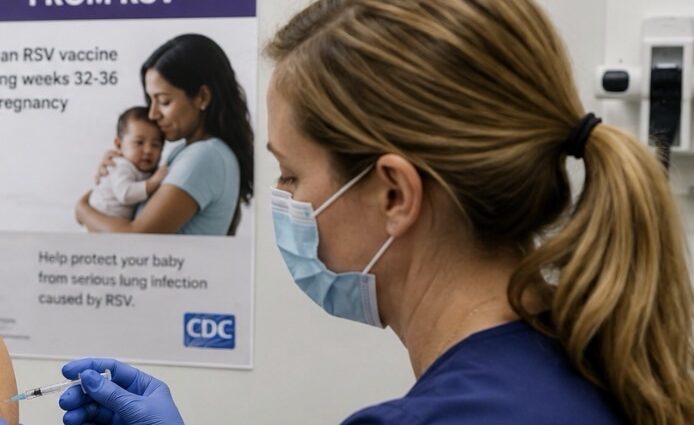
The Centers for Disease Control and Prevention (CDC) reported that the U.S. infant mortality rate fell to an all-time low in 2025, with slightly fewer than 5.4 deaths per 1,000 live births, according to preliminary government data. On Tuesday, the agency released a deeper analysis of 2024 figures that pointed in the same direction, showing declines among both the youngest newborns and older infants. In raw numbers, U.S. infant deaths dropped to roughly 19,350 last year, down from about 20,050 in 2024.
The improvement has a clear business story behind it. A major driver, experts believe, is a vaccination push against respiratory syncytial virus (RSV) — a common illness that causes cold-like symptoms but can turn dangerous, even deadly, for babies. Beginning in 2023, U.S. health officials recommended two new tools to protect infants, and both come from large pharmaceutical companies now selling them at scale.
The first is a vaccine given to pregnant women between 32 and 36 weeks, sold by Pfizer under the name Abrysvo, which passes protection to the baby before birth. The second is a lab-made antibody shot given directly to infants, called Beyfortus, marketed by Sanofi and AstraZeneca. Together they have created a fast-growing commercial market built around a problem that previously had few good defenses.
The payoff shows up most clearly in hospital data. The CDC has reported that infant hospitalizations for RSV dropped after the shots became available, with the largest reductions among babies up to two months old. That matters financially because severe RSV cases often mean stays in intensive care, which rank among the most expensive forms of pediatric treatment. Each hospitalization avoided is a cost not borne by a family, a hospital, or an insurer.
That makes the immunization push a rare win across the health-care economy. Insurers and employer health plans save when fewer babies need costly emergency care. Medicaid, which covers roughly four in ten U.S. births, stands to benefit heavily, since a large share of vulnerable infants fall under government coverage. Hospitals, meanwhile, can redirect strained pediatric capacity toward other patients. Prevention that costs a few hundred dollars per shot replaces care that can run into the tens of thousands.
For the drugmakers, the opportunity is still expanding. CDC figures show that as of late January, only about 41.6% of eligible pregnant women had received the RSV vaccine, with coverage uneven across different groups. That low rate is a problem for public health but a growth runway for Pfizer, Sanofi, and AstraZeneca, since millions of births each year represent a recurring market that is far from saturated. Closing the coverage gap means steady demand for years.
The ripple effects reach further into the health sector. Pharmacies and clinics that administer the shots gain a new line of routine business, and the broader push around maternal and infant health supports demand for prenatal care, pediatric services, and the workers who provide them. Health care has been one of the strongest areas for job growth, and preventive programs like this one help sustain that momentum by keeping a steady stream of patients moving through doctors’ offices and pharmacies rather than emergency rooms.
There are real limits to the good news. Even at a record low, the U.S. rate still trails other wealthy countries such as Italy, Japan, Spain, and Sweden, a gap experts tie to poverty and gaps in prenatal care that no single shot can fix. The benefits of the RSV products are also spread unevenly, with lower vaccination rates among some groups that face the highest risk. And the latest figures are provisional, meaning they could shift slightly as the CDC finishes its analysis.
Still, the direction is encouraging, and it carries a lesson that businesses across health care are watching closely. A targeted prevention effort, backed by products from a handful of major companies, appears to be saving lives and cutting costs at the same time. For an industry often criticized for spending heavily on treatment after people get sick, the RSV story is a reminder that prevention can be good medicine and good business at once.
The next test is whether the gains hold as the 2025 numbers are finalized and whether coverage climbs from here. If it does, the companies behind these shots, the insurers footing the bills, and the families raising healthier babies all stand to come out ahead.
Washington – JBizNews Desk
© JBizNews.com All Rights Reserved. Reproduction or distribution without written permission is prohibited.