America’s housing shortage has become one of the biggest economic challenges facing families, renters, employers, and local governments. Now, after years of debate and resistance, states across the country are beginning to rewrite the rules governing where and how homes can be built.
The latest and most significant move comes from California, where a major new housing law takes effect on July 1, allowing developers to construct residential buildings of up to nine stories near major transit stations, overriding many local zoning restrictions that have limited development for decades.
The change reflects a growing national realization that the housing crisis cannot be solved without increasing supply.
According to estimates from Smart Growth America, the United States faces a shortage of roughly 4.7 million homes. The gap between housing supply and demand has helped drive home prices and rents to record levels, placing homeownership increasingly out of reach for many Americans.
Economists broadly agree that the country needs to build more housing. The challenge is that increasing supply often creates political resistance from existing homeowners concerned about neighborhood character, traffic, school crowding, and potential impacts on property values.
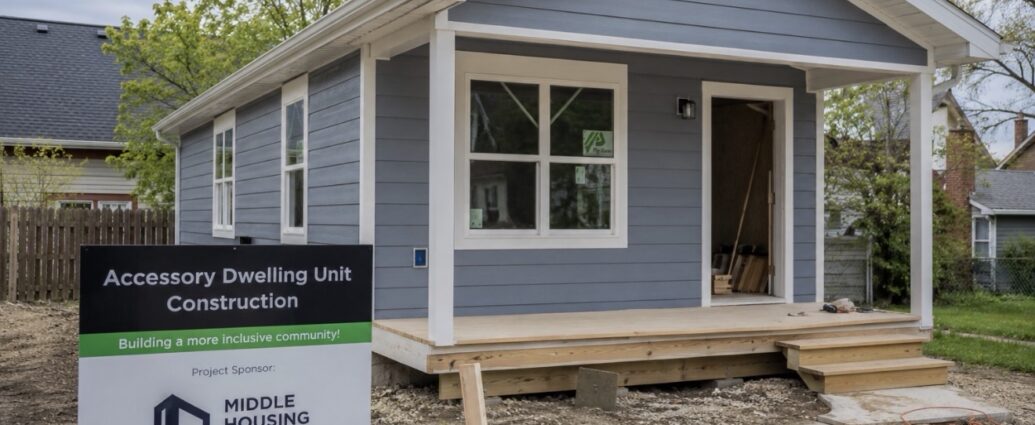
One of the most widely adopted solutions has been the expansion of Accessory Dwelling Units (ADUs) — often called granny flats, in-law suites, backyard cottages, or garage apartments.
California has spent years reducing barriers that previously prevented homeowners from building ADUs. The state eliminated many parking requirements, reduced permitting obstacles, and removed owner-occupancy rules that discouraged construction.
The results have been significant. According to Harvard University’s Joint Center for Housing Studies, ADUs now account for nearly 20% of all new housing units produced in California. To encourage even more construction, California’s housing agency offers grants of up to $40,000 to help homeowners cover development costs.
The idea is spreading rapidly beyond California.
Researchers at the Mercatus Center report that at least 18 states have now passed legislation making it easier for homeowners to build ADUs.
This year, Idaho emerged as an unlikely housing reform leader. The state approved a package of six housing bills covering backyard apartments, manufactured housing, lot splits, streamlined permitting, and other measures designed to increase supply.
Beyond ADUs, lawmakers are beginning to tackle zoning rules themselves.
For decades, zoning restrictions have limited housing density in many communities, particularly near transportation hubs where demand is strongest. California’s new Senate Bill 79, authored by State Senator Scott Wiener and signed by Governor Gavin Newsom, represents one of the most aggressive efforts yet to increase density near public transit.
The law allows significantly taller residential buildings within approximately a half-mile of major transit stations in the state’s largest urban regions, reducing the ability of local governments to block development.
Supporters argue that concentrating housing near transit reduces commuting times, lowers transportation costs, and creates more affordable housing opportunities.
Other states are pursuing a different approach by modernizing building codes.
A growing number of jurisdictions are reconsidering requirements that residential buildings taller than three stories contain two stairwells. Housing advocates argue that allowing certain smaller apartment buildings to use a single staircase can reduce construction costs and make projects financially viable on smaller parcels of land.
States including Texas and Idaho have begun exploring or implementing such reforms.
Still, housing experts caution that changing laws is only the first step.
California alone has enacted roughly 180 housing-related reforms over the past decade, yet the state continues to build far fewer homes than officials say are needed. State planners estimate California needs approximately 2.5 million additional homes by 2030 to adequately meet demand.
Implementation remains a challenge. In some cases, local governments have responded to state mandates by imposing additional requirements that make projects difficult or expensive to build.
That reality highlights a broader truth about housing policy: while there is widespread agreement that America needs more homes, consensus often disappears when specific neighborhoods face new development.
For families, however, the stakes are increasingly tangible.
A backyard apartment can provide rental income, housing for aging parents, or a place for adult children struggling with affordability. A new apartment building near a transit station can mean lower housing costs and shorter commutes.
No single law will solve the housing crisis overnight. But after years of treating housing shortages as a local issue, states are increasingly stepping in with broader reforms designed to increase supply and improve affordability.
Whether through granny flats, taller apartment buildings, streamlined permitting, or updated building codes, lawmakers across the country are sending the same message: America cannot solve its housing affordability problem without building more homes.
JBizNews Desk
© JBizNews.com All Rights Reserved. Reproduction or distribution without written permission is prohibited.