Four ancient artifacts were returned to Egypt by an American family in early June, announced the Egyptian Tourism and Antiquities Ministry.
All four had been part of a private collection belonging to a US citizen from Texas.
Following his death, his family reached out to the authorities regarding returning the artifacts to Egypt “in recognition of the civilizational and historical value they represent.”
An international legal expert was hired by the family to act as a liaison between them and the necessary Egyptian authorities.
The artifacts were received in Cairo by representatives from Egypt’s Supreme Council of Antiquities on June 5, before being transferred to the Egyptian Museum for further examination, documentation and restoration ahead of their display in the museum.
What are the artifacts?
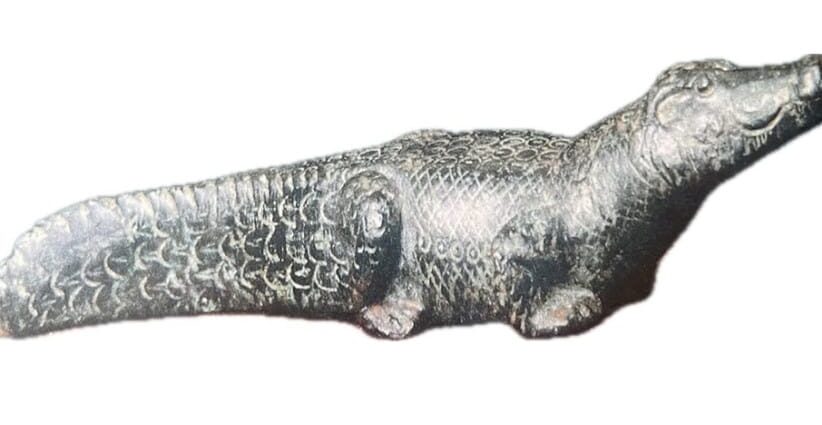
Included in the newly returned artifacts are a granite sphinx head, a bronze hippopotamus figurine, a double bronze statue of a king, and a bronze statue of the Egyptian deity Sobek.
Shaaban Abdel Gawad, director-general of the antiquities repatriation department at Egypt’s Tourism and Antiquities Ministry, noted that the granite sphinx head is the most prominent artifact to be recovered due to its significant artistic value.
Dated to the 18th Dynasty of the New Kingdom, the figure is depicted as wearing the formal headdress of the pharaohs, the Nemes, decorated with a cobra.
It is believed to be a portrait of either the 18th Dynasty Pharaoh Hatshepsut, one of the two known female rulers of ancient Egypt, or of her nephew, Thutmose III.
The recovered bronze hippopotamus figurine, covered with a distinctive green patina, dates back to the 12th Dynasty of the Middle Kingdom.
The double bronze statue depicts a king wearing the Hedjet (White Crown of pharaonic Upper Egypt) while being accompanied by the ancient Egyptian falcon-headed god Horus. It dates back to the 26th Dynasty of Egypt’s Late Period.
Also dating to the Late Period is the bronze statue of the ancient Egyptian crocodile god Sobek.
Egypt’s Tourism and Antiquities Minister thanked the American family for their gesture, adding that the recovery of the pieces reflects the growing global awareness of the importance of preserving cultural heritage.
US repatriates 13 artifacts to Egypt
The return of the four artifacts in early June follows an upward trend of international repatriation of cultural and historical artifacts to their home countries.
Back in April, the United States returned 13 artifacts to Egypt that had been smuggled from the country illegally.
Among the 13 were an alabaster vessel dated to the seventh century BCE used for storing oils and perfumes, a kohl container from the New Kingdom in the shape of a monkey, a cosmetics container in the shape of a cat from the Middle Kingdom, a vessel from the Ptolemaic era, a ceremonial cup, and several other containers from the Middle Kingdom.
Part of a vessel depicting a child hiding amid marsh plants, believed to be connected to the deity Horus the Child, a pottery piece in the shape of a duck from the Ptolemaic era, and a ceramic decoration bearing the head of the Greek god of wine Dionysus, were also returned.
Further included in the returned artifacts was a statue of the ancient Egyptian goddess Isis in the form of Aphrodite (Greek goddess of love), dating back to the second century CE, and a block statue of an individual named “Ankh-en-Nefer” from the Late Period.