For Israelis planning summer vacations abroad, one of the biggest travel expenses isn’t the hotel or airfare — it’s the exchange rate. After months as one of the world’s strongest currencies, the Israeli shekel began weakening against the U.S. dollar in June, raising concerns that overseas trips could become more expensive by the day.
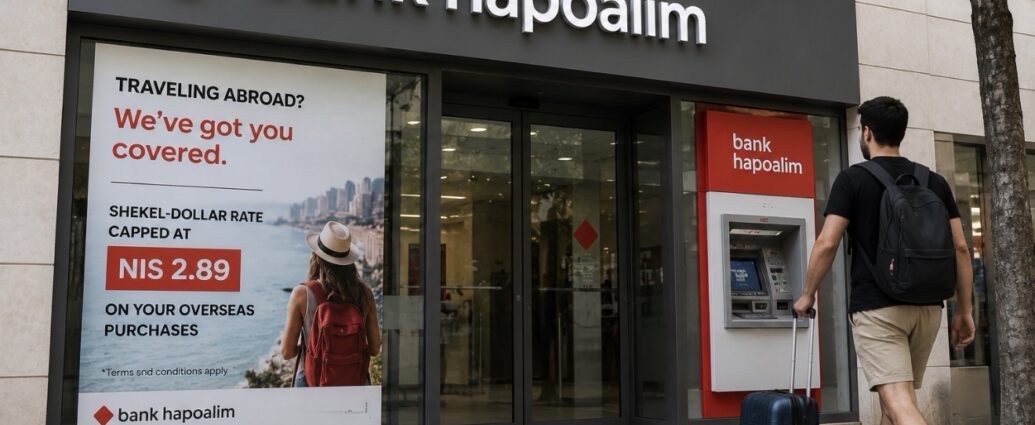
In response, Bank Hapoalim, Israel’s largest bank, has launched a new program designed to protect customers from further currency swings. The bank announced it will cap the exchange rate at NIS 2.89 per dollar for eligible card purchases made abroad this summer, giving travelers certainty at a time when the currency market remains volatile.
The offer, announced by Pazit Garfinkel, Head of Retail Banking at Bank Hapoalim, applies to purchases made with the bank’s credit and debit cards overseas, on foreign websites, and for cash withdrawals from foreign ATMs between June 15 and August 31.
“Our customers are planning their summer vacations abroad and deserve peace of mind without worrying about volatile foreign exchange markets,” Garfinkel said.
The protection works in the customer’s favor regardless of market direction. If the dollar rises above NIS 2.89, the bank will reimburse the difference. If the dollar falls below that level, customers automatically receive the lower market rate.
The program covers up to $5,000 per month in spending, allowing travelers to protect as much as $15,000 over the three-month summer period.
The potential savings can add up quickly. With the dollar trading near NIS 2.95 this week, customers are already saving approximately NIS 0.06 per dollar compared with the market rate. That translates to roughly NIS 300 per month on the maximum covered spending amount, or about NIS 900 over the summer.
If the dollar were to climb to NIS 3.00, the savings would increase to approximately NIS 550 per month, or about NIS 1,650 across the full summer period.
The benefit is available to private customers and small non-corporate business clients who hold active Bank Hapoalim credit or debit cards. Customers must register in advance through the bank’s online platform before purchases become eligible for reimbursement.
The timing may prove favorable. The dollar recently strengthened after comments from Bank of Israel Governor Amir Yaron suggested interest rates could be reduced faster than previously expected. Lower interest rates generally weaken a country’s currency, increasing the likelihood that the dollar remains above the bank’s guaranteed rate.
Still, the opposite scenario remains possible. Earlier this year, the shekel reached its strongest level against the dollar in roughly three decades, helped by renewed investor confidence following the regional ceasefire and improving trade conditions. Should the shekel strengthen again, the dollar could fall below the NIS 2.89 threshold. In that case, customers simply pay the lower market rate and lose nothing.
Beyond helping travelers, the initiative is also a competitive move by Bank Hapoalim. Israeli banks have increasingly competed for retail customers through rewards programs, trading-fee rebates, savings incentives, and other benefits. By offering protection against foreign-exchange volatility during peak travel season, the bank is giving customers a reason to keep spending on Hapoalim cards throughout the summer.
For now, with the dollar trading above the guaranteed rate, travelers are already benefiting. In a world where exchange rates can change daily, Bank Hapoalim is offering something unusual: predictability.
JBizNews Desk
© JBizNews.com All Rights Reserved. Reproduction or distribution without written permission is prohibited.