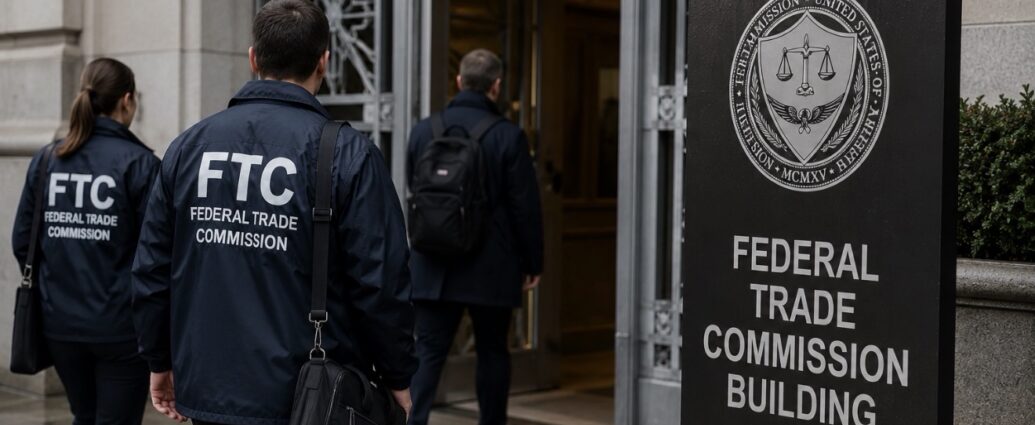
A federal court has temporarily shut down one of the largest subscription-app operations the government has targeted to date, freezing the assets of a network the Federal Trade Commission says quietly billed consumers worldwide for charges they never agreed to. In a complaint filed on Wednesday, June 17, 2026, in the U.S. District Court for the Northern District of California, the FTC moved against an enterprise operating as Genesis Tech, and the court granted the agency’s request to halt the operation and freeze its assets. The Commission authorized the case on a 2-0 vote.
The action names 15 corporations and eight individuals, including the company’s founder-CEOs, Vladimir Mnogoletny and Vasily Ulianov. At the center of the FTC’s argument is a simple idea: that these seemingly separate apps and websites were in fact a single “common enterprise” running the same deceptive script repeatedly.
That script, according to the complaint, was easy to start and hard to stop. The company advertised products as free or available for a low, one-time cost, often with a money-back guarantee, but once consumers signed up, references to auto-renewing subscriptions were relegated to the smallest print on the page. Customers were then charged on a recurring basis and, the FTC alleges, sometimes double-billed or charged for products they never requested.
The portfolio was broad enough that few buyers would have connected the dots. It included the fitness and nutrition apps MadMuscles, Harna, and Unimeal; an ADHD and productivity self-help course called Wisey; the document tools PDF Guru and PDF Master; the fashion-advice app Lumi; and the horoscope and psychic-chat service Nebula. The FTC says one program claimed it could diagnose and treat ADHD symptoms. Whatever the category, the agency says the underlying tactics were identical.
The money involved was substantial. From early 2023 through mid-2025, the enterprise’s five main product lines alone generated nearly a quarter-billion dollars in global revenue, and over the 12 months ending in September 2025, transactions across its linked PayPal accounts totaled nearly $700 million. The company’s apps have been downloaded more than 400 million times worldwide.
To keep that revenue flowing, the FTC alleges, the defendants made leaving as difficult as joining. The complaint says the company omitted cancellation options from its apps and websites and would often continue charging customers without authorization. When users tried to quit, the platforms allegedly forced them through extra steps or kept drafting payments even after a cancellation was confirmed.
The structure behind it was built to stay ahead of fraud detection. The FTC says the operation continually launched new products, registered new legal entities, and opened new merchant accounts to evade fraud-monitoring programs, producing an ever-shifting web of Cyprus and Delaware shell companies. The Cypriot companies targeted U.S. consumers, the agency says, while affiliated entities registered in Delaware provided access to U.S. payment processing that moved the money overseas.
The case also lands on Apple and Google. It highlights a growing challenge for the platforms, as subscription scams evolve beyond individual apps into intricate networks of shell companies. For the companies that distribute these apps and process their payments, the action reads less as a verdict than as a diagnosis of a gap in their own enforcement.
FTC officials framed the case as part of a wider crackdown. Christopher Mufarrige, director of the agency’s Bureau of Consumer Protection, called it an illustration of the bureau’s reinvigorated anti-fraud program. The complaint alleges violations of the FTC Act and the Restore Online Shoppers’ Confidence Act (ROSCA), the federal law written to govern online subscriptions and require clear disclosure and easy cancellation. The FTC files such a case only when it has reason to believe the law is being broken; the allegations are unproven, and the case will be decided by the court.
For everyday consumers, the action is a reminder of how much of the modern economy runs on recurring billing — and how easily a “free trial” becomes a charge that repeats every month. The dispute will play out over the coming months, but for now the court has stopped the billing and locked down the money while the case proceeds.
JBizNews Desk | Washington
© JBizNews.com All Rights Reserved. Reproduction or distribution without written permission is prohibited.