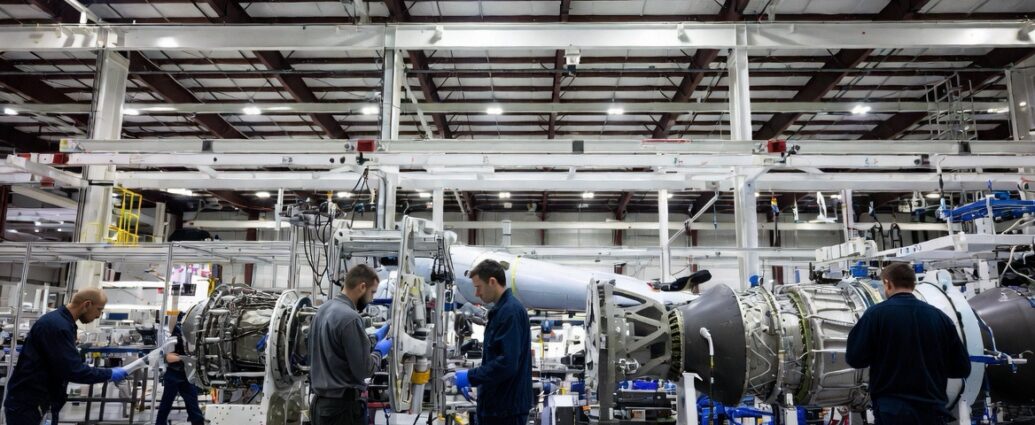
Defense contractors are heading into the second half of 2026 with the strongest order books in years, propped up by a Middle East war and a Washington spending plan that keeps getting bigger. The fiscal 2027 Department of War budget request earmarks roughly $60 billion for munitions development and procurement, including about $52.9 billion for critical munitions — a sign of how the government is rewiring the way it buys and replenishes weapons.
The political backdrop is even larger. President Donald Trump has proposed a $1.5 trillion defense budget for 2027, a substantial jump from the $901 billion approved for fiscal 2026. Spending bills of that size set the demand picture for the entire industry years in advance because most defense work is locked in through multi-year government contracts.
The urgency comes from the wider world. The war between the United States and Iran, ongoing since late February, along with tensions in Eastern Europe, has made military spending — in the words of Stifel analyst Jonathan Siegmann — “more urgent and less controversial.” When lawmakers from both parties agree that weapons stockpiles need refilling, the companies that build them gain unusually clear visibility into future sales.
Lockheed Martin, the world’s largest defense contractor, sits at the center of it. The company is anchored by the F-35 fighter jet, missile defense systems, and a large classified space business, and it has reported a record backlog of $194 billion. Lockheed has guided 2026 sales to a range of $92 billion to $93 billion. The stock trades around $525, up about 10% so far this year. The picture is not flawless: first-quarter adjusted earnings of $6.44 a share missed the $6.70 consensus estimate, dragged down by a $125 million unfavorable F-16 charge — a reminder that locked-in contract prices can cut both ways.
Northrop Grumman carries two of the military’s biggest long-term programs, the B-21 Raider stealth bomber and the Sentinel intercontinental ballistic missile program, with a backlog around $90 billion. Its shares trade near $542. General Dynamics builds the Navy’s submarines, one of the cleanest growth stories in the sector, while RTX, the parent company of Raytheon, manufactures many of the missiles and air-defense systems currently in highest demand and was the only major contractor to recently raise its 2026 outlook.
RTX has also drawn attention from the White House in a less favorable way. President Trump complained that Raytheon had been among the least responsive contractors to the needs of the Department of War and threatened to block contractors from paying dividends or repurchasing shares until they accelerate weapons production. The remarks briefly rattled defense stocks before they recovered, underscoring that the same government driving the spending boom can also pressure the companies benefiting from it.
The spending surge extends well beyond the household-name defense giants. Drone manufacturer AeroVironment has climbed more than 40% this year as militaries around the world invest heavily in unmanned aircraft and counter-drone systems. In Europe, where governments are boosting defense budgets under both domestic security concerns and U.S. pressure, shares of Britain’s BAE Systems, Italy’s Leonardo, Sweden’s Saab, and Germany’s Rheinmetall have all posted strong gains.
The broader story for taxpayers is where all that money ultimately goes. A $1.5 trillion defense budget means billions of dollars flowing into factories and facilities across states including Texas, Connecticut, California, Alabama, and Maryland, where major contractors and their suppliers employ tens of thousands of workers. Larger budgets typically translate into more hiring, more overtime, and more orders flowing through the vast network of subcontractors that provide everything from electronics and engines to software and specialized materials.
The industry’s optimism is reflected in its order books. Companies with large backlogs effectively have years of future revenue already committed under signed contracts. That visibility is rare in most industries and gives defense firms a level of predictability many technology, retail, and manufacturing companies would envy.
There are reasons for caution. Major defense contractors currently trade at roughly 22 to 25 times forward earnings, above their historical averages, meaning investors have already priced in much of the expected growth. Budget priorities can change with politics, and fixed-price government contracts have repeatedly created losses when development costs rise unexpectedly, as Lockheed’s recent F-16 charge demonstrated.
Still, the larger trend is difficult to ignore. Military conflicts, geopolitical competition, and the rebuilding of weapons inventories have created a powerful tailwind for defense spending across much of the world. As long as those conditions persist and Washington continues expanding military budgets, the companies sitting on record backlogs may enjoy one of the clearest growth runways available in the market.
JBizNews Desk | Washington
© JBizNews.com All Rights Reserved. Reproduction or distribution without written permission is prohibited.