Just days after President Trump signed a deal promising that the Strait of Hormuz would stay open and free, Iran has moved to take control of it — telling the world’s shipping companies they now need Tehran’s permission, and a government-approved insurance policy, to sail through the most important oil passage on earth. The order came in a document posted this week by Iran’s newly created Persian Gulf Strait Authority, which began processing vessel applications on June 18, the day the ceasefire took effect.
For now, the insurance is free; Iran says it is covering the cost. But the same document leaves the door open to charging later, stating that the authority “reserves the right to introduce insurance fees in the future” — wording that has alarmed shippers and oil producers who see it as the first step toward tolls on a waterway that has always been free to cross.
The rules go further. Iran says ships must obtain a navigation permit, follow a single approved route hugging its coastline near Larak Island, and avoid any alternative path. Straying from the route, the authority warned, would be treated as a violation that could trigger penalties or revoked passage.
Why does a strip of water matter this much?
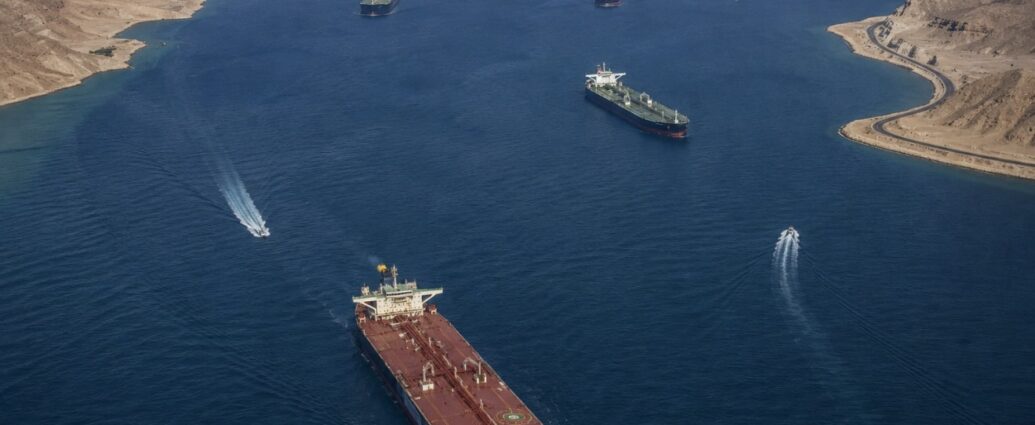
The Strait of Hormuz is barely 21 miles wide at its narrowest point, squeezed between Iran and Oman, yet roughly 20% of the world’s oil supply moves through it, along with massive volumes of natural gas and other commodities. Anything that raises the cost or risk of crossing it ripples outward into oil prices, shipping rates and, eventually, the prices consumers pay for fuel and goods.
Here is the problem for the White House: the move cuts directly against what Trump promised.
Throughout the conflict, Trump insisted that free passage through the Strait of Hormuz had to be part of any peace arrangement. The agreement he signed — known as the Islamabad Memorandum of Understanding — guarantees ships can cross without charges during its initial term. Yet within days, Iran is asserting authority over the waterway, requiring permits and insurance while reserving the right to impose fees after the agreement’s 60-day transition period expires.
In effect, critics argue, Tehran is building the framework for toll collection while the ink on the free-passage agreement is barely dry.
That has handed the president’s opponents new ammunition.
Republican critics including Sen. Roger Wicker of Mississippi and Sen. Bill Cassidy of Louisiana had already attacked the broader agreement as giving away too much leverage. Iran’s rapid effort to regulate passage through the strait strengthens arguments that Tehran may not view itself as constrained by the spirit of the deal.
For a president who presented the agreement as a demonstration of strength and stability, the optics are challenging. Critics say Iran’s actions create the appearance that it is attempting to rewrite terms almost immediately after the ceasefire.
The administration rejects that characterization.
Vice President JD Vance, who led negotiations for the United States, has repeatedly defended the agreement and said any benefits flowing to Iran remain contingent on compliance. Administration officials argue that the ceasefire has already reduced tensions, reopened shipping lanes and helped push oil prices lower.
On the water, the situation remains mixed.
Even as Iran announced its new requirements, U.S. officials reported that commercial vessels continued moving through alternative corridors near Oman’s coastline. Western naval forces have recommended those routes while mine-clearing operations continue in portions of the strait affected during the conflict.
A broader legal dispute is also taking shape.
The Persian Gulf Strait Authority was established by Tehran during the war and has since been sanctioned by the United States. Several Gulf nations have rejected its legitimacy and advised shipping companies not to recognize its authority.
Maritime experts note that international straits have historically been governed by principles of free navigation. Many governments argue that no country has the legal right to unilaterally impose tolls on a waterway that serves as a vital international trade corridor.
The United Arab Emirates has declared that the strait “cannot be held hostage by any country,” while Qatar has emphasized that international shipping routes must remain open to all nations.
Meanwhile, several U.S. allies, including Britain, are reportedly urging the administration to oppose any future transit-fee system.
The shipping industry itself is divided.
Many large shipping companies and energy producers oppose the concept outright, warning that fees would increase costs throughout the global economy. Others are taking a more practical view. Greek shipping billionaire Evangelos Marinakis recently suggested that some operators might be willing to pay modest fees if doing so guaranteed uninterrupted access and prevented future disruptions.
For American consumers, the implications are straightforward.
Gasoline prices have eased since the ceasefire reduced fears of prolonged disruption in the Strait of Hormuz. Additional permit requirements, insurance mandates or future transit charges could increase transportation costs and potentially reverse some of that relief.
Every additional cost imposed on tankers ultimately flows through supply chains, affecting fuel prices, shipping expenses and the cost of goods delivered around the world.
The next 60 days could determine whether the Strait of Hormuz returns to normal operations or becomes the center of a new economic confrontation.
If Iran attempts to impose fees once the transition period expires — and if shipping companies, Gulf governments and Western nations refuse to accept them — the result could be a fresh standoff over control of the world’s most important oil chokepoint.
This time, the battle may not be fought with missiles and warships, but with permits, insurance certificates and the economics of global trade.
JBizNews Desk | Gulf Region
© JBizNews.com All Rights Reserved. Reproduction or distribution without written permission is prohibited.