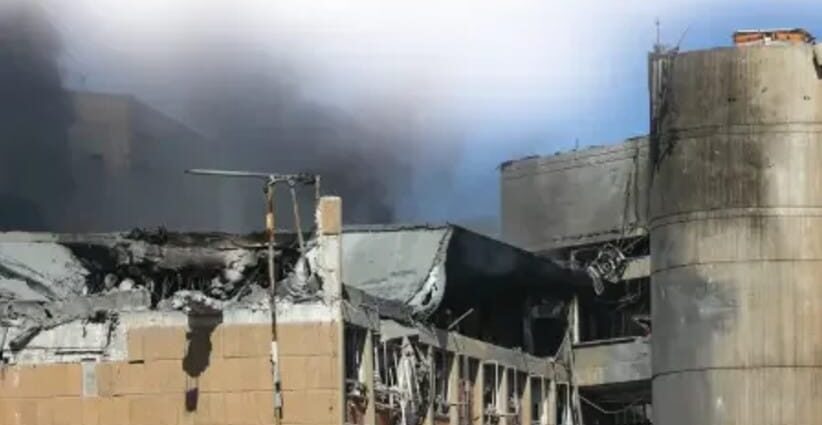
Soroka Medical Center in Beersheba is in the advanced planning stages for reconstruction one year after an Iranian ballistic missile struck the hospital.
As a result of the incident on June 19, 2025, the hospital lost 144 inpatient beds, though the building had been evacuated of patients a day earlier. Fortunately, there were no casualties.
“In the building that was hit, there were many wards and treatment rooms, operating rooms, and laboratories,” recalled Yarden Nevo, deputy director general of the hospital and head of its administration.
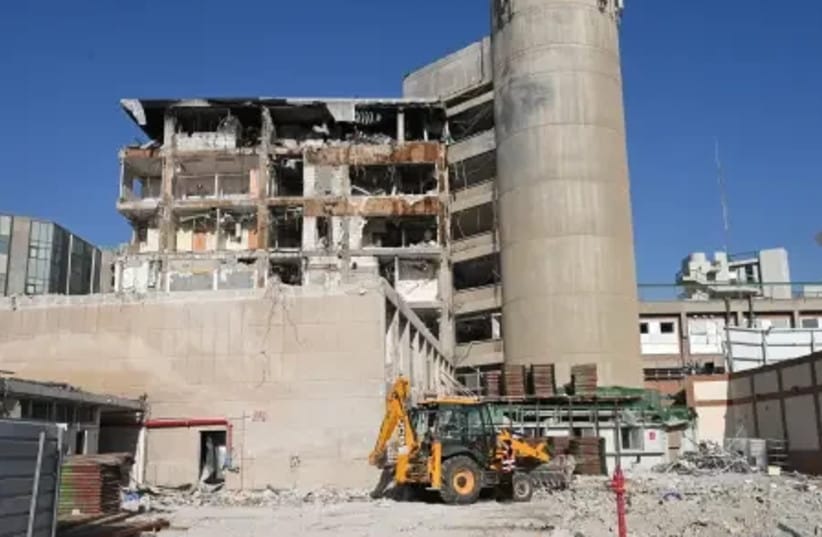
“The damage was extremely severe. In the ophthalmology department, for example, everything was destroyed. We saved what we could, and it was not much. The area that was directly affected underwent controlled demolition. The rest will be restored. The damage significantly reduced the scope of our operations; more than 30% of operating rooms were destroyed, but we quickly resumed operations. It requires a lot of effort and very creative capability from the teams,” Nevo said.
From Nevo’s office, the spot where the missile hit is clearly visible.
“In fact, the missile created a major opportunity for Soroka to move forward,” Nevo said.
The funding for the reconstruction process, estimated at about NIS 1.3 billion, comes from three sources: Clalit Health Services, the state treasury, and external donors. One of the benefactors is Sylvan Adams, who pledged $100 million.
“We are in advanced planning stages of the new inpatient tower,” Nevo said. “It will be very large, about 70,000 square meters. It will include inpatient wards, operating rooms, brain catheterization and cardiac catheterization units, a brain center, a heart center, a dialysis institute, and an underground parking facility that will serve as an emergency hospital when needed. It is expected to contain about 500 inpatient beds.”
The building plan was approved by the district planning committee in recent weeks, and construction is expected to take about seven years.
“It will be a state-of-the-art building, with modern standards, fully protected and with elements beyond what a medical center of this type usually contains,” the deputy director general said. “We are thinking about everything: the needs of families, the hospitalized, and the patients. The hospital will emerge much stronger.”
Hospital development is gaining momentum
The missile strike created urgent needs for Soroka, including the need to reopen the rehabilitation department. In the meantime, twenty-five inpatient beds were placed in a building outside Soroka, and later the entire department was moved there. Similarly, some of the operating room activities were transferred to the new Assuta hospital established in the city.
During the recent conflict with Iran, about 300 patients were discharged home or to other frameworks.
“We still had to find a way to treat those who arrived at the emergency department,” Nevo said. “It requires a lot of creativity and thought on the part of the clinical teams.”
In recent years, Soroka has been under enormous pressure, mainly due to the national security situation. The 2025 missile strike and the constraints it created made coping even more difficult. Alongside the return to full functionality, construction momentum continues.
“In the coming year, we will inaugurate four projects at the medical center,” Nevo said
“Soon we will open the expansion of the emergency department and trauma room, which will respond to the growing needs of the Negev population. Later, we will open three new buildings in the hospital’s northern campus: a protected neonatal intensive care unit building, a research building, and a rehabilitation building, which will include, for the first time in the south, pediatric rehabilitation as well. The various departments are being built based on population projections and their growth. An average of 17,000 births occur in Soroka’s delivery rooms each year. The accumulated experience is therefore very extensive,” Nevo explained.
Nevo proudly spoke of the team’s commitment to the special mission and their willingness to take on a lot of work, beyond their shift hours.
“Many of the team members are currently forced to work in temporary locations,” he noted.
The issue of medical workforce shortages in areas far from the center is well known. The new hospital will require hundreds of doctors and thousands of staff members. Training medical personnel typically takes about ten years.
“The effort to retain manpower, even in the period after the missile strike, is significant,” he said. “We say the department is the employee’s second home, and in this case, we had to provide many employees with an ‘alternative home.’ We are protecting the people, and therefore it is important to maintain hope and a future horizon.”
“When the missile hit, we carried out immediate repair work throughout the hospital, especially repairing infrastructure and essential systems, and we completely renovated departments in the internal medicine building,” he added. “We have recently begun rebuilding the northern operating rooms. At the same time, we are in advanced planning stages of longer-term projects, including adding two floors to the southern inpatient complex and a new protected building, the Rebirth Building. These are dozens of projects at different stages of execution and planning, which will bring Soroka to a stronger position for its staff and patients.”
The line between caregiver and patient can blur in times of struggle
There is a resilience unit at Soroka that was established long before the missile strike, dating back to the COVID-19 period. At that time, hospitals in Israel began to recognize that the burden on medical teams was not only physical and professional but also emotional and psychological. A concept was developed to identify distress early, address it openly, and integrate it into organizational life.
Dr. Yael Levaot, a specialist in community mental health and head of Soroka’s resilience unit, helped design this concept.
“The approach has proven critical since the outbreak of the war, and especially after the missile strike on the medical center,” she explained. “Trauma is also built from cumulative exposure, from ongoing alertness, from daily encounters with pain, loss, uncertainty, and sometimes from the awareness that the line between caregiver and victim can blur in an instant. Emotions are not dangerous, and psychological treatment is beneficial.”
Levaot emphasized the guiding principle of the Resilience Unit: “This is a unit that is constantly working to create a culture where staff members are allowed to say they are having a hard time, and it is important to get help. The goal is to ensure the integrity of the team members. We all get off balance sometimes and find ourselves on the continuum of those who need treatment.”
According to Levaot, in medical staff culture, the idea of receiving treatment is still difficult.
“It is true everywhere in the world,” she said. “It is hard for us to switch roles, to suddenly go from caregiver to patient. We say, ‘What do you mean, I need treatment? I am on the other side.’ But there are many situations in which caregivers also need support. Even though it is difficult for us to admit, we need it.”
There are many examples of these situations in medical work. “For example, the death of a patient or staff member,” she said. “Or the death of a baby after many days of hospitalization. When care teams have established relationships with the family, and suddenly their systems collapse, and they are forced to inform the family of their death. After events like these, staff members experiencing difficult feelings know that someone can help them. They reach out, talk about it, and also mention colleagues, and then I can contact them myself. The response to these experiences is very personal, and we provide something very accessible. The message is: I see your suffering. I am with you. It can truly help.”
The mind, like the body, heals slowly after an injury. “I want to see progress, so we will continue offering help to caregivers and make them feel like someone cares about them,” she explained. “For example, we have about 200 doctors who are also reservists. They have dangerous missions. Sometimes they fail to save people, and they take it personally. That’s where I’m looking to get my foot in the door, to find opportunities to let them speak. The sooner we intervene, the more suffering we can prevent.”
What makes the unit unique is that it does not wait for employees to request help; instead, it proactively reaches out.
Rather than just individual treatment, the unit works with managers, departments, peer dialogue, and organizational spaces to strengthen a sense of belonging, cohesion, and meaning. Within 72 hours of the missile strike, contact was made with about 1,700 employees from the affected areas, and the organization consistently and continuously supported the adaptation and recovery process and referred those in need to treatment
Dr. Lebaot’s articles in “Medicine” magazine over the past three years reflect a complex picture. Medical teams continue to treat, operate, and function completely even in times of emergency and distress, but at the same time, they carry with them experiences of fear, helplessness, mental fatigue, loss of security, and also deep questions about meaning, identity, and the ability to continue.
For this reason, the Resilience Unit at Soroka is built on principles of community mental health: not seeing distress solely through the individual’s eyes, but also in the broader context of community, organization, interpersonal relationships, and a shared narrative.
“Resilience is not the absence of pain,” Levaot said, “but the ability to keep moving through it, together.”