China struck back at the Pentagon on Monday, banning exports to 10 American companies, including the only U.S. firms working to build a rare earth supply chain that does not run through Beijing. The order came from China’s Ministry of Commerce, which said it was punishing Washington for adding Chinese firms to a military blacklist earlier this month.
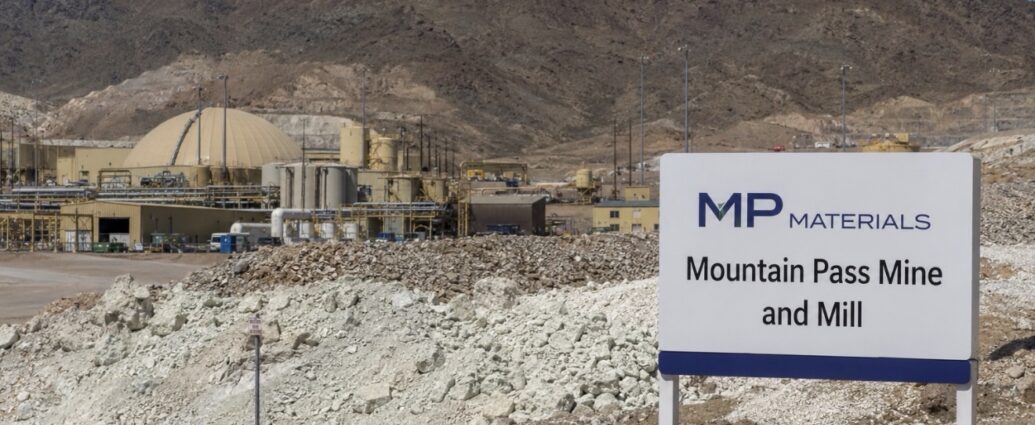
The hardest hit are MP Materials Corp and USA Rare Earth, two leading U.S. producers of rare earth minerals. Rare earths are the magnets and metals inside almost everything modern, from smartphones and electric cars to fighter jets, wind turbines and home appliances. China controls most of the world’s supply, and these two companies sit at the center of America’s push to change that.
The Commerce Ministry placed the 10 firms on its export control list and imposed a full ban on shipping any Chinese-origin “dual-use” goods to them. That is a step up from the old rules, which only required a license. The ban reaches around the world: any company anywhere is now barred from passing Chinese-made dual-use materials to the listed American firms. Also named were drone makers Teal Drones and Jaia Robotics, both owned by Red Cat Holdings, plus motor manufacturer Aveox and Ball Aerospace & Technologies Corp.
China went a second route at the same time. Its Ministry of Finance barred Chinese government buyers from purchasing products from 46 separate U.S. companies. American-owned businesses operating inside China were left out of that procurement ban.
The trigger was a move in Washington. On June 9, the Pentagon updated what it calls its 1260H list, a roster of companies it believes help China’s military. It added some of China’s biggest names, including Alibaba Group, Baidu, electric-car maker BYD and NIO. Being on that list does not bring instant sanctions, but it bars the U.S. Department of Defense from signing direct contracts with those firms starting June 30, with tighter rules on indirect purchases in 2027. In practice, the label scares off other federal agencies and private partners too.
China’s Commerce Ministry said the Pentagon acted with what it called malicious intent and ignored the understanding reached when President Donald Trump and Chinese leader Xi Jinping met in Beijing last month. That meeting had kept a fragile trade-war truce alive. Beijing framed its own export ban as a matter of national security and its non-proliferation duties.
There is a sharp irony in which companies China picked. MP Materials is backed by the Pentagon itself. The Pentagon put $400 million into the company in July 2025 and became its largest shareholder. MP Materials runs the only active rare earth mine in the United States, at Mountain Pass, California. By hitting it, Beijing aimed straight at the heart of America’s plan to wean itself off Chinese minerals.
That plan still has a long way to go. The United States produced its most rare earth material in decades last year, yet domestic mines covered only about a third of what the country used. The rest was imported, roughly 71% of it from China. So even as Washington races to build its own supply, it still leans heavily on the country it is fighting with.
Some experts say Monday’s move stings less than it looks. Han Shen Lin, China country director at the consultancy The Asia Group, said the countermeasures are largely symbolic. Most of the targeted American companies have little or no real business inside China, so a ban on selling to them or buying from them does not change much day to day.
The bigger worry is what it signals. For more than a year the two governments have traded blacklists, tariffs and export limits while trying not to tip back into a full trade war. Rare earths are China’s strongest card. By aiming its controls at the exact firms America is using to escape that grip, Beijing showed it is willing to play that card rather than just hold it.
For U.S. manufacturers, the stakes are real. Rare earth magnets go into car motors, missiles, jet engines and the gadgets in most people’s pockets. Aerospace makers have already warned of shortages of materials like yttrium, used to keep engine parts from melting. Any squeeze on supply can raise costs and slow production, and those costs eventually reach the people buying the cars and electronics.
Here is the plain bottom line. The new bans hit a small number of companies and may not move prices this week. The longer story is a slow, expensive race: America trying to build a rare earth industry of its own, and China using its dominance to make that race as hard as possible.
JBizNews Desk | New York
© JBizNews.com All Rights Reserved. Reproduction or distribution without written permission is prohibited.