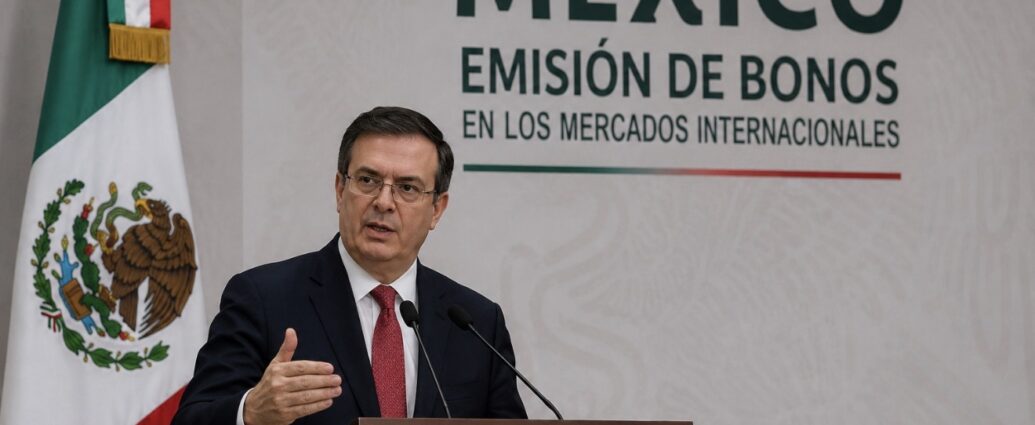
The government of Mexico is tapping international investors again. On Monday, June 22, the United Mexican States filed a preliminary prospectus supplement with the U.S. Securities and Exchange Commission to sell new dollar-denominated bonds, with the proceeds aimed largely at buying back shorter-dated debt it already owes. The filing lays out a two-part deal: a new benchmark of Global Notes due 2037 and an additional issue of 6.750% Global Notes due 2056.
The 2056 portion is not a brand-new bond but a reopening. According to the filing, those notes will be consolidated with, and become fungible with, the $2 billion of 6.750% 2056 notes Mexico sold on January 9, carrying the same terms and identification numbers. Tacking onto an existing line is a common tactic for governments because it deepens a single bond’s trading pool, which tends to make it easier to buy and sell. Mexico is marketing the combined sale at roughly $6.3 billion, with the proceeds earmarked primarily to repurchase outstanding shorter-dated international bonds and extend the country’s debt maturity profile.
The structure is classic liability management: borrow fresh money at today’s rates and use it to retire bonds coming due sooner, pushing the repayment calendar further out. The 2037 notes will pay interest each February and August, beginning in 2027, while the reopened 2056 notes make their first interest payment on August 9. Mexico retains the right to redeem either series before maturity. The two offerings are independent and not conditioned on each other, meaning the government can complete one even if it pulls the other.
For Mexico, the move fits a pattern of front-loading its borrowing early and often. The country opened 2026 on January 5 with a $9 billion three-part deal — its second-largest dollar offering on record — selling $3 billion of 5.625% notes due 2034, $4 billion of 6.125% notes due 2038, and $2 billion of the 6.750% 2056 bonds now being reopened. That sale drew about $30 billion in orders, more than three times the amount offered. In February, the Finance Ministry added roughly $2 billion in sustainable peso-denominated bonds at home.
The logic is to lock in funding before conditions can turn. Borrowing costs across emerging markets remain elevated, and the U.S. Federal Reserve’s recent hawkish turn under new Chair Kevin Warsh, which has lifted U.S. Treasury yields, raises the baseline against which Mexico and its peers must price their debt. By repaying near-term maturities now, Mexico reduces the pile of bonds it would otherwise have to refinance in a possibly tougher market later, and signals to investors that it is managing its obligations actively rather than waiting for bills to come due.
The country has become one of the most active borrowers in the developing world. Analysts have projected Mexico will raise around $25 billion in international markets this year, a pace that could make it 2026’s largest emerging-market sovereign issuer, ahead of Saudi Arabia, Poland and Turkey. Part of that heavy schedule reflects the financing needs tied to state oil company Pemex, whose own debt load has repeatedly drawn on the sovereign’s support and market access.
The deal also carries a read for ordinary investors and businesses. Sovereign bond sales like this one set the benchmark borrowing cost for an entire economy: when Mexico prices its government debt, the yields ripple outward into what Mexican banks, exporters and large companies pay to borrow in dollars. Strong demand and tight pricing tend to signal investor confidence in the country’s finances, while weak demand or higher yields can raise costs across the board. That makes Monday’s transaction a useful gauge of how global money managers view Mexico heading into the second half of the year.
Final pricing confirmed strong institutional demand, with the transaction serving both as a financing tool and a debt-management exercise. The same major international banks that have led Mexico’s recent dollar offerings acted as underwriters and dealer managers, handling both the new bond sale and the concurrent repurchase effort.
JBizNews Desk
© JBizNews.com All Rights Reserved. Reproduction or distribution without written permission is prohibited.