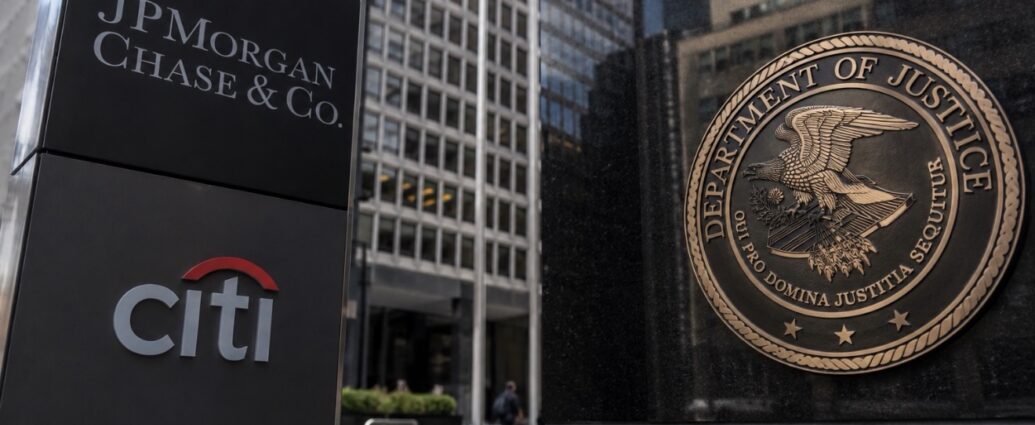
Two of Wall Street’s biggest banks have been pulled into a federal inquiry involving Iran. According to officials familiar with the matter, the U.S. Department of Justice is examining whether JPMorgan Chase and Citigroup played a role in processing funds linked to a business network associated with Iranian Supreme Leader Mojtaba Khamenei. The investigation was first reported by Bloomberg News on June 18. Both banks and the Justice Department declined to comment, and no charges have been filed.
The review is part of a broader Justice Department examination into alleged money laundering and corruption involving entities tied to Khamenei. Investigators are examining large money transfers between firms connected to his network and the role that U.S. correspondent banks may have played in processing those transactions. Officials cautioned that the existence of an inquiry does not imply wrongdoing by any institution and noted that such reviews often conclude without enforcement action.
The figure at the center of the inquiry has become one of the most influential people in Iran. Khamenei became supreme leader in March 2026 following the death of his father during the Iran conflict. He was sanctioned by the United States in 2019. Prior reporting has described a business network spanning shipping interests, overseas bank accounts and real-estate holdings across Europe and the Middle East.
Part of the scrutiny reportedly involves financier Ali Ansari, whom the United States sanctioned in October 2025 for alleged support of Iran’s Islamic Revolutionary Guard Corps. U.S. authorities allege that shell companies were used to acquire luxury hotels and commercial properties across Europe. Ansari’s legal representatives have denied any connection to Khamenei.
For the banks, the inquiry raises compliance questions. Large global institutions such as JPMorgan and Citigroup process trillions of dollars in international payments and are required to maintain extensive anti-money-laundering and sanctions-screening programs. A federal review could examine whether those controls functioned as intended and whether additional safeguards are needed.
The timing is notable. The inquiry surfaced as Washington and Tehran pursue diplomatic negotiations and as regulators continue warning financial institutions about Iranian sanctions-evasion techniques, including the use of shell companies, third-country intermediaries and digital assets. For now, the likely response from the banking sector will be enhanced monitoring and cooperation with investigators as authorities continue tracing the transactions in question.
JBizNews Desk
© JBizNews.com All Rights Reserved. Reproduction or distribution without written permission is prohibited.