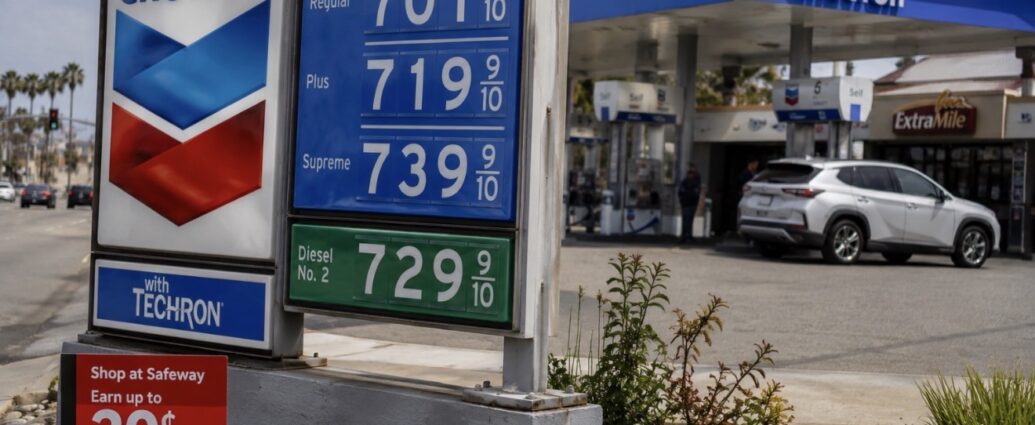
Some of the biggest names in fuel retailing are being accused of using artificial intelligence to quietly inflate what Californians pay at the pump. In a proposed class-action complaint filed Monday, June 22, in federal court in Sacramento, a group of California drivers alleged that gas station operators including BP, Marathon Petroleum, Walmart, 7-Eleven, Albertsons and Alimentation Couche-Tard’s Circle K used a shared AI pricing tool to “coordinate high prices and wring more money from the pockets of consumers.” The companies have not yet responded to the claims.
At the center of the suit is software from Kalibrate Fuel Systems, a fuel-pricing technology firm. According to the complaint, the defendants — which together operate more than 1,700 filling stations across California — fed the tool confidential data and let it automatically adjust prices based on what nearby competitors were charging. The drivers argue that routing pricing decisions through a single common algorithm let rivals effectively set prices in lockstep without an old-fashioned smoke-filled-room agreement.
“Defendants have conspired to put an end to competition, joining an AI-powered trust to ensure that no matter where a driver turns, the price for gasoline is artificially high,” the complaint states.
The alleged cost to consumers is steep. The suit claims the tool pushed gasoline prices up by as much as 22 to 30 cents a gallon, and diesel by as much as 33 cents, in areas where a high share of stations used it. Because of the size of California’s market, every additional penny per gallon costs the state’s drivers roughly $134 million a year, according to figures cited in the filing. The alleged inflation came on top of pump prices that had already surged during recent energy-market volatility.
The case leans on two legal hooks. It accuses the operators of violating California’s primary antitrust law, the Cartwright Act, and of running afoul of Assembly Bill 325, a state law that took effect January 1 and was written specifically to address algorithmic price-fixing concerns. The lawsuit is among the first major tests of AB 325, making it a closely watched case for businesses using automated pricing systems.
The defendants are heavyweight, publicly traded companies, which raises the stakes well beyond California’s gas stations. BP and Marathon Petroleum are among the largest fuel suppliers in the country. Walmart and Couche-Tard are major retailers. Albertsons and 7-Eleven operate fuel stations alongside their core businesses. Kalibrate, the software vendor, sits at the center of the alleged scheme, though the complaint focuses primarily on the retailers using the technology. None of the companies has publicly commented on the allegations, which remain unproven.
The lawsuit follows growing regulatory scrutiny of fuel pricing. In May, California’s Division of Petroleum Market Oversight, an independent watchdog within the California Energy Commission, issued subpoenas to some station owners over elevated gasoline prices. The legal theory also mirrors arguments increasingly advanced by federal antitrust regulators, who have contended that competitors using a common pricing algorithm can form what is known as a “hub-and-spoke” conspiracy even without direct coordination among themselves.
For businesses, the case is a warning shot about a rapidly expanding technology. Pricing algorithms that analyze market conditions and competitor data have become common across retail, real estate, hospitality and fuel sales because they can optimize margins in real time. But lawmakers and regulators are increasingly questioning where optimization ends and unlawful coordination begins. California’s case could help shape how courts nationwide approach AI-driven pricing systems.
The drivers are seeking unspecified damages on behalf of California consumers who purchased fuel at affected stations. Whether the lawsuit ultimately succeeds may depend on a question courts are only beginning to address: when an algorithm sets the price, who bears responsibility for the outcome? The answer could have implications far beyond the gas pump, reaching industries across the economy that now rely on AI to make pricing decisions.
JBizNews Desk
© JBizNews.com All Rights Reserved. Reproduction or distribution without written permission is prohibited.