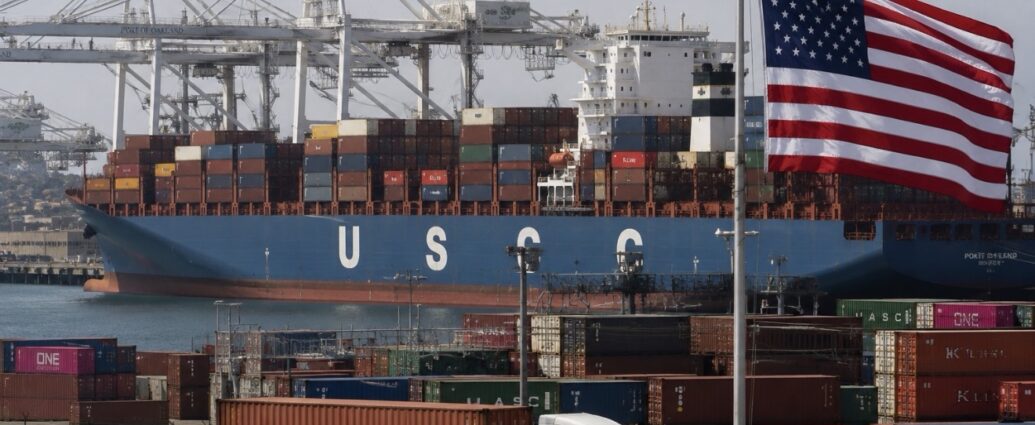
The U.S. Census Bureau reported Friday that America’s advance goods trade deficit jumped to $105.8 billion in May, up a sharp $22.7 billion from April’s revised $83.0 billion and the widest monthly gap in more than a year. The figure came in the agency’s Advance Economic Indicators Report and badly missed Wall Street forecasts, which had centered near $85 billion.
The swing was driven by both ends of the trade ledger. Goods exports fell $11.8 billion to $207.7 billion in May, while goods imports rose $10.9 billion to $313.4 billion. A drop in exports paired with a jump in imports is the textbook recipe for a wider deficit, and it landed in a single month.
The May blowout interrupts what had been a steady narrowing. Through April, the Census Bureau had logged a goods deficit that fell to $82.4 billion, with exports hitting a record $219.7 billion. For the January-April stretch, the cumulative goods gap had dropped to roughly $330 billion from about $549 billion in the same span of 2025, as the tariff-driven import rush of early 2025 unwound.
May reversed that story. The wider deficit subtracts directly from gross domestic product, because imports count against growth in the national accounts. The reading matters for the second-quarter scorecard, and forecasters had already trimmed their Q2 GDP nowcasts before the release.
The numbers also reignite the tariff debate. Companies spent much of 2025 pulling shipments forward to beat duties, then pulled back, producing the wild monthly swings now showing up in the data. A one-month surge in imports suggests some firms restocked shelves and warehouses heading into summer, even as exports softened.
The trade balance carries weight beyond economists’ spreadsheets. A weaker export month points to softer foreign demand for American-made goods, feeding into factory output, shipping volumes and manufacturing payrolls. Importers, meanwhile, continue paying tariffs at the border that often work their way through to consumer prices.
Wholesale inventories rose 0.3% in May to $944.0 billion, while retail inventories climbed 0.6% to $832.2 billion, the Census Bureau said. Building stockpiles can indicate businesses expect steady sales, though it can also signal goods are accumulating faster than consumers are buying.
The advance report provides markets with an early, near-complete look at U.S. goods trade roughly three to four weeks after the month closes. The full report, including services, will be released in early July through the comprehensive FT-900 report published jointly by the U.S. Census Bureau and the Bureau of Economic Analysis. Because the United States typically runs a surplus in services, that report often narrows the overall trade deficit.
For now, the May reading serves as another reminder that America’s trade picture remains volatile and politically charged. The Trump administration has promoted tariffs as a tool to reduce the trade deficit and bring manufacturing back to the United States. A monthly deficit this large complicates that narrative and gives critics new ammunition to argue that tariffs continue disrupting supply chains without producing a lasting reduction in the trade gap.
The next advance goods trade report, covering June, is scheduled for release in late July. Until then, May’s results leave the trade story in familiar territory: long-term improvement mixed with sharp month-to-month swings that continue to reshape expectations for economic growth, manufacturing activity and U.S. trade policy.
JBizNews Desk
© JBizNews.com All Rights Reserved. Reproduction or distribution without written permission is prohibited.