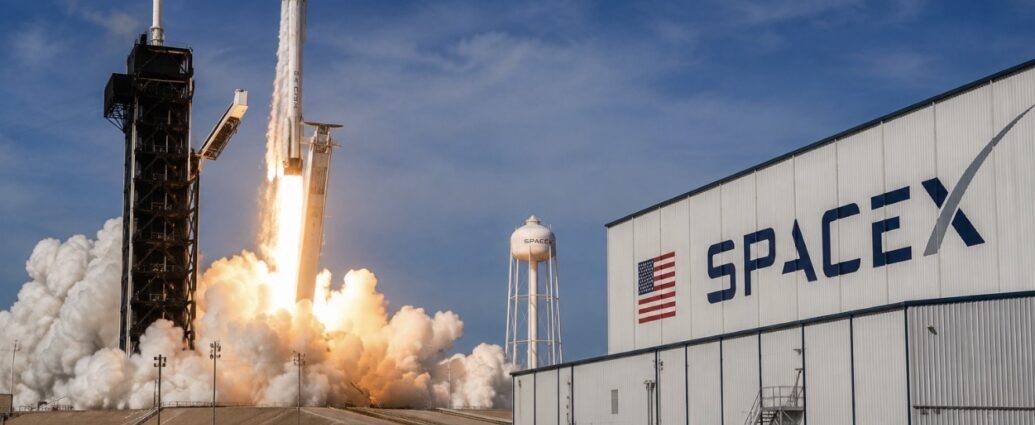
SpaceX joins the FTSE Russell indexes at Friday’s close, marking the latest step in a rapid series of benchmark additions that is forcing index funds to purchase billions of dollars’ worth of shares in the newly public aerospace giant while setting up a direct battle with investors betting the stock will fall. Trading on the Nasdaq under ticker SPCX since its June 12 debut, the company is being added to major stock indexes at an unprecedented pace for a company of its size.
The company’s initial public offering shattered records. SpaceX priced its IPO at $135 per share, opened at $150, and finished its first trading day near $161, raising approximately $75 billion in the largest IPO ever completed and valuing Elon Musk’s company at more than $2 trillion.
What happens after the IPO may prove even more unusual. Because index funds are required to own the stocks included in the benchmarks they track, every major index addition automatically creates billions of dollars in mandatory buying. CRSP indexes added SPCX on June 18, FTSE Russell follows Friday, and MSCI is expected to include the company during the final days of June, with each addition bringing another wave of passive investment.
The market dynamics are amplified by the company’s exceptionally small public float. Elon Musk continues to own approximately 49% of the company, while insiders control much of the remaining stock, leaving only about 4% to 5% of shares available for public trading. That combination of limited supply and mandatory institutional buying creates conditions for unusually large price swings.
The situation has created a high-stakes contest between two groups of investors. Short sellers believe the company’s $2 trillion valuation significantly exceeds its current financial performance and are betting shares will decline. Index funds, meanwhile, have no discretion—they must buy the stock regardless of price on scheduled inclusion dates. When large mandatory purchases collide with a limited number of available shares and aggressive short sellers, volatility often increases dramatically.
Even larger buying pressure could arrive soon. Under revised Nasdaq rules, SPCX becomes eligible for inclusion in the Nasdaq-100 approximately 15 trading days after its public debut, potentially in early July. That addition alone would require major exchange-traded funds such as the Invesco QQQ Trust to purchase billions of dollars in shares. Analysts estimate total mechanical buying associated with the Nasdaq-100 and Russell 1000 could eventually reach between $22 billion and $27 billion.
One major benchmark provider has taken a different approach. S&P Dow Jones Indices declined on June 4 to accelerate SpaceX’s eligibility for the S&P 500, maintaining its longstanding requirement that companies demonstrate profitability over both the latest quarter and the previous twelve months. As a result, SpaceX is not expected to become eligible for the S&P 500 until at least mid-2027, delaying purchases by funds tracking indexes such as SPY and VOO.
The company’s rapid inclusion is also reshaping the broader index industry. Nasdaq, FTSE Russell, and CRSP modified eligibility rules to accommodate exceptionally large, low-float IPOs, while S&P Dow Jones Indices and MSCI have generally maintained more conservative standards. That divergence means investors’ exposure to SpaceX increasingly depends on which index funds they happen to own.
For millions of retirement investors, ownership will occur automatically. Anyone holding a Nasdaq-100 or total-market index fund through a 401(k) or similar retirement account will gain exposure to SpaceX without making an investment decision themselves, regardless of whether they believe the company’s valuation is justified.
Future share lockups also remain an important consideration. SpaceX structured staggered release periods allowing certain insiders to sell shares only weeks after the IPO, while restricting Elon Musk and several major investors from selling for 366 days. As those restrictions expire, the number of publicly traded shares will increase, potentially placing downward pressure on the stock even as continued index buying provides support.
The result is one of the most unusual market events in recent history: the largest initial public offering ever completed, an exceptionally small public float, billions of dollars in scheduled institutional buying, and a growing community of investors wagering that the shares remain significantly overvalued. Throughout the remainder of 2026, SPCX is likely to become one of Wall Street’s most closely watched tests of what happens when passive investment flows collide with a limited supply of publicly available stock.
JBizNews Desk
© JBizNews.com All Rights Reserved. Reproduction or distribution without written permission is prohibited.