Prime Minister Benjamin Netanyahu appeared on Saturday in front of a large map of Lebanon showing a new security zone that Israel has vowed to hold onto in Lebanon. How long Israel will stay, and what exactly will happen in the zone remains to be seen. So far, Israel has forced most of the civilians to evacuate the area, and has razed some of the villages within it. This is a policy borrowed from Gaza, made possible by an international community that feels this new policy is acceptable; and by US support for it.
The new security zone looks a lot like the old one from the era of the 1980s and 1990s. There are some key differences. In the old days Israel had a local partner force called the South Lebanon Army. This group was able to work with the local population and also help fight Hezbollah and other threats. In those days Israeli soldiers were used to working among an Arab population. They had done it in Gaza and the West Bank.
Today things have changed. Israel prefers to have zero civilians among or near IDF soldiers. This is partly a result of a lot of the changes since the Second Intifada. While there are elements of Israel’s security forces that speak Arabic and work with Arabs, the overall sense is that the big army shouldn’t have to deal with civilian affairs. There is a logic to this. Armies are not very good at dealing with civilians. Armies don’t have civilian powers. For instance, in the West Bank the IDF is sometimes called upon to separate violent Israeli citizens who are attacking Arab civilians, or vice versa. The army can’t arrest people, that is a police job. Therefore IDF soldiers, who are conscripted to their units but volunteer for combat roles, are forced into an impossible situation. Soldiers don’t make for good riot control units. As such, forcing soldiers to deal with civilians in Lebanon would be a recipe for problems down the road.
Israel’s decision to order the evacuation of the population in southern Lebanon, and essentially remove the Shi’ite population, looking like a semi-permanent policy now. As in Gaza, the civilians have been moved away from the border. In theory this is supposed to prevent another October 7. Any student of military history knows that armies tend to prepare for the last war, meaning they prepare for the wrong war. The French after the First World War built the Maginot Line, assumed wrongly that the next war would be fought in trenches. Instead, the enemy came with massed tank formations.
Israel’s doctrine has become one of buffer zones
The chances of another October 7 type of attack is very low. Hezbollah may have trained for such an attack but when Hamas carried it out, Hezbollah put the plans on the back burner. Hezbollah no longer has this capacity. Could it repair the capacity in the next decade? Anything is possible. Therefore, Israel’s doctrine has become one of buffer zones; in Lebanon, Gaza and Syria. The concept is to move the possible enemy further away. Since the enemy works among the civilians, the concept becomes one of moving the civilians away and then razing most of the buildings near the border. This creates a no-man’s land, a zone of nothingness near the border. Into that zone, the IDF is then inserted.
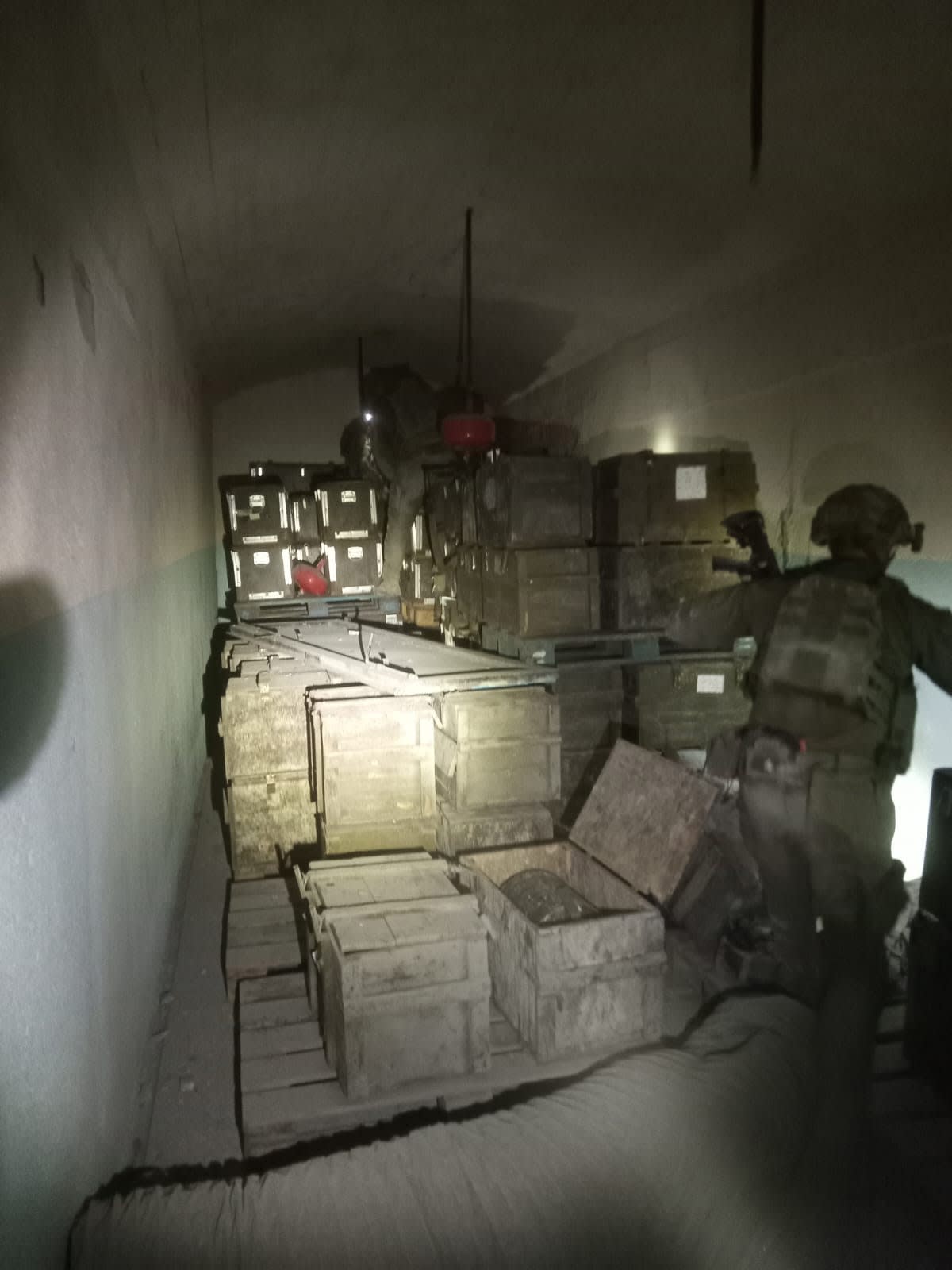
The challenge for the IDF in the zone is going to be to not become complacent. Armies sent to man static defensive lines tend to have a habit of becoming complacent. They settle into routine. This is what happened along the border of Gaza before October 7. Moving the border in Lebanon a few miles north may help protect Israeli civilians from infiltration attacks. On other threats, it kicks the can down the road. The enemy has moved to using fiber optic drones. The enemy will keep changing. The IDF will need to change with the enemy. Rockets and drones have a range to reach Israeli border communities even with the new security zone. However, the range of ATGMs and some types of weapons now cannot reach the border, or at least the enemy has a harder time using these weapons.
Bringing peace of mind to Israel-Lebanon border communities
This will bring some peace of mind to the communities on the border. Israel evacuated these communities, tens of thousands of people, after October 7. The whole city of Kiryat Shmona was evacuated and made a ghost town for a year. This was a national disaster that had never befallen Israel before. In the past, Israeli prime ministers never evacuated Israelis from the border. The October 7 doctrine became one of evacuating Israelis and then waging a long war and then carving out buffer zones, in the hopes Israelis might return. The policy of evacuating Israelis was not extended to the communities in the West Bank. Those communities, even if threatened, stayed. Only historic communities built prior to 1967 were evacuated. Why this was the case, was not clear. It’s not clear today if a lesson has been learned not to evacuate again, or if another threat will come with more evacuations. Creating buffer zones is supposed to end that trend.
The challenge for Israel will be to see if the new security zone in Lebanon, shown in all its newfound reality on the map the prime minister showed on June 27, will remain. Israeli officials, such as the defense minister, say that it will remain. This is presented as a vow. However, times change and administrations change. A new framework deal with Lebanon, signed with the US, is supposed to have Lebanon try to remove Hezbollah and this would allow the IDF to “redeploy” in some areas.
What the text of the 14-point plan says is that “the Government of Israel and the Government of Lebanon commit to a reciprocal, sequenced process, with clear conditions, whereby the LAF will restore effective sovereign authority over all Lebanese territory, pending the verified disarmament of non-state armed groups and dismantlement of associated infrastructure, enabling the Israel Defense Forces (IDF) to progressively redeploy out of the Lebanese territory.” It also says that “successful implementation of this Framework will pave the way for a stable and peaceful relationship between the two countries and will enable the IDF to redeploy out of the Lebanese territory.”
The text also notes that “the LAF will gradually assume full and effective security responsibility in pilot zones, which will serve as the mechanism for phased and verified redeployments of the IDF and the deployments of the LAF.” So far only two “pilot” zones have been determined in Lebanon where the IDF and LAF will try to coordinate. “Upon the confirmation of successful disarmament of non-state armed groups and dismantlement of their infrastructure in these zones, the LAF will assume full and effective security responsibility in these zones, internationally supported reconstruction efforts will begin, and Lebanese civilians will be able to safely return to these areas under the exclusive control of Lebanese state authorities.”
Time will tell if this happens.