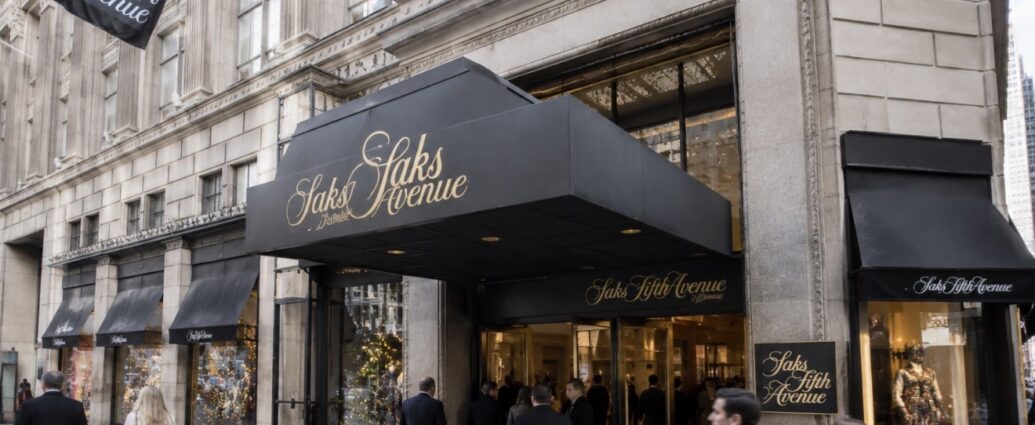
The parent company of Saks Fifth Avenue, Neiman Marcus and Bergdorf Goodman officially emerged from Chapter 11 bankruptcy on Friday, June 26, with a new corporate name, substantially less debt and a significantly smaller store footprint. Saks Global announced it has renamed its corporate parent Exemplar Luxury Group, and Chief Executive Geoffroy van Raemdonck told The Associated Press in a phone interview that the company is ready for a new chapter after several difficult years.
“Today is really a brand new day for the organization,” van Raemdonck said, describing the restructuring as a fresh start for three of America’s most recognizable luxury department store brands.
The restructuring reduced the company’s debt by nearly 75% and injected approximately $500 million in new financing, leaving the retailer with additional liquidity to support daily operations and invest in its stores. Van Raemdonck said the new corporate identity reflects a commitment to higher standards for the brands it represents, the customers it serves and the employees who work throughout the organization.
Consumers will not notice any changes to the store names. Shoppers will continue visiting Saks Fifth Avenue, Neiman Marcus and Bergdorf Goodman, while Exemplar Luxury Group will exist solely as the parent company overseeing the portfolio.
The financial reset comes with a dramatically smaller retail footprint. The company now operates 49 full-line stores consisting of 15 Saks Fifth Avenue locations, 33 Neiman Marcus stores and the single Bergdorf Goodman flagship on Manhattan’s Fifth Avenue. Meanwhile, the company’s Saks Off 5th discount business has been reduced to just 12 locations after the closure of most of its outlet stores.
The company’s financial troubles stem largely from its ambitious expansion. Saks Global completed its $2.7 billion acquisition of the Neiman Marcus Group in December 2024, betting that combining several of the nation’s premier luxury retailers would generate greater purchasing power and operating efficiencies. Instead, the combined company struggled under its debt burden and fell behind on payments owed to many of the luxury brands and vendors supplying its stores.
The company filed for Chapter 11 bankruptcy protection in January, and a Texas bankruptcy court approved its restructuring plan in early June, allowing the retailer to complete one of the fastest major retail bankruptcies in recent years.
A newly formed board of directors will now oversee the company. Pentwater Capital Management and Bracebridge Capital, the investment firms that supported the restructuring, will each appoint two members to the seven-person board. Van Raemdonck will also serve on the board alongside two independent directors with extensive retail experience.
Those independent directors include Dave Kimbell, former Chief Executive of Ulta Beauty, who previously held executive roles at PepsiCo and Procter & Gamble and currently serves on the board of Best Buy, and Philippe Schaus, the former head of Moët Hennessy and previously Chief Executive of DFS Group, where he spent more than a decade on the executive committee of luxury giant LVMH.
Looking ahead, van Raemdonck said management’s primary objective is to clearly differentiate each of the three retail banners so they appeal to distinct luxury customers rather than competing against one another. He believes operating under one corporate umbrella will allow the company to spread investments in technology, merchandising and staffing across all three brands more efficiently than if each operated independently.
He also said the company has already begun repaying key vendors and rebuilding merchandise inventories, important steps toward restoring confidence among luxury fashion houses whose products drive customer traffic.
The broader challenge remains the luxury consumer. While many retailers continue to face cautious spending, van Raemdonck expressed confidence that affluent shoppers remain willing to spend on premium brands. He pointed to successful product launches, exclusive in-store events and luxury trunk shows that generated record sales over the past year, arguing that consumers continue responding when brands deliver compelling merchandise and experiences.
The outcome extends well beyond the company’s own balance sheet. Saks Fifth Avenue, Neiman Marcus and Bergdorf Goodman serve as anchor tenants in premier shopping districts and major malls across the country while providing an important sales channel for luxury fashion, jewelry and accessories brands. Every store closure affects employees, suppliers, designers and commercial landlords alike.
With bankruptcy now behind it, Exemplar Luxury Group begins its next chapter as a smaller, financially stronger retailer. The challenge ahead will be proving that a leaner organization with less debt can succeed where its larger predecessor struggled—delivering sustainable profits while serving an increasingly selective luxury consumer.
JBizNews Desk | New York
© JBizNews.com All Rights Reserved. Reproduction or distribution without written permission is prohibited.