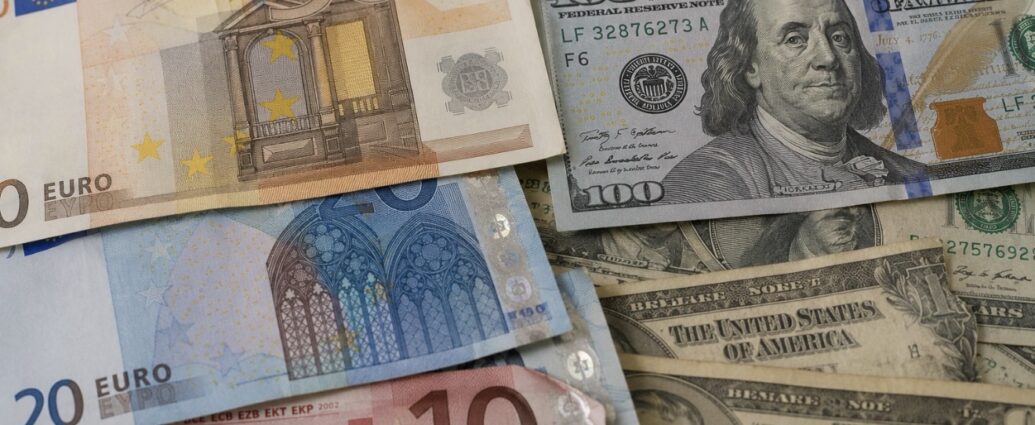
For most of this year, big banks were betting the euro would keep climbing against the U.S. dollar. Now that trade is unraveling. J.P. Morgan Global Research has turned bearish on the euro for the first time in a year, cutting its forecast for the EUR/USD exchange rate from around 1.20 to a range of roughly 1.13 to 1.15 over the next three quarters, and other forecasters who had called for a much stronger euro are quietly being overtaken by events. The shift follows hawkish turns by both the European Central Bank and the Federal Reserve, and it has helped drive the U.S. dollar to its highest level in more than a year.
To understand the reversal, it helps to know what was supposed to lift the euro in the first place. Currencies tend to move on the gap between interest rates set by different central banks, because higher rates attract money seeking better returns. The bullish case for the euro rested on the idea that the Fed would keep cutting rates while the ECB held steady, narrowing the rate gap and pulling money toward Europe. Investors also pointed to German government spending plans and a fading sense of American economic dominance. That story powered the euro’s rally to about 1.20 in January.
Then the script flipped. The ECB raised its key rate on June 11, its first increase since 2023, lifting the deposit rate to 2.25 percent as eurozone inflation climbed to its highest level since 2023. Days later, on June 17, the Fed, under new chairman Kevin Warsh, held rates steady but signaled it was more likely to raise them than cut them this year, with roughly half of policymakers now expecting a hike. When both central banks lean toward tighter policy at the same time, the rate-gap trade that had been driving the euro higher simply goes quiet, removing the main engine behind its climb.
The newer forces, meanwhile, favor the dollar. J.P. Morgan strategist Meera Chandan said two bearish pressures on the euro have intensified in recent weeks. First, the U.S. economy has pulled further ahead of the eurozone, with a strong American jobs market easing fears of a slowdown. Second, the market’s expectation that the Fed could hike has shifted interest-rate differentials back in the dollar’s favor. On top of that, the war in Iran hurt Europe more than the United States, worsening the region’s trade position as energy and import costs rose, while European stocks lagged behind a strong run in U.S. shares led by the technology sector.
The result is a dollar resurgence. The U.S. Dollar Index, which measures the greenback against a basket of major currencies, recently peaked near a one-year high, helped by the Fed’s hawkish stance and by easing tensions in the Middle East that sent investors back toward U.S. assets. The euro, which started the year above 1.20, has slid to around 1.14, its weakest level since the spring. A number of major banks had been targeting 1.22 to 1.25 or higher by year-end, but those forecasts were largely set before the ECB’s hike and the Fed’s pivot, leaving them out of step with how the world looks now.
For American businesses and households, a stronger dollar cuts both ways. It makes foreign travel and imported goods cheaper for U.S. consumers, a welcome offset to inflation. But it makes American exports more expensive and less competitive abroad, and it eats into the overseas profits of U.S. multinationals when foreign sales are converted back into dollars. For European companies, the mirror image applies: a weaker euro helps the continent’s exporters by making their goods cheaper in dollar terms, but it raises the cost of the energy and raw materials they buy in dollars, adding to the inflation their central bank is already fighting.
The single biggest wild card remains the Iran ceasefire and the price of oil. A durable peace and a reopened Strait of Hormuz would push energy prices down, cool inflation on both sides of the Atlantic, and could revive the case for a softer dollar and a firmer euro. But with the truce repeatedly tested, every headline can swing the currency pair sharply in either direction. For now, the consensus on Wall Street has moved from betting on a rising euro to expecting it to grind sideways or lower, a reminder of how quickly a crowded trade can reverse when the assumptions behind it change. As always with currency forecasts, the only certainty is that the next surprise will come from wherever the market is least positioned for it.
JBizNews Desk | New York
© JBizNews.com All Rights Reserved. Reproduction or distribution without written permission is prohibited.