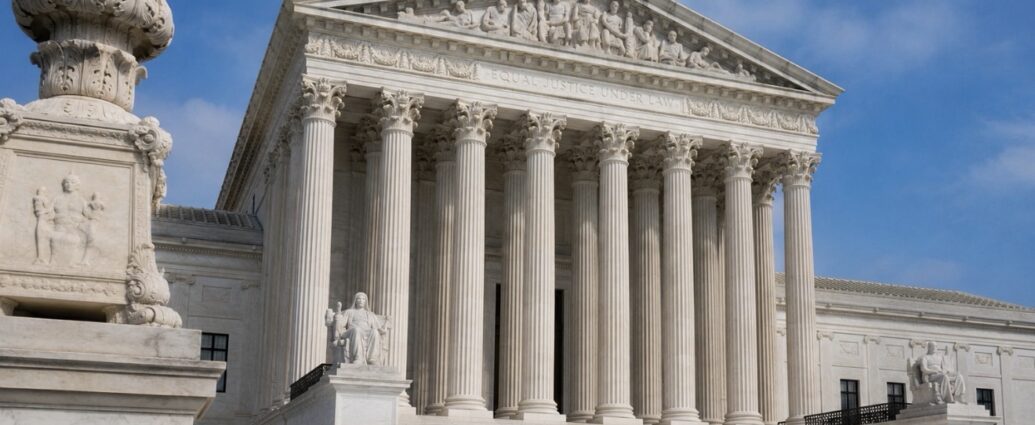
The U.S. Supreme Court ruled Monday that states may count mail-in ballots that arrive after Election Day as long as they are postmarked on time, rejecting a challenge from the Republican National Committee just months before the 2026 midterm elections.
In a 5-4 decision in Watson v. Republican National Committee, the Court upheld a Mississippi law allowing election officials to count absentee ballots that are postmarked by Election Day and received up to five business days later.
Justice Amy Coney Barrett, writing for the majority and joined by Chief Justice John Roberts and the Court’s three liberal justices, concluded that federal election laws establish the day voters must cast their ballots but do not require those ballots to be physically received by Election Day.
Barrett described the dispute as “a narrow question about timing,” explaining that while the Constitution specifies the day Americans vote, it does not establish a nationwide ballot-receipt deadline.
The ruling carries significant practical consequences. More than half of the states and the District of Columbia currently allow certain mail ballots that arrive after Election Day to be counted if they were mailed on time. In 15 states and Washington, D.C., ballots remain valid if they arrive within five days after the election. In many of those states, the extended deadline applies primarily to military personnel and overseas voters.
The legal battle began in 2024, when the Republican National Committee and state Republican organizations challenged Mississippi’s election law, arguing that federal statutes require all ballots to be received by Election Day. A federal district court upheld the law, but the U.S. Court of Appeals for the Fifth Circuit later reversed that decision, prompting Mississippi to appeal to the Supreme Court.
For election officials, Monday’s ruling provides stability ahead of this year’s midterm elections.
Stephen Richer, the former Republican election official for Arizona’s Maricopa County and now affiliated with the Cato Institute, called the decision a “sigh of relief,” saying that overturning existing state laws would have forced election offices to rewrite procedures, retrain workers, and revise ballot-processing systems only months before voting begins.
The ruling also affects the U.S. Postal Service, election vendors, and printing companies that help administer elections by avoiding a costly, nationwide scramble to redesign ballots, modify equipment, and change operating procedures.
Supporters of the law say the decision protects voters who depend on mail delivery. Washington Secretary of State Steve Hobbs said more than 250,000 ballots postmarked on time arrived after Election Day during the 2024 election, noting that many rural voters and military personnel rely on grace periods because of longer delivery times.
Reaction to the ruling quickly divided along political lines.
President Donald Trump, who has repeatedly criticized widespread mail voting, called the decision “a tremendous loss” and renewed his call for Congress to establish new national voting standards.
Justice Samuel Alito, writing for the dissent, warned that allowing ballots to arrive after Election Day raises difficult legal questions and could further undermine public confidence in elections.
Voting rights organizations, meanwhile, praised the ruling, arguing that it protects military voters, rural communities, overseas Americans, and others who cannot always rely on guaranteed mail delivery by Election Day.
For now, the election rules used by many states for years will remain in place heading into the 2026 midterms.
Justice Barrett emphasized that Congress still has the authority to establish a nationwide ballot-receipt deadline if lawmakers choose to do so. Until then, the Supreme Court’s decision removes one of the biggest legal uncertainties facing election officials as preparations for November continue.
JBizNews Desk
© JBizNews.com All Rights Reserved. Reproduction or distribution without written permission is prohibited.