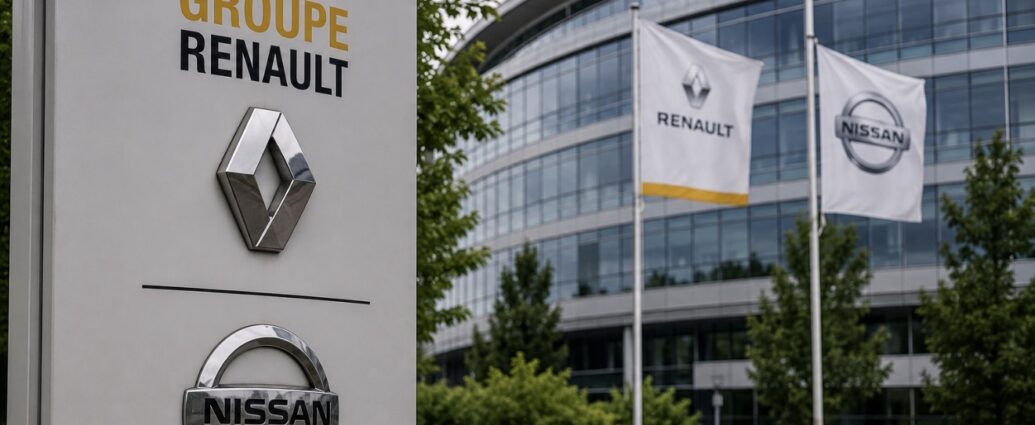
Renault reasserted its influence over struggling Japanese automaker Nissan this week, helping remove one of the company’s most powerful board members and signaling that the decades-old alliance between the two automakers remains as politically sensitive as ever.
At Nissan’s annual shareholder meeting, investors voted against reappointing longtime outside director Motoo Nagai, ending his tenure after Renault withheld its support for his nomination.
Although Renault owns roughly 36% of Nissan’s shares, a 2023 restructuring of the alliance reduced its voting rights to about 15%. Even with that smaller voting stake, Renault’s decision to abstain from supporting Nagai, combined with opposition from proxy advisory firms and other shareholders, proved enough to remove one of Nissan’s most influential directors.
The vote marks Renault’s most significant exercise of influence at Nissan since the companies renegotiated their alliance three years ago.
Nagai played an unusually powerful role within Nissan’s governance structure.
The 72-year-old director served on the company’s nomination, compensation, and audit committees, giving him substantial influence over executive appointments and board oversight. He also supported Nissan’s unsuccessful merger discussions with Honda in 2024 and was closely involved in selecting current Chief Executive Ivan Espinosa following leadership changes inside the company.
Renault argued that Nagai’s independence had become increasingly difficult to defend.
Both Nagai and another board nominee previously worked for Mizuho Financial Group, Nissan’s largest lender, raising concerns about board independence. Proxy advisory firms Institutional Shareholder Services (ISS) and Glass Lewis also recommended shareholders vote against his reappointment, with Glass Lewis concluding that “Nominee Motoo Nagai is not independent.”
The latest dispute adds another chapter to one of the automotive industry’s longest-running corporate relationships.
Following the arrest of former alliance leader Carlos Ghosn in 2018 and his dramatic escape from Japan the following year, Renault and Nissan spent years renegotiating their partnership. Their 2023 agreement reduced Renault’s ownership stake from 43% to 15% on a voting basis in an effort to create a more balanced relationship.
This week’s vote demonstrates that Renault remains willing to exercise its influence whenever it believes major governance issues are at stake.
The governance battle comes at a difficult time for Nissan.
The automaker continues working through years of declining profitability, weaker sales in both China and the United States, and approximately ¥4.4 trillion ($27.3 billion) in debt. Credit-rating agencies have lowered Nissan’s debt to junk status, increasing pressure on management to restore profitability.
Chief Executive Ivan Espinosa, who recently succeeded Makoto Uchida, has pledged to return the company to sustained profitability by the fiscal year ending March 2027.
For investors, the boardroom fight highlights the importance of corporate governance during periods of financial stress. Leadership decisions, board independence, and shareholder influence can significantly affect the direction of companies attempting major turnarounds.
The Renault-Nissan alliance, which also includes Mitsubishi Motors, continues collaborating on manufacturing projects across Europe, India, and Latin America, suggesting neither company wants to abandon the partnership entirely.
But this week’s vote makes one point unmistakably clear: despite years of restructuring, Renault remains prepared to use its influence when it believes Nissan’s future is at stake. As Nissan works to rebuild its finances and regain competitiveness, the alliance’s internal politics are likely to remain almost as closely watched as the automaker’s financial performance.
JBizNews Auto Desk
© JBizNews.com All Rights Reserved. Reproduction or distribution without written permission is prohibited.