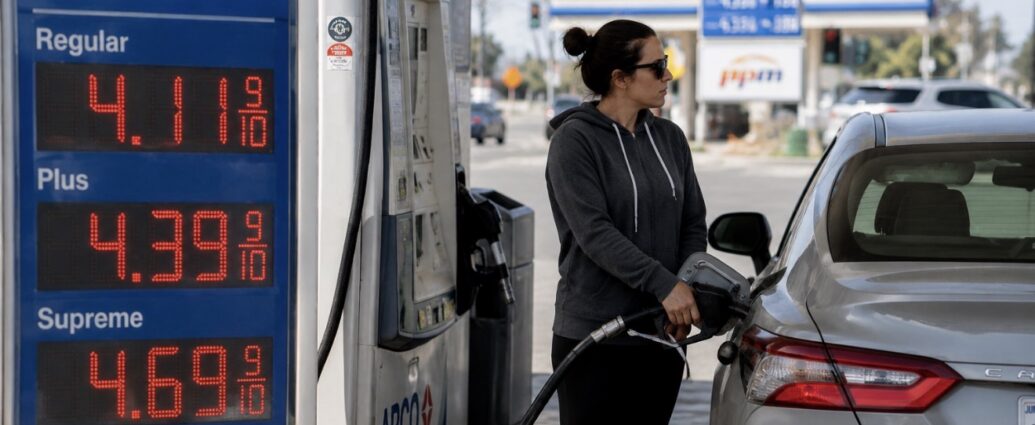
Americans felt slightly better about the economy in June, mostly because gas prices came down. The University of Michigan said its final Index of Consumer Sentiment rose to 49.5, up from May’s all-time low of 44.8, with survey director Joanne Hsu crediting relief at the pump for the rebound.
It was the first increase since February, before the U.S.-Israeli war with Iran pushed global energy prices higher.
The improvement was real but modest, and the survey makes clear people are still unhappy. Sentiment remains about 13% below January and roughly 19% below a year ago. For the third straight month, more than half of consumers brought up high prices on their own as a drag on their finances, Hsu said.
The gas-price story is central. The national average retail gasoline price dropped to about $4.11 from $4.56 at its recent peak, according to AAA. Prices at the pump had reached near-historic highs after the conflict led to the near-closure of the Strait of Hormuz, the waterway that moves a large share of the world’s oil. That spike had driven two straight record-low sentiment readings.
Lower-income households drove the June bounce. Hsu said those consumers posted a particularly strong increase, which makes sense because gasoline takes up a bigger share of their budgets. When the price of a tank of gas falls, families living closest to the edge feel it first.
But the relief has limits, and inflation is still the top worry. Year-ahead inflation expectations edged down to 4.6% from 4.8%, while long-run expectations fell to 3.4% from 3.9%. Both are still well above the levels seen before the Iran conflict began. Hsu said consumers welcomed cheaper gas but remain worried that high prices overall will keep eroding their living standards.
A few other forces helped. The job market stayed solid, with three straight months of better-than-expected job growth and a stable unemployment rate, which likely added to the better mood. The expectations gauge climbed to its highest level in three months as fears about the long-term fallout from the war eased.
There is also a split running underneath the headline number, and it matters for businesses trying to read their customers. Hsu noted that the soaring stock market is lifting personal finances—but mainly for consumers who hold the largest stock portfolios. That leaves a familiar divide: wealthier households cushioned by market gains, and everyone else watching grocery and gas receipts.
For retailers, restaurants and service businesses, the signal is mixed. Sentiment is off the floor, lower-income shoppers have a bit more breathing room as fuel costs fall, and a steady job market keeps paychecks coming. But with the cost of living still front of mind for most households, spending is likely to stay cautious on anything that isn’t essential.
The bottom line is that one month of cheaper gas was enough to stop the slide, but not enough to make people feel good. Even with the gain, consumers remain far more downbeat than they were before the war. The next move in sentiment will likely follow the same thing that drove this one—what happens at the pump.
JBizNews Desk | New York
© JBizNews.com All Rights Reserved. Reproduction or distribution without written permission is prohibited.