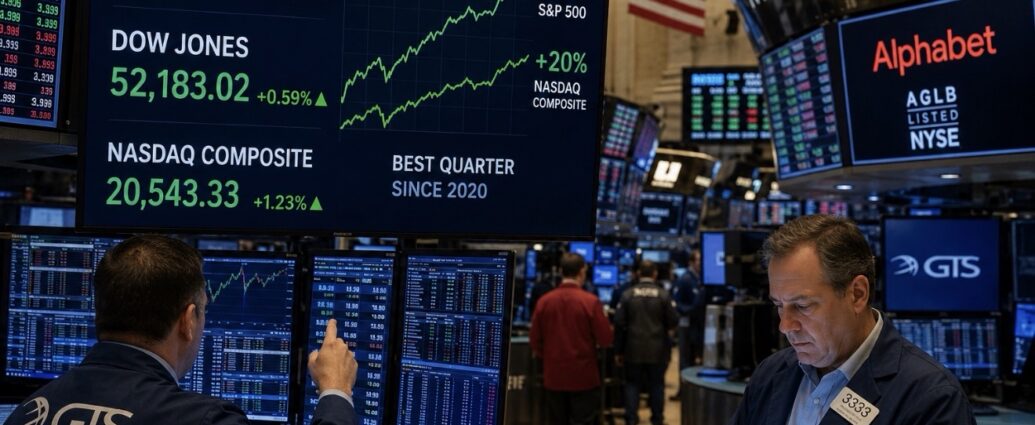
U.S. stocks pulled back Wednesday, July 1, the morning after major indexes closed out their best quarter since 2020, as investors digested a softer-than-expected read on hiring, watched Federal Reserve Chair Kevin Warsh speak abroad, and eyed faltering peace talks in the Middle East. The retreat was modest, more of a breather than a reversal, after a run that pushed the Dow to back-to-back record highs.
In early trading, the S&P 500 slipped about 0.35%, the Dow Jones Industrial Average lost roughly 0.35%, and the tech-heavy Nasdaq Composite fell about 0.72%. The one bright spot was small companies: the Russell 2000 rose 0.46%, a sign that money was rotating out of the big technology names and into the smaller, more domestic stocks that tend to benefit when the economy looks steady. For context, the Dow closed Tuesday at a record 52,319.20 to cap a quarter in which the S&P 500 climbed more than 14% and the Nasdaq soared about 20%.
The morning’s big economic news was about jobs, and it pointed to a cooling market. Payroll processor ADP reported that private employers added just 98,000 jobs in June, fewer than economists expected and a clear slowdown. Separately, the outplacement firm Challenger, Gray & Christmas said U.S. employers announced just under 46,000 job cuts last month, roughly in line with a year earlier. Together the reports set the stage for the government’s June jobs report, which arrives Thursday, a day earlier than usual because of the July 4 holiday.
Market movers
The standout story for everyday shoppers came from the grocery aisle. Kroger shares fell about 2.8% after the supermarket giant said it would buy regional chain Giant Eagle in a $1.65 billion deal. The move comes after Kroger’s far larger $25 billion attempt to merge with Albertsons was blocked by regulators and courts in 2024. Kroger is fighting to hold down grocery prices while competing with Walmart and Amazon, and this smaller, more digestible acquisition is its way of growing without triggering another antitrust battle.
Technology was the day’s weak spot, extending a rough stretch for the market’s former darlings. The Magnificent Seven group of mega-cap tech stocks shed about $2.3 trillion in market value during June as investors questioned whether massive spending on artificial intelligence will actually turn into profits. CNBC’s Jim Cramer argued that Wall Street is now rewarding the companies that supply the AI boom, naming chipmakers like Micron, Intel, Marvell, AMD, and SanDisk, while punishing the giants footing the bill.
Analysts are still finding winners in the space. Wedbush technology analyst Dan Ives this week began coverage of newly public SpaceX with an outperform rating and a $190 price target, calling it more of an AI play than investors realize. SpaceX, which staged the largest IPO in history last month, is set to join the Nasdaq-100 index before trading opens on July 7, which will force index funds to buy the stock.
Commodities and volatility
Oil gave back its early gains and turned lower after diplomacy stumbled. Peace talks in Doha faltered Wednesday when Iran said its negotiators would not meet President Trump’s team, dimming hopes for a lasting deal and a full return to normal oil flows. Crude fell about 1%, with Brent sliding toward $72 a barrel and U.S. benchmark WTI dropping below $69. Even with the dip, oil remains far below its wartime highs, which has been the single biggest force pulling inflation lower and easing pressure on the Fed.
Much of the day’s caution centered on Warsh, who is appearing at the European Central Bank’s forum in Sintra, Portugal, alongside ECB President Christine Lagarde, Bank of England Governor Andrew Bailey, and Bank of Canada Governor Tiff Macklem. Investors are parsing his every word for hints about where interest rates head next, a question that touches everything from mortgage rates to credit-card bills.
Looking ahead
The rest of the holiday-shortened week is all about jobs. After Wednesday’s soft ADP figure, traders turn to Thursday’s June employment report for a fuller picture of whether the labor market is genuinely cooling or simply catching its breath. A reading on manufacturing activity is also due. With the SpaceX index addition looming July 7 and markets thin ahead of the long weekend, trading could stay choppy. After a quarter this strong, a pause is hardly a surprise, and many on Wall Street see the early-July softness as digestion rather than the start of a real downturn.
JBizNews Desk
© JBizNews.com All Rights Reserved. Reproduction or distribution without written permission is prohibited.