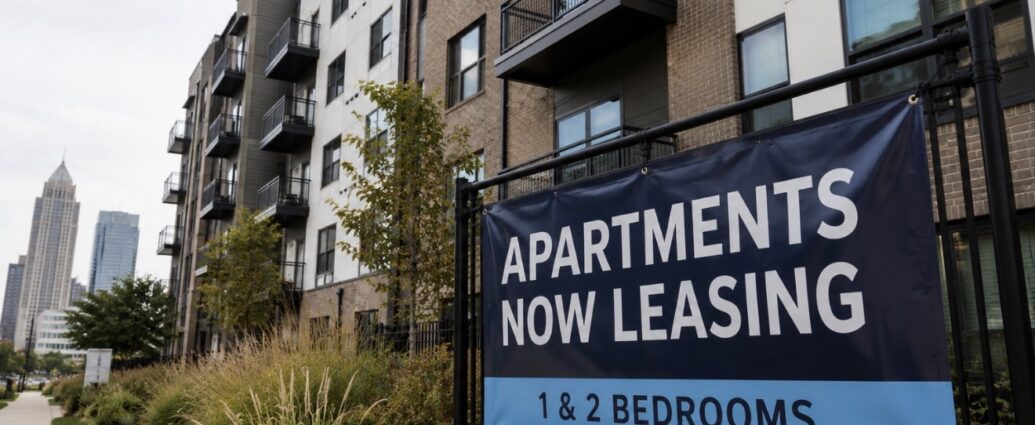
Finding an apartment is getting a little more expensive again this summer, but renters are still in a better position than they were a year ago thanks to a record wave of new construction that continues to keep prices in check.
According to Apartment List’s July National Rent Report, released this week, the national median rent rose 0.4% in June to $1,385 per month, marking the fifth consecutive monthly increase. The report says the gain is typical for the busy summer moving season, when demand rises and landlords generally have greater pricing power.
Even so, the broader trend remains favorable for renters.
National median rent is still 1.2% lower than it was in June 2025, a decline of roughly $17 per month, and remains 4% below its mid-2022 peak, or about $57 less. Despite that easing, rents are still approximately 21% higher than they were at the start of 2021, reflecting the lasting impact of the pandemic housing boom.
The biggest reason prices have remained relatively soft is supply.
The apartment construction boom peaked in 2024, when developers delivered more than 600,000 new apartments in large multifamily buildings—the highest annual total since 1986. That unprecedented surge gave renters more choices and forced landlords to compete more aggressively for tenants.
Now the market is beginning to tighten.
Apartment List said the national multifamily vacancy rate stands at 7.2%. Vacancy reached a record high in February but has started to decline for the first time in more than four years, suggesting the large inventory of newly completed apartments is gradually being absorbed.
Apartments are also leasing a bit faster. Properties are now spending about 30 days on the market, one day less than in May.
The report also found that annual rent growth has improved for two straight months after reaching its weakest level on record in April, based on Apartment List’s data dating back to 2017. While rents remain lower than a year ago, those year-over-year declines are becoming smaller.
Housing conditions continue to vary widely across the country.
Among major metropolitan areas, San Antonio now has the softest rental market, with median rents down 5% from a year ago as Texas continues adding new apartment supply. Austin follows closely with rents down 4.3%.
At the opposite end of the spectrum, San Francisco recorded the strongest annual increase, with median rents rising 7.4% over the past year.
The regional differences reflect where builders have been most active.
Most of the annual rent declines are concentrated across the South and Mountain West, while much of the Northeast, Midwest, and parts of the West Coast continue seeing rent increases.
Among the nation’s 56 metropolitan areas with more than one million residents, 30 posted lower rents than a year ago, but 51 experienced month-over-month increases during June, highlighting the normal seasonal strength in the rental market.
The report also carries broader economic implications.
Housing remains one of the largest monthly expenses for American households and is a major component of inflation. Slower rent growth helps reduce pressure on consumers while also easing one of the Federal Reserve’s most closely watched inflation measures as policymakers continue evaluating future interest-rate decisions.
The trend is equally important for apartment owners and developers.
After accelerating construction through 2023 and 2024, many builders have sharply reduced new projects. If that slowdown continues while today’s excess supply is absorbed, landlords could regain greater pricing power beginning in 2027.
For now, however, vacancy rates remain elevated and the record pipeline of recently completed apartments continues to give renters more leverage than they have enjoyed in several years.
The bottom line is that rents are following their normal summer pattern by moving higher, but the largest apartment-building boom in decades has prevented another major surge in housing costs. How long that continues will depend on how quickly today’s supply is absorbed—and how much developers slow future construction.
JBizNews Desk | Washington
© JBizNews.com All Rights Reserved. Reproduction or distribution without written permission is prohibited.