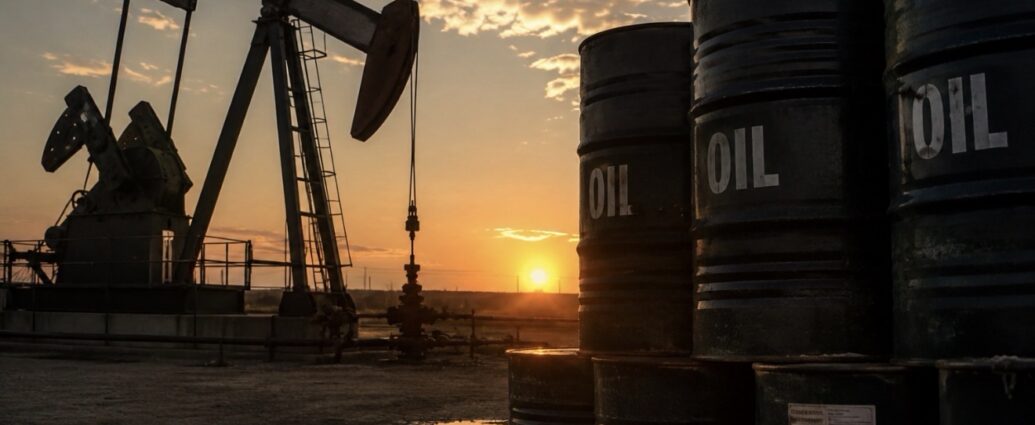
Oil prices have fallen all the way back to where they stood before the United States and Iran went to war, erasing months of wartime gains and weakening one of Tehran’s most powerful sources of economic leverage. The decline accelerated Sunday after the Organization of the Petroleum Exporting Countries and its allies agreed to add another 188,000 barrels a day to their production target beginning in August, marking the fourth straight monthly increase and signaling that the world’s biggest exporters are confident supplies will remain ample.
The seven countries still bound by quotas — Saudi Arabia, Russia, Iraq, Kuwait, Algeria, Kazakhstan and Oman — have now returned about 940,000 barrels a day to the market since the war between the United States and Iran began on February 28. That is close to 1% of all the oil the world burns in a day. The United Arab Emirates walked away from the alliance in the spring so it could pump freely, and its exports have since climbed to a record of roughly 3.7 million barrels a day.
For American families, the timing could hardly be better. Crude has slid all the way back to where it sat before the fighting started. West Texas Intermediate, the U.S. benchmark, traded near $68 a barrel late last week, while Brent, the global standard, hovered around $72. Both sit at their lowest levels since February 27 — the day before the war — and cheaper crude usually reaches the gas pump within a few weeks. That means relief for drivers heading home from the July 4 weekend and lower fuel bills for airlines.
The turnaround is remarkable. When Iran choked off the Strait of Hormuz this winter — the narrow channel that carries about a fifth of the world’s seaborne oil — prices jumped and forecasters warned of a real crisis. OPEC’s own output tumbled to 33.13 million barrels a day in May from 42.77 million in February. But tanker traffic through the strait has been climbing back, Saudi Arabia has restored shipments to about 90% of prewar levels, and a memorandum of understanding between Washington and Tehran aimed at ending the war has calmed nerves.
Now the worry is a glut, not a shortage. Norbert Rücker, head of economics at Swiss bank Julius Baer, said the market is settling into a “new-old normal” of ample supply and fierce competition among producers. Goldman Sachs expects Gulf exports to return to prewar levels by the end of July and sees Brent ending the year near $80.
There is one place the shelves are still bare: the world’s emergency reserves. Crude in the U.S. Strategic Petroleum Reserve fell by 5.5 million barrels in the week ended June 26 to 325.7 million barrels, its lowest level since May 1983, according to the Department of Energy. The reserve has been cut nearly in half since 2021, drained to keep oil flowing during the Hormuz crunch as part of a coordinated release organized by the International Energy Agency.
That gap is exactly why the current glut matters far beyond the gas station. The faster the United States and its partners can buy up cheap crude and refill their tanks, the less power Iran holds the next time it threatens to close the strait. A country with full storage can shrug off a blockade; a country running on fumes cannot. Cheaper oil, in other words, hands Washington leverage at the negotiating table just as talks with Tehran gain steam.
Refilling those reserves will not happen overnight. Patrick De Haan, head of petroleum analysis at GasBuddy, has cautioned that stockpiles remain thin enough that markets could still panic if the peace deal wobbles or the strait shuts again. And with governments focused on keeping prices low, few are in a rush to bid aggressively for barrels to top off their reserves right now.
For now, though, the direction is clear. Ample supply, recovering shipments and a fragile but holding truce have pulled oil off its wartime highs and put money back in the pockets of ordinary consumers. Whether the calm lasts depends on a peace deal that neither side has fully signed — and on a strait that Iran has closed before and could close again.
JBizNews Desk | New York
© JBizNews.com All Rights Reserved. Reproduction or distribution without written permission is prohibited.