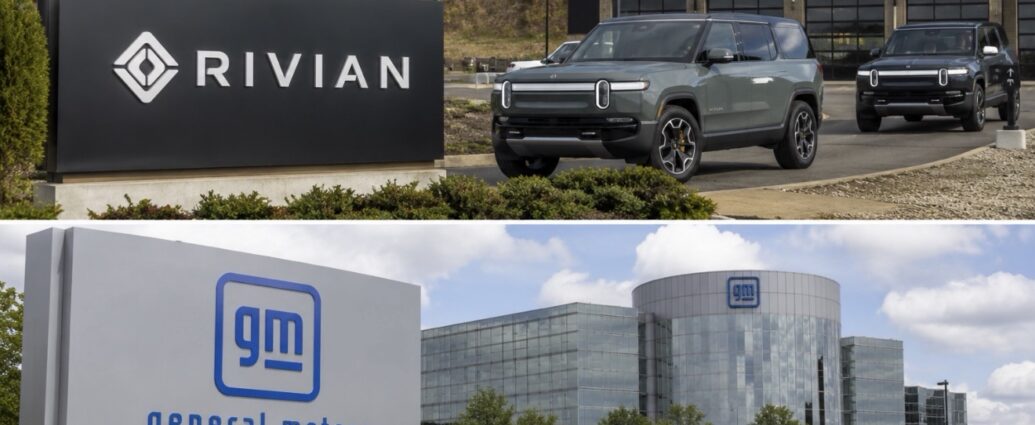
Rivian Automotive and General Motors released their second-quarter vehicle sales during the first week of July, offering two very different snapshots of the U.S. auto market. While Rivian exceeded expectations and raised its full-year delivery forecast, GM remained America’s largest automaker but reported declining sales as demand for electric vehicles slowed following the expiration of federal EV incentives.
Together, the results highlight how the industry is adjusting to changing consumer preferences, new government policies and intensifying competition in both gasoline and electric vehicles.
Rivian delivered 12,194 vehicles during the second quarter, comfortably exceeding both its own guidance and Wall Street expectations. Encouraged by the stronger-than-expected performance, the electric vehicle manufacturer raised its full-year delivery forecast to between 65,000 and 70,000 vehicles, reflecting growing confidence in demand for its expanding lineup.
The company credited continued strength in its R1T pickup, R1S SUV and commercial delivery van business while also pointing to strong early interest in its new R2 sport utility vehicle. Investors welcomed the higher guidance, sending Rivian shares higher following the announcement.
For Rivian, the improved outlook represents another important milestone as the company works toward long-term profitability. Like many newer electric vehicle manufacturers, Rivian continues investing heavily in production capacity while seeking to increase sales volume and lower manufacturing costs.
General Motors painted a different picture.
GM sold 714,896 vehicles in the United States during the second quarter, maintaining its position as the nation’s largest automaker but recording a 4.2% decline from the same quarter a year earlier. It marked the company’s third consecutive quarterly sales decline.
Despite the overall decrease, GM executives emphasized continued strength in traditional trucks and sport utility vehicles. The company reported strong demand for models such as the Chevrolet Silverado, GMC Sierra, Chevrolet Traverse and several other SUV nameplates that continue generating some of its highest profit margins.
Electric vehicles proved more challenging.
GM’s EV sales fell significantly compared with the prior year, reflecting softer consumer demand after the expiration of the federal tax credit previously available on many electric vehicle purchases. Without the incentive, many buyers have delayed purchases or returned to gasoline-powered vehicles, hybrids or plug-in hybrid models.
The contrast between Rivian and GM illustrates how differently manufacturers are experiencing today’s market.
Rivian continues growing from a relatively small production base, allowing new products and increased manufacturing capacity to generate substantial percentage gains. GM, by comparison, manages one of the world’s largest automotive operations, where even modest changes in consumer demand affect hundreds of thousands of vehicle sales.
Another factor is product mix.
While Rivian focuses almost exclusively on premium electric vehicles, GM depends heavily on profitable pickups and SUVs while simultaneously investing billions of dollars to expand its electric vehicle portfolio. That broader strategy provides stability but also exposes the company to changing consumer demand across multiple vehicle categories.
The broader industry continues evolving rapidly.
Automakers worldwide remain committed to electric vehicles, but many are adjusting production schedules, delaying some investments and placing greater emphasis on hybrids as consumers seek lower operating costs without concerns about charging infrastructure.
For consumers, increased competition continues creating more choices than ever before. Buyers shopping for electric vehicles now have access to expanding model lineups across multiple manufacturers, while traditional gasoline and hybrid vehicles remain widely available as companies respond to changing demand.
Investors will now shift their attention to upcoming quarterly earnings reports, where both Rivian and GM are expected to provide additional details about profitability, production plans and expectations for the remainder of the year.
The second-quarter sales reports demonstrate that America’s auto industry remains in the middle of one of its largest transformations in decades. Companies able to balance consumer demand, manufacturing efficiency and evolving technology are likely to be best positioned as the market continues shifting toward its next phase.
JBizNews Desk | Detroit
© JBizNews.com All Rights Reserved. Reproduction or distribution without written permission is prohibited.