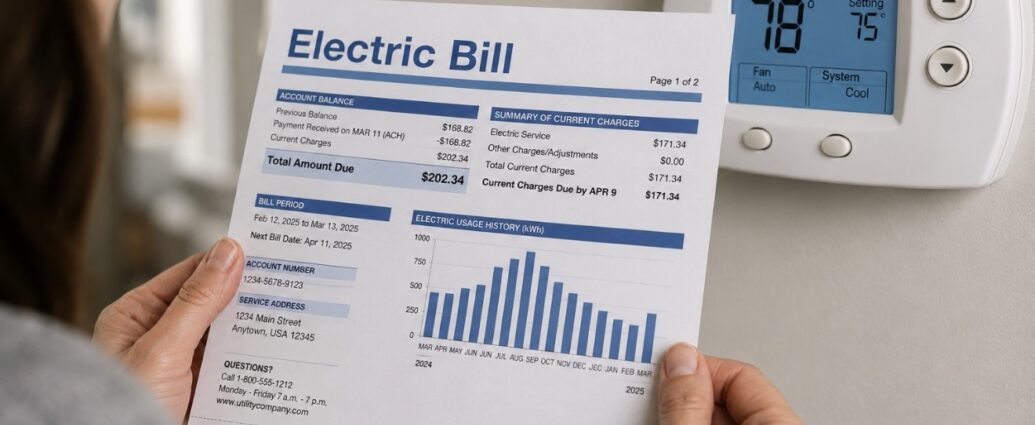
A report released by the National Energy Assistance Directors Association (NEADA) and the Center for Energy Poverty and Climate warns that American households are on track to pay the highest summer electric bills ever recorded, as soaring temperatures combine with rising electricity prices to strain family budgets across the country. The report, released in June and highlighted again as a dangerous heat wave grips much of the United States, projects the average household will spend approximately $792 on electricity for cooling between June and September, up more than 10% from last summer.
The increase comes as millions of Americans battle another stretch of extreme heat. Large portions of the country continue experiencing above-normal temperatures, forcing air conditioners to run longer while utilities struggle to meet growing demand.
According to NOAA, above-average temperatures are expected across much of the United States throughout the summer, increasing electricity consumption at the same time energy prices continue climbing.
“Families are getting hit from both sides,” said Mark Wolfe, Executive Director of NEADA. “Electricity prices continue to rise, and hotter summers mean households need to use more electricity simply to stay safe.”
The report estimates that summer cooling costs have climbed nearly 40% since 2020, reflecting both higher electricity prices and increased demand driven by longer and more intense heat waves.
Several factors are contributing to the rising cost of electricity, but one of the fastest-growing pressures comes from the rapid expansion of artificial intelligence.
Across the country, technology companies are building massive AI data centers that require enormous amounts of electricity to operate. Those facilities consume power around the clock, increasing demand on regional electric grids and requiring utilities to invest billions of dollars in new generation capacity, transmission lines and infrastructure upgrades.
Industry analysts say those investments are increasingly finding their way into customer utility bills.
Additional pressure comes from higher fuel costs, continued infrastructure improvements and growing electricity demand from homes, businesses and electric vehicles.
For many families, the financial strain is becoming difficult to manage.
The report estimates millions of households remain behind on their utility payments, while total consumer utility debt continues climbing nationwide. Lower-income families are particularly vulnerable because cooling is no longer considered simply a comfort but an important public health necessity during prolonged periods of extreme heat.
Health experts warn that reducing air conditioning too aggressively can create dangerous conditions, particularly for seniors, young children and individuals with chronic medical conditions.
Rather than turning cooling systems off completely, energy experts recommend practical steps that can reduce electricity consumption without compromising safety.
Simple measures include raising the thermostat by one degree, replacing dirty HVAC filters, sealing air leaks around windows and doors, closing blinds during the hottest parts of the day and using ceiling fans to improve air circulation. Even modest efficiency improvements can lower monthly electricity costs while maintaining comfortable indoor temperatures.
Federal and state assistance programs may also help qualifying households.
The U.S. Department of Energy continues supporting energy-efficiency upgrades through various grant programs designed to improve insulation, replace older cooling equipment and reduce household energy consumption. Many states also offer utility assistance programs for qualifying low-income families during periods of extreme weather.
NEADA is urging Congress to increase funding for the Low Income Home Energy Assistance Program (LIHEAP), arguing that current funding has not kept pace with rising energy costs and more frequent extreme heat events.
The organization also recommends stronger consumer protections to prevent utility shutoffs during dangerous heat waves, particularly for vulnerable populations.
For businesses, higher electricity costs present another challenge.
Restaurants, retailers, manufacturers and office buildings all face rising operating expenses as cooling costs increase during the busiest months of the year. Many companies are responding by investing in energy-efficient lighting, upgraded HVAC systems and smart-building technology designed to reduce long-term utility expenses.
The report highlights how one of the biggest economic stories of 2026—the rapid expansion of artificial intelligence—is affecting Americans in unexpected ways. While AI promises major productivity gains, the enormous electricity required to power advanced computing facilities is adding new pressure to an already strained electric grid.
For households, the message is straightforward: expect another expensive summer.
With temperatures expected to remain above normal across much of the country and electricity demand continuing to grow, energy experts encourage consumers to prepare for higher monthly utility bills while taking advantage of available conservation measures and assistance programs wherever possible.
JBizNews Desk | Washington
© JBizNews.com All Rights Reserved. Reproduction or distribution without written permission is prohibited.