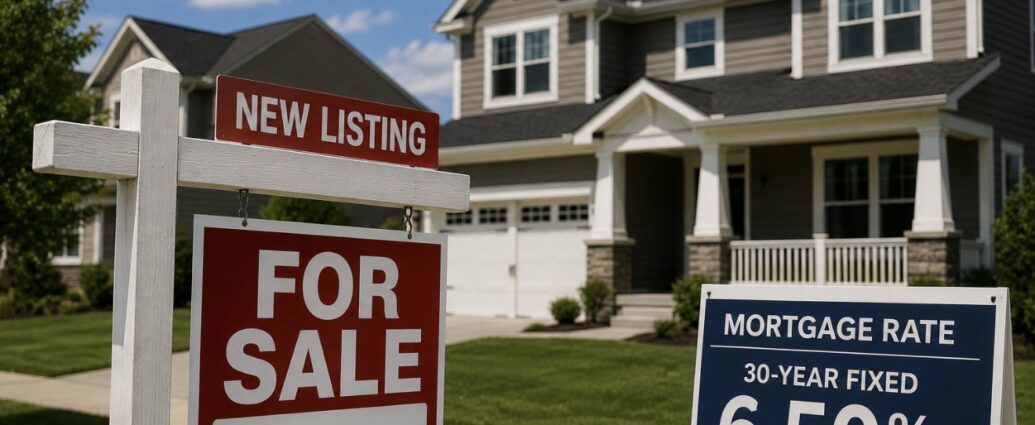
The U.S. housing market continues showing signs of improvement in inventory, but for many Americans, homeownership remains financially out of reach as mortgage rates remain stubbornly high. According to the latest housing data from Freddie Mac, the average 30-year fixed mortgage continues hovering around 6.5%, keeping monthly payments elevated even as more homes become available for sale across much of the country.
Higher borrowing costs have become the single biggest obstacle facing prospective homebuyers.
At today’s mortgage rates, financing a $400,000 home requires monthly principal and interest payments exceeding $2,500, hundreds of dollars more each month than buyers would have paid just a few years ago when mortgage rates were near historic lows.
That difference has dramatically reduced affordability, particularly for first-time buyers struggling to save for down payments while managing higher living costs.
Although housing inventory has gradually increased this year, demand has remained relatively subdued.
More homeowners have begun listing their properties, and builders continue adding new homes to the market. Sellers are also becoming more willing to negotiate prices, offer mortgage-rate buydowns and provide additional incentives to attract buyers.
Even so, elevated financing costs continue limiting affordability.
Mortgage rates closely follow movements in the 10-year U.S. Treasury yield, which remains influenced by inflation expectations. As long as inflation remains above the Federal Reserve’s target, economists expect mortgage rates to remain relatively elevated.
Another challenge continues restricting supply.
Millions of homeowners refinanced during the pandemic when mortgage rates fell below 4%, with many locking in rates closer to 3%. Those homeowners now have little incentive to sell because purchasing another home would require accepting significantly higher financing costs.
Economists refer to this as the “lock-in effect,” and it continues limiting the number of existing homes entering the market.
Despite those challenges, there are encouraging signs.
The National Association of Realtors recently reported existing-home sales improving from earlier this year, while inventory continues expanding in many markets. Slower home-price appreciation is also allowing incomes to gradually catch up after several years of rapid housing inflation.
Builders have responded by offering more incentives, including mortgage-rate assistance, closing-cost credits and upgrades designed to improve affordability without reducing advertised home prices.
Housing analysts believe those concessions could create opportunities for financially prepared buyers willing to enter the market despite higher interest rates.
For many households, however, affordability remains the deciding factor.
Higher mortgage payments affect not only purchasing decisions but also how much home buyers can qualify to finance. Even modest changes in mortgage rates can significantly alter monthly payments and purchasing power.
Financial experts generally caution buyers against waiting indefinitely for mortgage rates to return to pandemic-era lows, noting those historically low borrowing costs were largely the result of extraordinary economic conditions unlikely to return soon.
Instead, many advisers recommend purchasing when personal finances allow rather than attempting to predict future interest-rate movements.
For business leaders, the housing market remains an important economic indicator because residential real estate influences consumer spending, construction activity, banking, home improvement retailers and numerous related industries.
The next housing reports later this month will provide additional insight into whether improving inventory and moderating home-price growth are beginning to stimulate stronger buyer activity.
For now, the housing market remains caught between improving supply and stubborn affordability challenges.
More homes may finally be available, but until mortgage rates move meaningfully lower or household incomes rise further, many Americans will continue finding that owning a home remains one of the biggest financial challenges they face.
JBizNews Desk | Washington
© JBizNews.com All Rights Reserved. Reproduction or distribution without written permission is prohibited.