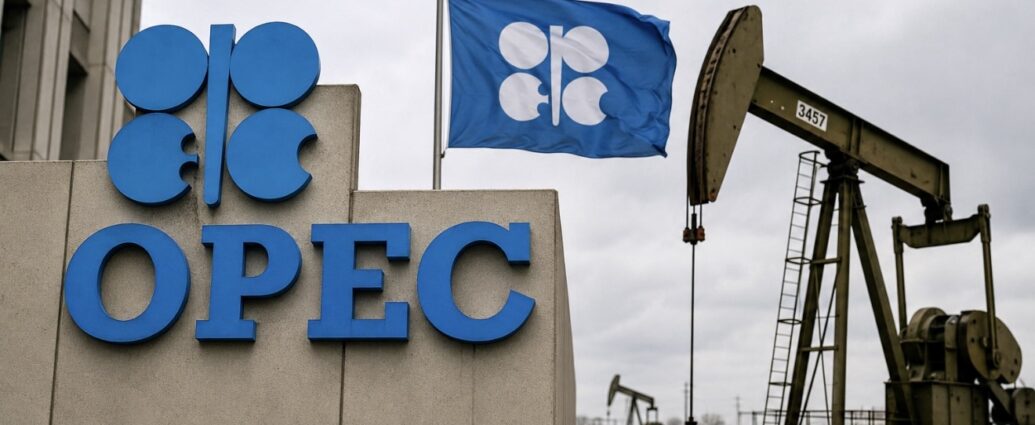
Seven members of the OPEC+ alliance, led by Saudi Arabia and Russia, agreed on Sunday, July 5, to increase oil production by another 188,000 barrels per day beginning in August, according to a statement released by OPEC. On the surface, it was the group’s fifth consecutive monthly production increase. Beneath that decision, however, is a growing battle over the future of the nearly 70-year-old oil cartel—one that could ultimately send crude prices sharply lower and deliver significant savings to consumers.
Only a few months ago, the world faced the opposite problem.
The conflict that erupted in late February involving the United States, Israel and Iran disrupted shipping through the Strait of Hormuz, the narrow waterway that normally carries roughly one-fifth of the world’s oil supply. Energy markets reacted immediately. Brent crude, the international benchmark, surged to $138 per barrel on April 7, its highest level since 2022, while fears of prolonged supply shortages sent fuel prices soaring around the globe.
Today, the picture has changed dramatically.
Commercial traffic has resumed through the Strait of Hormuz, production is returning, and crude prices have largely erased their wartime gains. On Monday, July 6, Brent crude traded near $71.70 per barrel, while West Texas Intermediate (WTI) hovered around $68.40, almost exactly where both benchmarks stood before the conflict began.
Several energy analysts now believe prices may have further to fall.
The pressure is coming from inside OPEC itself.
During the conflict, Gulf producers with limited export routes—including Iraq, Kuwait and Iran—were forced to sharply reduce production after shipping through the Persian Gulf became constrained. Saudi Arabia was better positioned because it continued exporting significant volumes through its East-West Pipeline to the Red Sea port of Yanbu, allowing it to maintain a much larger share of production.
Now that exports have resumed, countries that lost months of revenue want to increase production aggressively.
Iraq has publicly indicated it wants authorization to pump as much as 5 million barrels per day, with a longer-term objective of reaching 7 million barrels daily. Iraqi officials have also suggested the country could reconsider its membership in OPEC if larger production quotas are not approved.
That threat highlights the organization’s growing dilemma.
To keep member nations satisfied, OPEC may need to permit significantly higher production, increasing global supply and driving oil prices lower. But limiting production to support higher prices risks encouraging frustrated members to leave the organization altogether, weakening the cartel’s influence over world energy markets.
It is a difficult balancing act.
Saudi Arabia remains OPEC’s dominant producer and effectively controls the group’s direction. Flooding the market too quickly could send prices sharply lower, reducing revenues for every member. Holding production back, however, risks internal divisions that could permanently weaken the alliance.
Signs of that pressure are already emerging.
State-owned Saudi Aramco recently reduced official selling prices for its flagship crude grades destined for Asian buyers, one of its most aggressive pricing moves in years. The reductions reflect increasing competition for market share as additional barrels begin returning to global markets.
Demand trends are adding another layer of uncertainty.
Higher oil prices earlier this year accelerated investment in electric vehicles, renewable energy and energy efficiency across many countries. Some analysts believe a portion of that lost oil demand may never fully return, even as prices moderate.
According to JPMorgan commodities strategist Natasha Kaneva, the market now faces the prospect of previously constrained oil supplies returning just as global consumption growth begins slowing—a combination that could create a significant supply surplus.
Several forecasters believe that scenario could push prices considerably lower over the next several years.
Capital Economics economist Kieran Tompkins has suggested oil could average around $60 per barrel next year, with prices potentially falling toward $50 later in the decade. Some market analysts have argued that if OPEC loses control of production discipline altogether, prices could temporarily decline to $40 per barrel.
For oil-producing nations, that would represent a painful financial blow.
Saudi Arabia is widely estimated to require oil prices near $91 per barrel to balance its national budget, while several other producing countries depend heavily on petroleum revenues to fund government spending and economic development.
For consumers, however, lower oil prices would be welcome news.
Cheaper crude typically leads to lower gasoline and diesel prices, reduced airline fuel costs, lower shipping expenses and slower inflation across much of the economy. Because transportation costs affect nearly every product consumers purchase, sustained declines in oil prices often ripple throughout supply chains and eventually reach household budgets.
The larger story extends beyond this month’s production increase.
For decades, OPEC has exercised enormous influence over global oil markets by carefully managing supply. Today, growing internal disagreements, shifting energy demand and changing geopolitical realities are testing that influence as never before.
Whether the organization preserves its unity or fractures under competing national interests could determine not only the future of global energy markets, but also what consumers pay at the gas pump for years to come.
JBizNews Desk
© JBizNews.com All Rights Reserved. Reproduction or distribution without written permission is prohibited.