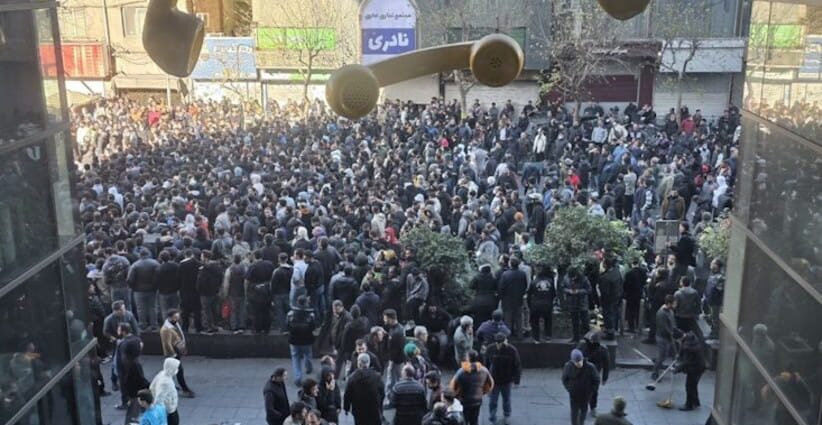
Six months after Iran’s January 8–9 massacre, in which opposition-linked estimates and evidence from inside Iran place the number of dead at between 35,000 and 40,000, The Jerusalem Post is publishing profiles of some of those killed, based on testimony provided by their families.
Among them was Adel Matlabnejad, a 38-year-old from Ahvaz, remembered by his brother as an honorable and compassionate man who spent his life helping others.
Adel was born in Ahvaz on February 23, 1987. He was killed on January 9.
“I want the whole world to know that my brother was a noble and honorable man,” his brother told The Jerusalem Post. “He lived with dignity, and he left this world with absolute honor.”
According to his brother, Adel was the kind of man who instinctively stood beside those weaker than himself. He helped others whenever he could, without needing recognition or reward.
“He always helped those who were weaker than himself in every way he possibly could,” his brother said. “He was so kind and compassionate that everyone loved him — even his enemies would have found him willing to help them in their time of need.”
Grew without a father, working since being 12
That kindness, his family said, was matched by an intense work ethic shaped by hardship from a young age. Adel grew up without a father and began working when he was only 12 years old so that he could stand on his own two feet.
His brother described him as tireless, hardworking, and determined, a man who carried the burden of life with a smile.
“He was an incredibly hardworking and tireless person who always wore a smile,” his brother said.
Adel also loved cheerful music, his brother recalled.
On the evening of January 9, Adel left his mother’s house. He had not planned to be gone long. He did not even stay for dinner.
‘I’ll be right back’
“I’ll be right back, and then I’ll eat,” he said, according to his brother. But Adel never returned.
His brother said he had only briefly changed his clothes before leaving the house. What happened afterward ended with the family receiving his body.
For Adel’s relatives, the grief of his killing was compounded by the restrictions placed on his funeral. According to his brother, the family was forced to sign a written undertaking limiting who could attend.
“For his funeral, we were forced to sign a written undertaking stating that no one else could attend, or that the number of mourners had to be kept extremely small and strictly limited to immediate family members,” his brother told the Post.
The family was also denied the chance to see him properly one final time, he said. When Adel’s body was handed over, it was already completely wrapped in a burial shroud.
“They did not allow us to see what they had done to him,” his brother said.
For the family, that denial remains part of the wound: not only that Adel was killed, but that even in death, they were prevented from fully saying goodbye.
Adel is remembered by his family as Javidnam – an immortal hero – one of the many Iranians whose lives were cut short during the January massacre.
But to his brother, he was first and foremost a man of honor: a son, a brother, a worker, and a person whose goodness was recognized by everyone around him.