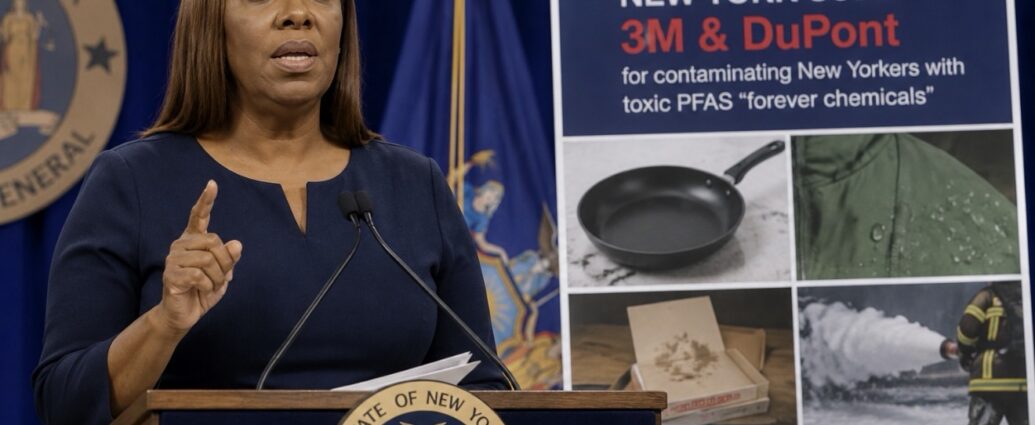
New York Attorney General Letitia James has filed a major lawsuit against 3M, DuPont, Chemours, Corteva and several related companies, accusing them of knowingly selling products containing toxic PFAS, commonly known as “forever chemicals,” while concealing the health and environmental risks for decades.
The lawsuit, filed Thursday in Albany County Supreme Court, alleges the companies manufactured, marketed and sold PFAS-containing consumer products despite evidence that the chemicals could accumulate in the human body and persist in the environment indefinitely.
PFAS, or per- and polyfluoroalkyl substances, have been widely used for decades because they resist water, grease and heat.
The chemicals are commonly found in nonstick cookware, stain-resistant fabrics, food packaging, cosmetics, waterproof clothing and firefighting foam.
Unlike many other chemicals, PFAS break down extremely slowly, allowing them to accumulate in soil, groundwater, rivers and drinking water supplies.
Health researchers have linked long-term exposure to certain PFAS compounds with increased risks of cancer, developmental problems, immune system disorders and other serious illnesses.
Attorney General Letitia James said New Yorkers have spent years paying the environmental and public health costs while manufacturers continued profiting from products containing the chemicals.
The lawsuit alleges the companies possessed internal research demonstrating the dangers of PFAS decades before consumers were informed.
According to the complaint, internal company documents dating back to the early 1980s indicated concerns about birth defects and other health risks associated with exposure to certain PFAS compounds.
Despite that knowledge, the state alleges the manufacturers continued producing and selling PFAS-containing products without adequately warning consumers.
The lawsuit seeks significant financial damages and broad corrective actions.
New York is asking the court to require the companies to pay for environmental cleanup across the state, compensate affected communities, provide restitution, pay civil penalties and stop selling PFAS-containing consumer products without appropriate warnings.
The case adds to a growing wave of PFAS litigation across the United States.
Chemical manufacturers have already agreed to billions of dollars in settlements related to contaminated drinking water systems, and additional lawsuits continue moving through federal and state courts.
For businesses, the financial implications could be substantial.
Large environmental liabilities, remediation costs and potential future settlements continue creating uncertainty for chemical manufacturers and investors.
Companies facing PFAS litigation may also encounter higher compliance costs, increased regulatory oversight and reputational challenges as governments continue tightening environmental standards.
The lawsuit also carries implications for manufacturers that continue using PFAS in consumer products.
Many companies have already begun developing alternative materials as regulators around the world move toward stricter limits on the chemicals.
For consumers, the lawsuit highlights growing concerns surrounding products used every day in homes and workplaces.
While many manufacturers have already begun phasing out certain PFAS compounds, environmental experts note that decades of previous use have left widespread contamination requiring long-term cleanup efforts.
The defendant companies had not publicly responded in detail to the lawsuit at the time of the announcement.
The case is expected to become one of New York’s largest environmental lawsuits involving PFAS contamination and could influence similar litigation across other states.
For businesses, investors and manufacturers, the outcome may help shape future standards governing chemical safety, environmental responsibility and corporate disclosure for years to come.
JBizNews Desk | Albany, N.Y.
© JBizNews.com All Rights Reserved. Reproduction or Distribution without Written Permission is Prohibited.