
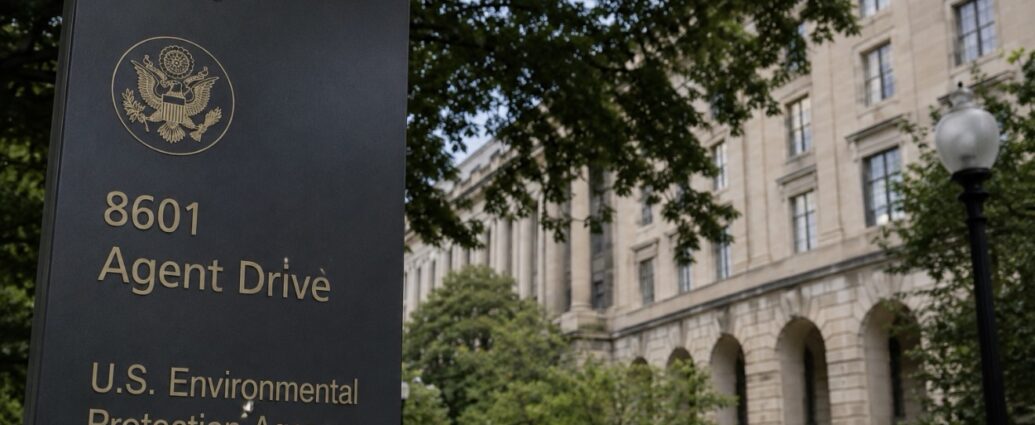
The U.S. Environmental Protection Agency has proposed rolling back portions of the federal emissions requirements for heavy-duty diesel vehicles, a move the agency says will lower costs for manufacturers, truck operators and small businesses while keeping the core pollution limits in place.
The proposal, announced Thursday by EPA Administrator Lee Zeldin, would modify several provisions of the agency’s heavy-duty vehicle emissions rule that applies to trucks, buses, garbage trucks, fire engines and other large diesel-powered vehicles beginning with the 2027 model year.
Although the proposal leaves the stricter nitrogen oxide (NOx) emission standards unchanged, it would ease several related compliance requirements that trucking companies and engine manufacturers have argued are costly and difficult to implement.
Among the biggest proposed changes is a delay in tougher engine durability requirements.
Under the current rule, heavy-duty diesel engines would be required to meet emissions standards for up to 650,000 miles beginning with model year 2027.
The EPA now proposes keeping the existing 435,000-mile requirement until 2030, giving manufacturers additional time to develop and validate longer-lasting emissions-control systems.
The agency also proposes reducing mandatory emissions-control warranties from 10 years to 5 years.
In addition, the EPA would eliminate a requirement that automatically reduce engine power when emissions-control systems malfunction.
Instead, vehicles would notify drivers through warning systems while allowing operators to continue driving.
According to the EPA, the changes would reduce manufacturing costs while avoiding disruptions for commercial fleets.
The agency estimates the proposal would save between $4,100 and $6,100 per heavy-duty diesel engine, depending on vehicle type and configuration.
Administrator Lee Zeldin said the proposal maintains cleaner air standards while reducing unnecessary regulatory burdens on businesses.
Trucking organizations and industry groups welcomed the announcement, arguing that the previous regulations required manufacturers to deploy technologies before they were fully proven under real-world operating conditions.
The U.S. Small Business Administration also supported the proposal, saying lower compliance costs could benefit trucking companies, farmers and many small businesses that rely on commercial transportation.
Environmental organizations strongly criticized the plan.
Groups including the Sierra Club argued that weakening emissions requirements would result in additional air pollution and greater health risks for communities located near highways, ports and freight corridors.
The EPA’s own analysis estimates the proposal would increase nitrogen oxide emissions compared with the current rule, although the agency says approximately 90% of the expected pollution reductions under the original regulation would still be achieved.
Nitrogen oxide pollution contributes to smog formation and has been linked to respiratory illnesses including asthma and other lung diseases.
Heavy-duty trucks represent only a small percentage of vehicles on U.S. roads but account for a disproportionately large share of transportation-related emissions.
The proposal will now enter the federal public comment process before the EPA determines whether to finalize the changes.
For manufacturers, the proposal offers additional time to develop new engine technologies while reducing warranty and compliance costs.
For trucking companies and fleet operators, it could lower equipment costs and reduce maintenance expenses associated with complex emissions-control systems.
For businesses that depend on freight transportation, lower truck acquisition costs could eventually help reduce operating expenses across supply chains.
The proposal reflects the administration’s broader effort to reduce regulatory costs while balancing environmental standards with business competitiveness.
Whether the revised rule ultimately takes effect will depend on the outcome of the public comment process and any future legal challenges.
JBizNews Desk | Washington
© JBizNews.com All Rights Reserved. Reproduction or Distribution without Written Permission is Prohibited.





