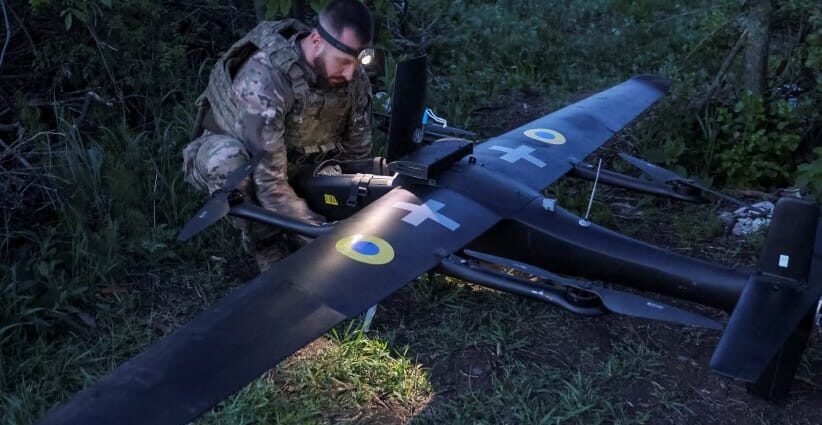
Much of today’s defense-tech debate focuses on visible platforms: drones, loitering munitions, interceptors, lasers, autonomous vessels, and robotic systems. Each new system attracts headlines, procurement attention, and investor capital. Yet a deeper competition is taking shape in the digital layer that connects these systems into a battlefield network. The next defense-tech race is for the operating system of the battlefield.
A military operating system is the architecture that connects sensors, shooters, satellites, drones, AI models, data, compute, and command-and-control into one adaptive ecosystem. Its value is measured by operational learning: how quickly the force can understand what happened, update the network, and integrate new capabilities.
This matters because the battlefield is filled with sensors and effectors. Some are expensive and exquisite. Others are cheap, disposable, and deployed in large numbers. The harder problem is turning that density into coherent action.
A drone that sees a target creates value only if its data can be trusted, transmitted, fused with other sources, processed at the edge or in secure infrastructure, and translated into a decision that a commander can use. The platform is the visible element. The operating layer determines whether the network behaves like a collection of assets or like a force.
Ukraine has become one of the clearest examples. According to Reuters, Ukraine is already using AI across drone operations, combat planning, and the analysis of Russian missile-attack data.
Danylo Tsvok, the head of Ukraine’s Defense AI Center, described the next phase as a “war of operating systems,” in which advantage will go to the system that holds more data, understands it better and can propose operational solutions faster. Ukraine has also opened controlled access to battlefield datasets for allies seeking to train drone AI software, turning annotated combat data into a strategic resource. Battlefield data is now a weapons-development asset.
The United States is moving in the same direction through procurement. In June 2026, the US Army selected Anduril, working with Palantir, to lead the common data layer baseline for its Next Generation Command and Control initiative.
The architecture centers on an edge-to-cloud data mesh using Anduril’s Lattice and Palantir’s Foundry, with additional tools for data registries, transformation, and federation. This is the practical language of the battlefield operating system: common data, software deployment, edge connectivity, integration, and continuous access to operational information.
The Atlantic Council’s Commission on Software-Defined Warfare gives this trend a useful name. Its work argues that armed forces need to adopt modern software practices across existing and future systems. NATO’s testing of uncrewed and counter-uncrewed systems in Latvia points to the same operational challenge: faster experimentation, validation, and adoption across domains.
For investors, this shift changes the logic of defense technology. A drone, sensor, or interceptor is a product. An operating layer can become a platform. Every new sensor connected to the network increases its value. Every engagement creates data that can improve models, tactics, and interfaces. Every software update can upgrade multiple systems at once. The most strategic defense-tech companies may be those building autonomy stacks, data platforms, simulation environments, secure edge computing, and modular command systems.
Production lines, supply chains, cost-effective mass, and ruggedized systems remain decisive. The emerging advantage will belong to those who connect hardware, software, and operational learning into one repeatable cycle.
For Israel, the question is immediate. Israel has deep operational experience, strong defense engineering, and a fast-growing defense-tech startup ecosystem. The IDF’s establishment of the Alumot unit under the C4I and Cyber Defense Directorate, focused on AI and information-processing capabilities for frontline forces, shows that the direction is already understood.
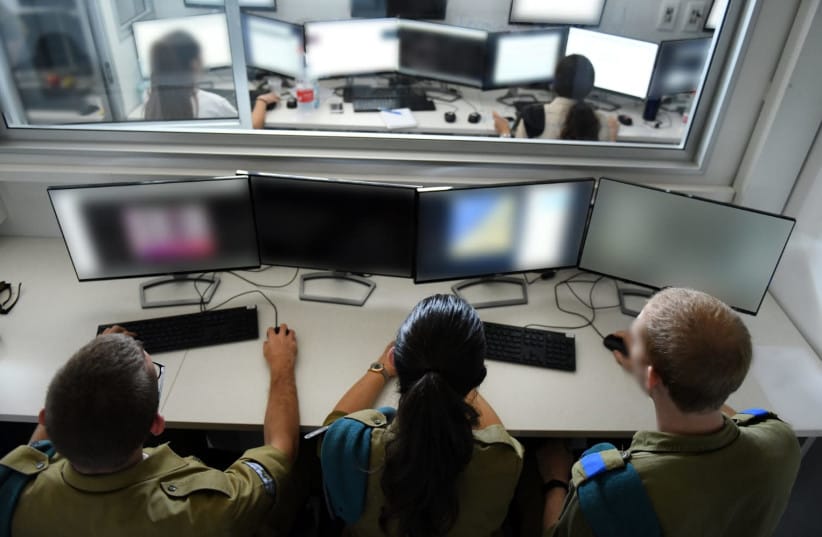
Israeli startups are moving in the same direction. Kela, for example, has been described as developing an open and modular software platform designed to integrate commercial technologies such as AI models, sensors, and edge devices into existing military systems. Defense-tech companies working with Israel’s Directorate of Defense Research and Development (MAFAT) raised more than $1 billion in exits and funding in the past year, according to Israel’s Defense Ministry.
This momentum is significant, and it now needs discipline. Israel’s strength has always included operational improvisation: reservists, engineers, commanders, and technologists solving urgent problems under pressure. That culture is a national asset. It saves lives. It produces capabilities faster than formal processes often allow. The next phase requires converting wartime creativity into durable architecture.
Improvisation is not architecture. A bridge built under fire can solve an immediate operational need, yet the national system still requires common interfaces, data standards, cybersecurity rules, testing environments, and procurement models that reward interoperability. Without that discipline, every major program builds its own stack, and the broader force remains fragmented.
Procurement has to change. Defense acquisition traditionally knows how to buy platforms: a vehicle, a radar, a missile, a communication system, a command post. Software-defined warfare evolves through feedback loops. It requires continuous updates, operational testing, red-teaming, integration with legacy systems, and close contact between users and developers. A procurement system that treats software as a one-time delivery will struggle to support a learning battlefield.
Governance matters as much as speed. As AI moves deeper into command-and-control, military organizations need traceability, validation, auditability, escalation procedures, and clear human responsibility. Human control cannot be reduced to a slogan. Commanders will need systems they can understand, challenge, and supervise under pressure. The operating layer must be built with accountability from the beginning.
Israel should treat the battlefield operating layer as a strategic national capability. That means government-owned interfaces where necessary, open architectures where possible, secured data foundations, edge computers suited for classified and disconnected environments, and simulation environments that allow rapid testing before operational deployment. It also means backing horizontal players alongside vertical platform companies.
The strategic risk is that Israel continues to produce excellent defense platforms while others define the operating layer that connects them. In defense, as in civilian technology, the integration layer shapes who can innovate, who can scale, and who controls the pace of change.
Israel has the talent, the urgency, and the operational experience to lead this field. The decision now is whether to organize those strengths into a common architecture.