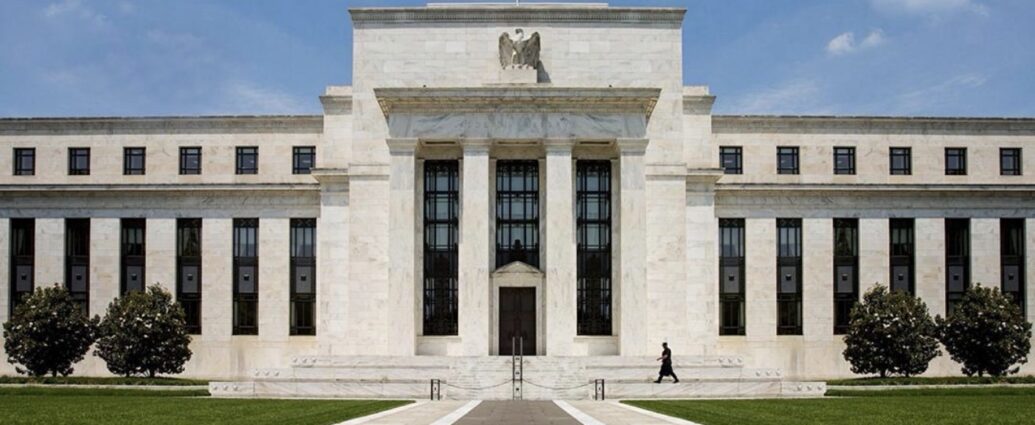
Federal Reserve Chairman Kevin Warsh told lawmakers on Tuesday, July 14, that the central bank remains fully committed to restoring price stability but deliberately avoided signaling whether policymakers will raise interest rates at their next meeting. During testimony before the House Financial Services Committee, Warsh emphasized that the Federal Reserve has “no tolerance for persistently elevated inflation,” while stressing that future policy decisions will depend on incoming economic data rather than predetermined plans.
Warsh’s appearance came only hours after the U.S. Bureau of Labor Statistics reported encouraging inflation data showing the Consumer Price Index rose 3.5% from a year earlier in June, down from 4.2% in May, while core inflation measured 2.6%.
The timing immediately shifted attention from the inflation report itself to how the Federal Reserve would interpret the data.
Financial markets initially welcomed the softer inflation figures. Treasury yields declined, stock markets advanced and traders sharply reduced expectations that the Federal Reserve would approve another interest-rate increase during its upcoming policy meeting.
Warsh, however, cautioned against drawing sweeping conclusions from a single month of favorable inflation data.
He reminded lawmakers that inflation remains above the Federal Reserve’s long-term 2% target and that policymakers must remain focused on sustained progress rather than short-term fluctuations.
That message reflected the central bank’s ongoing challenge.
While inflation has moderated considerably from its peak, consumers continue paying substantially more for housing, insurance, healthcare and many everyday necessities than they did before the inflation surge began. A lower inflation rate means prices are rising more slowly—not that prices are returning to previous levels.
Warsh also acknowledged that recent geopolitical developments could complicate the outlook.
Renewed military tensions involving the United States and Iran have pushed global oil prices higher after energy costs declined during June. Rising crude oil prices can eventually increase gasoline, transportation, manufacturing and shipping costs, potentially reversing part of the progress reflected in the latest inflation report.
Because energy prices influence nearly every sector of the economy, the Federal Reserve must determine whether any renewed increase represents a temporary geopolitical shock or the beginning of broader inflationary pressure.
Warsh declined to provide the forward guidance that investors had become accustomed to under previous Federal Reserve leadership.
Instead of indicating where interest rates may move, he emphasized that monetary policy would remain data dependent, allowing policymakers flexibility as new information becomes available.
That approach is intended to preserve the Federal Reserve’s independence while avoiding commitments that could become inappropriate if economic conditions change.
The chairman also discussed the growing impact of artificial intelligence on the U.S. economy.
Warsh said the Federal Reserve is closely monitoring how artificial intelligence influences productivity, labor markets, wages and long-term economic growth. Businesses continue investing billions of dollars in data centers, advanced computing systems and supporting infrastructure.
While artificial intelligence has the potential to improve productivity and economic efficiency over time, it may also increase short-term demand for electricity, specialized equipment, construction materials and skilled labor.
Those investments could create new inflationary pressures even as technological advances reduce costs elsewhere.
Warsh noted there is currently no broad evidence that artificial intelligence has produced widespread job losses across the economy. However, he acknowledged that some entry-level positions and routine office work may experience disruption as businesses adopt increasingly sophisticated automation.
Employment remains another critical factor shaping Federal Reserve policy.
A strong labor market supports consumer spending and overall economic growth but can also contribute to persistent inflation if wage increases significantly outpace productivity.
Conversely, a weakening labor market could reduce inflationary pressure while increasing concerns about slower economic growth.
For now, the Federal Reserve appears determined to balance both risks carefully.
Markets will continue watching upcoming employment, retail sales and inflation reports before the central bank’s next policy meeting.
Businesses are also monitoring borrowing costs closely.
Interest rates affect mortgage payments, commercial real estate financing, business expansion, automobile loans, credit cards and corporate investment decisions. Even modest changes in Federal Reserve policy can influence financing costs throughout the economy.
Warsh’s testimony therefore delivered a clear message without offering a timetable.
The Federal Reserve remains committed to defeating inflation, but policymakers are unwilling to declare victory—or signal their next move—until additional economic data confirms that recent progress can be sustained.
For consumers, investors and business leaders, one conclusion remains certain.
The direction of interest rates will continue depending on inflation, employment, consumer spending and global developments—not on predetermined promises from the Federal Reserve.
JBizNews Desk | Washington
© JBizNews.com All Rights Reserved. Reproduction or distribution without written permission is prohibited.