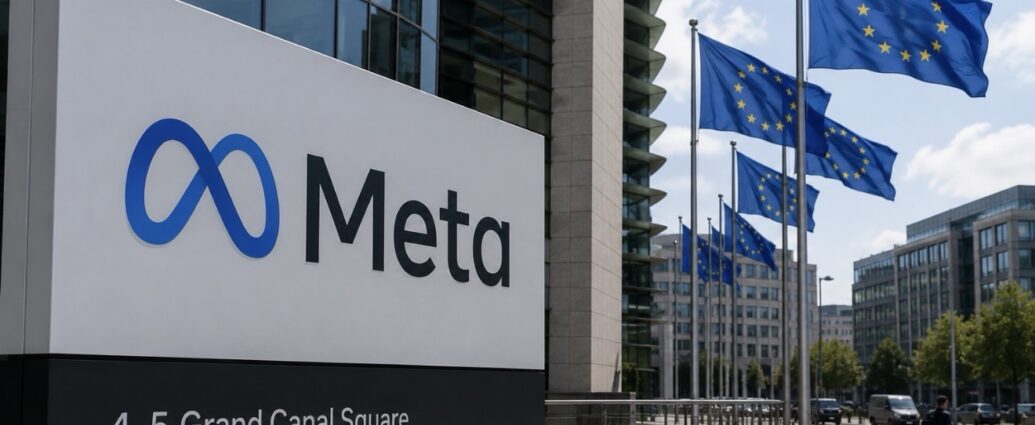
The European Commission has ordered Meta Platforms to overhaul design features on Facebook and Instagram that it says are built to hook users, or face a fine that could run into billions of dollars — one of the European Union’s most aggressive regulatory moves yet against a U.S. technology company.
The Commission, the European Union’s executive arm, published preliminary findings on Friday, July 10, concluding that Meta is in breach of the Digital Services Act, the bloc’s sweeping rulebook governing the world’s largest online platforms. Regulators singled out features including infinite scrolling, autoplay video, push notifications, highly personalized recommendation feeds, Reels and Stories, arguing they work together to keep users engaged far longer than intended and encourage compulsive use.
According to the Commission, Meta failed to adequately assess the risks these design choices pose to users’ physical and mental well-being, particularly children, teenagers and other vulnerable users. Officials cited evidence showing young people spending extended periods on the company’s platforms late into the night and argued the products are engineered to maximize attention rather than user welfare.
At the center of the case is what European regulators describe as the “rabbit-hole effect.” Personalized algorithms continually serve content similar to what users have already watched or interacted with, drawing them into increasingly lengthy browsing sessions. The Commission argues this is not an unintended consequence but a structural feature deliberately built into Meta’s products.
While Meta offers screen-time controls and parental tools, European regulators concluded those safeguards are too easily ignored or overridden, leaving users exposed to engagement-focused defaults designed to encourage continuous scrolling.
The potential financial stakes are substantial.
If the Commission ultimately confirms its preliminary findings after Meta submits its formal response, the company could face fines of up to 6% of its total worldwide annual revenue under the Digital Services Act. Given Meta’s global size, that penalty could amount to several billions of dollars. The investigation has been underway for nearly two years.
Meta strongly disputed the findings.
A company spokesperson said the Commission’s conclusions fail to reflect the extensive measures Meta has implemented to protect younger users. The company pointed to its recently introduced Teen Accounts, which automatically apply stricter privacy settings, nighttime restrictions and parental controls intended to create a safer online experience for adolescents.
Meta said it shares regulators’ objective of protecting young users and will continue working with European officials as the investigation moves toward a final decision.
The European action arrives amid growing legal pressure in the United States as well.
In a U.S. court filing earlier this week, Meta disclosed that four states are seeking approximately $1.4 trillion in penalties in litigation alleging Facebook and Instagram were intentionally designed to addict young users while misleading families about the platforms’ safety. That lawsuit is part of broader nationwide social media litigation involving youth mental health, with additional trials expected later this year.
The European Commission has also opened a similar investigation into TikTok’s platform design and previously pursued enforcement actions involving X, formerly Twitter, underscoring the bloc’s broader effort to regulate how large technology companies compete for user attention.
For Meta, the regulatory threat extends well beyond potential financial penalties.
The features under scrutiny—including endless scrolling, autoplay video and personalized recommendation algorithms—form the core of the company’s advertising business. The more time users spend engaging with content, the more advertising Meta can deliver. Any requirement to redesign those systems in Europe could directly affect user engagement and advertising revenue across one of the company’s largest international markets.
More broadly, the case could establish an important global precedent.
If European regulators ultimately require Meta to redesign the fundamental architecture of Facebook and Instagram, other major technology companies may face similar demands, forcing social media platforms to balance growth strategies with increasing regulatory scrutiny over user well-being.
The Commission’s final decision is expected after reviewing Meta’s response in the coming weeks, with technology companies around the world watching closely as Europe continues defining the future boundaries of digital platform regulation.
JBizNews Desk | New York
© JBizNews.com All Rights Reserved. Reproduction or distribution without written permission is prohibited.