The U.S. Department of Commerce’s Bureau of Industry and Security (BIS) has issued a final rule allowing the United Arab Emirates government and a list of approved companies to purchase advanced American AI chips and servers without an export license. The agency said the change recognizes the UAE’s status as a Major Defense Partner and its support for U.S. national security interests, including Operation Epic Fury, the American military campaign against Iran. The rule took effect immediately upon publication.
The change is structural, not a one-time authorization. BIS removed the UAE from Export Administration Regulations Country Groups D:3 and D:4 and placed it into Country Group A:5, a tier generally reserved for Washington’s closest trading partners. The group is largely composed of NATO members and longtime U.S. allies. The UAE is now the only country in A:5 that is not part of the multilateral export control regimes, and it is the only nation in its region included in the group. Israel and Saudi Arabia are not members of A:5.
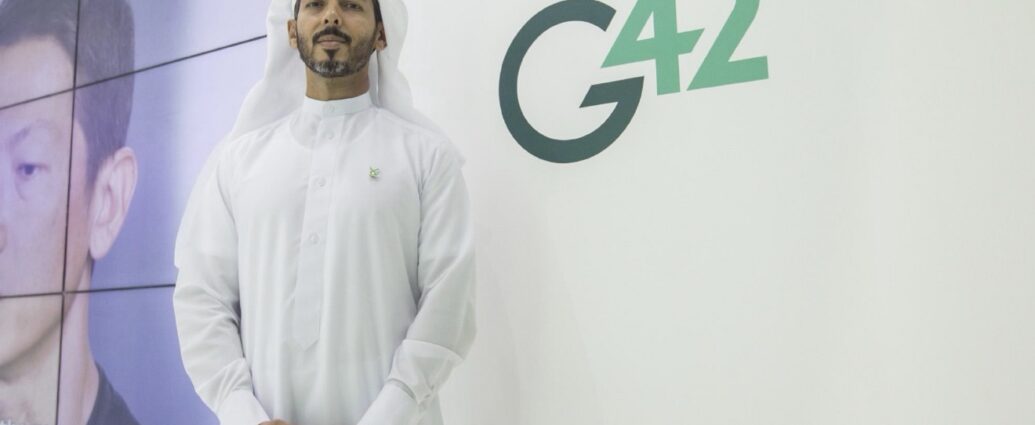
The practical effect comes through License Exception Strategic Trade Authorization. Under a new Supplement No. 8 to Part 740 of the regulations, designated Emirati entities—including G42 and Core42—may receive advanced computing items without individual export licenses. The UAE operations of Amazon, Apple, Google, Meta, Microsoft, OpenAI, Oracle, and xAI are also covered. Commerce said it will additionally “favorably review” license applications tied to MGX, Abu Dhabi’s technology investment vehicle. Companies not listed must seek an advisory opinion from BIS, which said requests will be evaluated individually based on compliance history and overall track record.
For American chipmakers, the rule opens a market that previously required individual licensing approvals. Nvidia, Advanced Micro Devices, and Cerebras Systems can now supply approved UAE projects without waiting for separate export licenses. The most immediate beneficiary is Stargate UAE, the 1-gigawatt AI compute cluster G42 is building for OpenAI alongside Oracle, Cisco, Nvidia, and SoftBank Group. The project serves as the centerpiece of the planned UAE-U.S. AI Campus, a 5-gigawatt complex spanning approximately ten square miles in Abu Dhabi.
The foundation for the agreement was laid over the past fourteen months. The two governments signed an AI cooperation framework in May 2025. In November 2025, Washington authorized G42 to acquire computing power equivalent to approximately 35,000 Nvidia Blackwell GB300 processors. In March 2026, the United States approved roughly $7 billion in additional weapons sales to the UAE. Speaking at the World Economic Forum in Davos in January, G42 Group Chief Executive Peng Xiao said the first shipments were expected within months, enough to power the initial 200 megawatts of the Stargate project.
The UAE also made significant strategic changes to strengthen its relationship with Washington. G42 divested its stake in ByteDance and removed Huawei Technologies hardware from its systems, conditions tied to its $1.5 billion partnership with Microsoft announced in 2024. The company is chaired by Tahnoun bin Zayed Al Nahyan, the UAE’s national security adviser and brother of the country’s president.
Not everyone supports the policy. Senator Elizabeth Warren, ranking member of the Senate Banking Committee, argued the administration is granting G42 license-free access while promising favorable treatment for MGX despite longstanding concerns about advanced technology potentially reaching China. She also cited the royal family’s reported investment in a Trump-affiliated cryptocurrency venture. The Commerce Department did not immediately respond to requests for comment. A former Commerce official told Reuters the new framework effectively ends the internal licensing debates that previously accompanied exports to G42.
A separate security concern remains. In April, Iran’s Islamic Revolutionary Guard Corps published a list of 17 technology companies it claimed would be targets across the Middle East. G42 was the only non-American company named. The company now receiving license-free access to some of America’s most advanced AI technology is also one that Tehran has publicly singled out.
The move suggests U.S. export policy is increasingly being used as a tool of strategic alliance management, linking technology access with broader security relationships. That reshapes where data centers are built, which suppliers secure multi-year contracts, and how quickly advanced computing capacity comes online outside the United States. It also concentrates a significant amount of American AI computing power in a region that remains vulnerable to military conflict.
The Wall Street Journal reported this week that G42 has developed a plan to reincorporate as a U.S. company. JBizNews could not independently confirm that reporting, and G42 has not publicly announced any such filing.
JBizNews Desk | Washington
© JBizNews.com All Rights Reserved. Reproduction or distribution without written permission is prohibited.