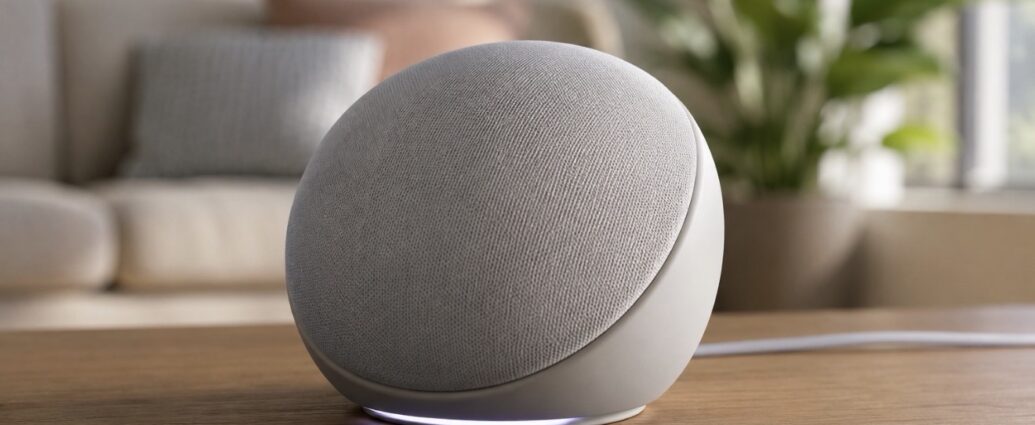
OpenAI is developing a portable, screen-free smart speaker as its first consumer hardware product, according to details reported Tuesday, July 14. The company has not officially announced the device, and many of the details now appear in Apple’s 41-page lawsuit filed July 10 in the U.S. District Court for the Northern District of California, along with OpenAI’s public response denying any interest in competitors’ trade secrets. Additional details were reported Tuesday by Bloomberg’s Mark Gurman, citing people familiar with the project, who described a portable, screenless AI device designed to become a new type of home computer for the artificial intelligence era.
Inside OpenAI, the product reportedly is not viewed as simply another smart speaker.
Instead, sources describe it as a human-like AI companion designed to live throughout the home—a device with personality that gradually learns its owner’s routines, preferences and habits, becoming increasingly useful the longer it is used.
What the Device Will Do
The device is expected to control smart-home appliances, play music and media, answer questions, send and receive messages, and provide the full capabilities of ChatGPT.
Unlike traditional smart speakers, it reportedly includes a camera and multiple sensors that allow it to understand its surroundings and interpret context, enabling more advanced AI interactions.
Its portability is another distinguishing feature.
Powered by a rechargeable battery, users will be able to carry the device from room to room—helping with recipes in the kitchen, assisting with chores in the laundry room, or providing music and information in the bedroom. Owners will also have the option of leaving it plugged into a permanent location.
According to reports, the hardware will include subtle mechanical movements intended to give the device more presence, making it feel less like a stationary speaker and more like an AI companion.
Over time, the system is expected to become increasingly personalized by learning user habits and, with permission, incorporating information from sources such as email accounts.
Price and Timeline
Current plans reportedly target a retail price between $200 and $300.
Bloomberg reports the product could be unveiled during 2026, with commercial availability expected in 2027.
Manufacturing is reportedly being considered in either Vietnam or the United States.
The pricing would position the device below Apple’s HomePod while costing more than an entry-level Amazon Echo Dot, placing it squarely in the mainstream consumer market.
The project is being led creatively by legendary former Apple design chief Jony Ive and his design firm LoveFrom.
Last year, OpenAI acquired Ive’s hardware startup, io Products, in an all-stock transaction valued at approximately $6.5 billion, making it the largest acquisition in OpenAI’s history.
Bloomberg reports the speaker is one of roughly five hardware products currently under development. Longer-term concepts reportedly include a dedicated AI mobile device that could eventually replace today’s smartphone, along with wearable devices and possible home robotics initiatives.
The Apple Lawsuit
The hardware plans surfaced only days after Apple filed a sweeping federal lawsuit.
The complaint alleges that OpenAI improperly obtained Apple’s confidential intellectual property while developing consumer hardware products.
Named as defendants are OpenAI, io Products, Chief Hardware Officer Tang Tan, and former Apple engineer Chang Liu.
Apple alleges that Tan encouraged Apple employees interviewing with OpenAI to bring actual hardware components to interviews for demonstration purposes and claims departing employees were coached on avoiding Apple’s security procedures.
The lawsuit further alleges that more than 400 former Apple employees now work at OpenAI.
Apple is seeking financial damages, court injunctions, and orders requiring defendants to stop using any allegedly misappropriated technology and return confidential materials.
OpenAI’s public response was brief.
The company stated it has no interest in competitors’ trade secrets and remains focused on building technology that empowers people.
Sources familiar with the project also told Bloomberg that the device differs substantially from any existing Apple product and is unlikely to infringe on Apple’s proprietary technology.
Why It Matters
The dispute marks a dramatic reversal in the relationship between two companies that partnered in 2024 to integrate ChatGPT into Apple’s operating system.
Today, Apple’s upcoming version of Siri instead relies primarily on Google Gemini, effectively ending what once appeared to be a long-term partnership.
The timing is especially significant as OpenAI prepares for what many expect to become one of the largest technology IPOs in history.
Depending on how the litigation unfolds, the lawsuit could delay commercial production, creating uncertainty for suppliers, manufacturers, retailers and investors already planning around a 2027 launch.
Investment in AI hardware, however, continues accelerating.
In May, Hark, the artificial intelligence startup founded by Brett Adcock, raised an oversubscribed $700 million Series A financing round at a $6 billion valuation to develop proprietary AI hardware paired with its own foundation models, despite revealing few details about its products.
For businesses, the implications extend well beyond consumer electronics.
An always-on AI device equipped with cameras, contextual awareness, memory of personal habits and access to communications becomes another workplace endpoint rather than simply another household gadget.
Retailers, offices, healthcare providers and small businesses adopting the technology will likely confront difficult privacy, cybersecurity and customer trust questions long before many consumers fully understand how these devices work.
JBizNews Desk | New York
© JBizNews.com All Rights Reserved. Reproduction or distribution without written permission is prohibited.