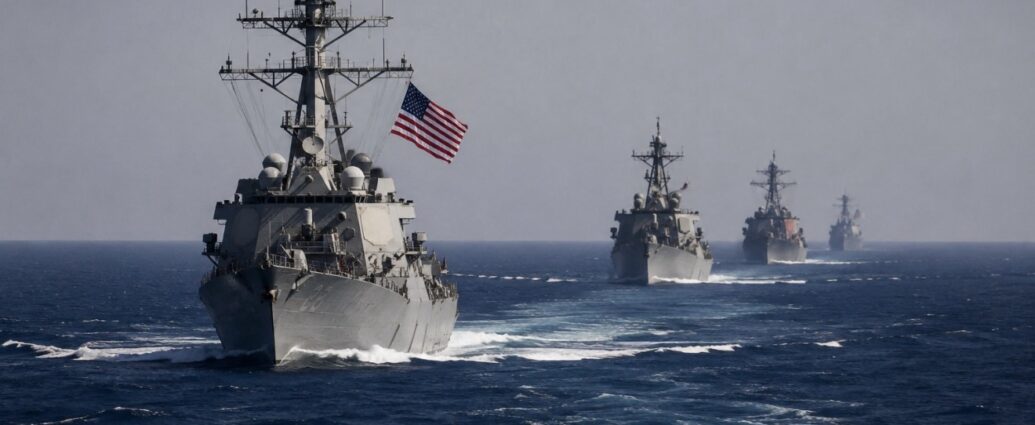
U.S. Central Command said it completed a 90-minute wave of strikes against Iran at 7:30 a.m. ET on Wednesday, July 15, targeting coastal defense systems and cruise missile storage and launch sites on Greater Tunb Island. The strikes were “designed to further degrade military capabilities Iranian forces have used to attack commercial shipping” in the Strait of Hormuz, according to a CENTCOM statement.
It marked the fifth consecutive day of American strikes on Iran and came as the U.S. naval blockade of Iranian ports resumed.
The blockade returns
CENTCOM reinstated the blockade Tuesday. Within the first 17 hours, U.S. forces said they had already redirected two commercial vessels attempting to violate it. Approximately 21 U.S. naval vessels are now operating in the region.
Unlike the broader blockade enforced earlier this year, the current operation specifically targets vessels linked to Iran while continuing to protect commercial shipping using the Omani transit corridor through the Strait of Hormuz.
The daytime strikes followed an overnight campaign lasting roughly seven hours against multiple Iranian military targets along the country’s southern coastline.
Iran’s semi-official Tasnim News Agency reported at least seven personnel were killed at a military facility near Bampur, where missiles struck guard posts, accommodations and support facilities.
CENTCOM Commander Gen. Brad Cooper said Iran had launched dozens of missiles and drones toward neighboring Gulf states. Kuwait reported one naval vessel was struck, injuring four personnel, while its air defenses intercepted a ballistic missile, five cruise missiles and 33 drones.
Iran again threatened to halt regional energy exports.
Trump’s warning
President Donald Trump told Fox News Tuesday evening that additional U.S. strikes could continue over the next two days and warned that bridges and power infrastructure could become targets if negotiations do not resume.
“You better make a deal, or you’re not going to have anything left,” Trump said.
Trump also announced he would replace the previously proposed 20 percent U.S. Reimbursement Fee on Hormuz shipping with broader trade and investment agreements involving Gulf nations, saying those agreements would generate substantial manufacturing investment inside the United States.
The move removes what would have amounted to a significant surcharge on global oil and liquefied natural gas shipments.
Oil barely reacts
Despite the military escalation, energy markets remained relatively calm.
West Texas Intermediate crude for August delivery slipped 10 cents to $79.24 per barrel, while Brent crude for September delivery eased 13 cents to $84.60 after briefly trading above $86 overnight.
Oil remains well above June levels but has shown surprisingly limited reaction to several consecutive days of U.S. military operations.
The muted response suggests traders believe much of the geopolitical risk has already been priced into energy markets.
The Bureau of Labor Statistics also reported lower wholesale gasoline prices during June, while AAA listed the national average price for regular gasoline at approximately $3.87 per gallon, slightly above last week but below levels seen a month ago.
Shipping remains under pressure
Maritime analytics firm Kpler tracked 21 monitored commercial transits through the Strait of Hormuz on July 14, primarily carrying crude oil, liquefied petroleum gas, methanol and iron ore.
The firm also confirmed three additional attacks near Oman, bringing the verified total to 56 maritime incidents since the conflict began.
Before the war, approximately 130 vessels per day transited the Strait of Hormuz, which handles roughly one-fifth of the world’s seaborne oil and natural gas shipments.
Financial pressure increases
The U.S. Treasury Department announced sanctions freezing more than $130 million tied to cryptocurrency wallets allegedly linked to Iran’s central bank.
Separately, the U.S. State Department imposed additional sanctions on a network associated with Iranian oil shipping figure Mohammad Hossein Shamkhani, targeting 50 individuals, entities and vessels accused of facilitating Iranian oil exports.
For businesses worldwide, the immediate economic impact continues to center on freight costs, marine insurance premiums and transportation expenses, even as oil prices remain relatively stable.
JBizNews Desk | Washington
© JBizNews.com All Rights Reserved. Reproduction or distribution without written permission is prohibited.